
Guest post by First Day of Forever.
We are so very grateful to this UK wedding website for taking a principled stand against “dove” releases. We hope their compassion inspired others to do the right thing. Read their entire statement here.
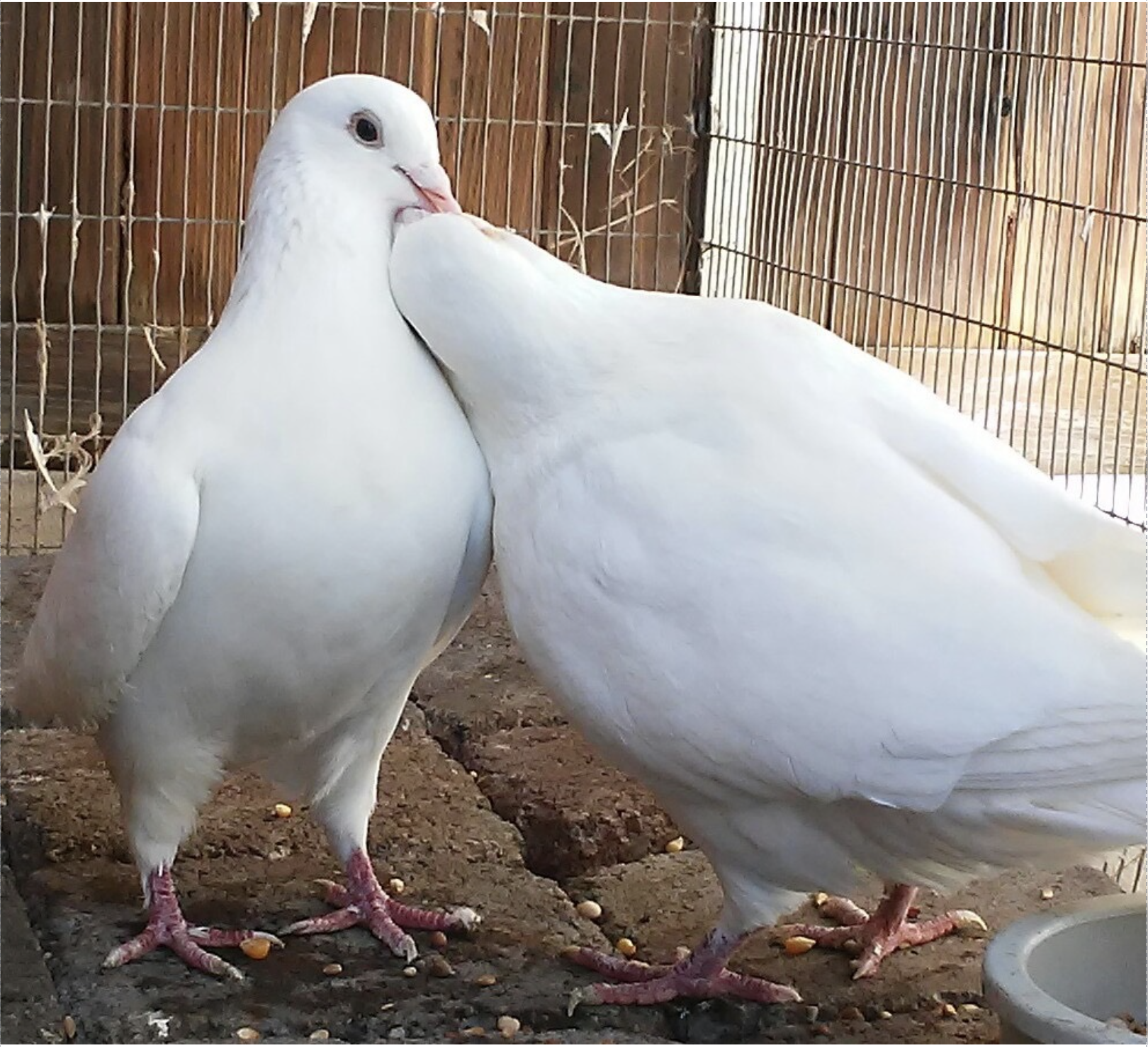
Photo by Elizabeth Young
Why We Don’t Support Dove Releases at Weddings: Our Animal Welfare Promise
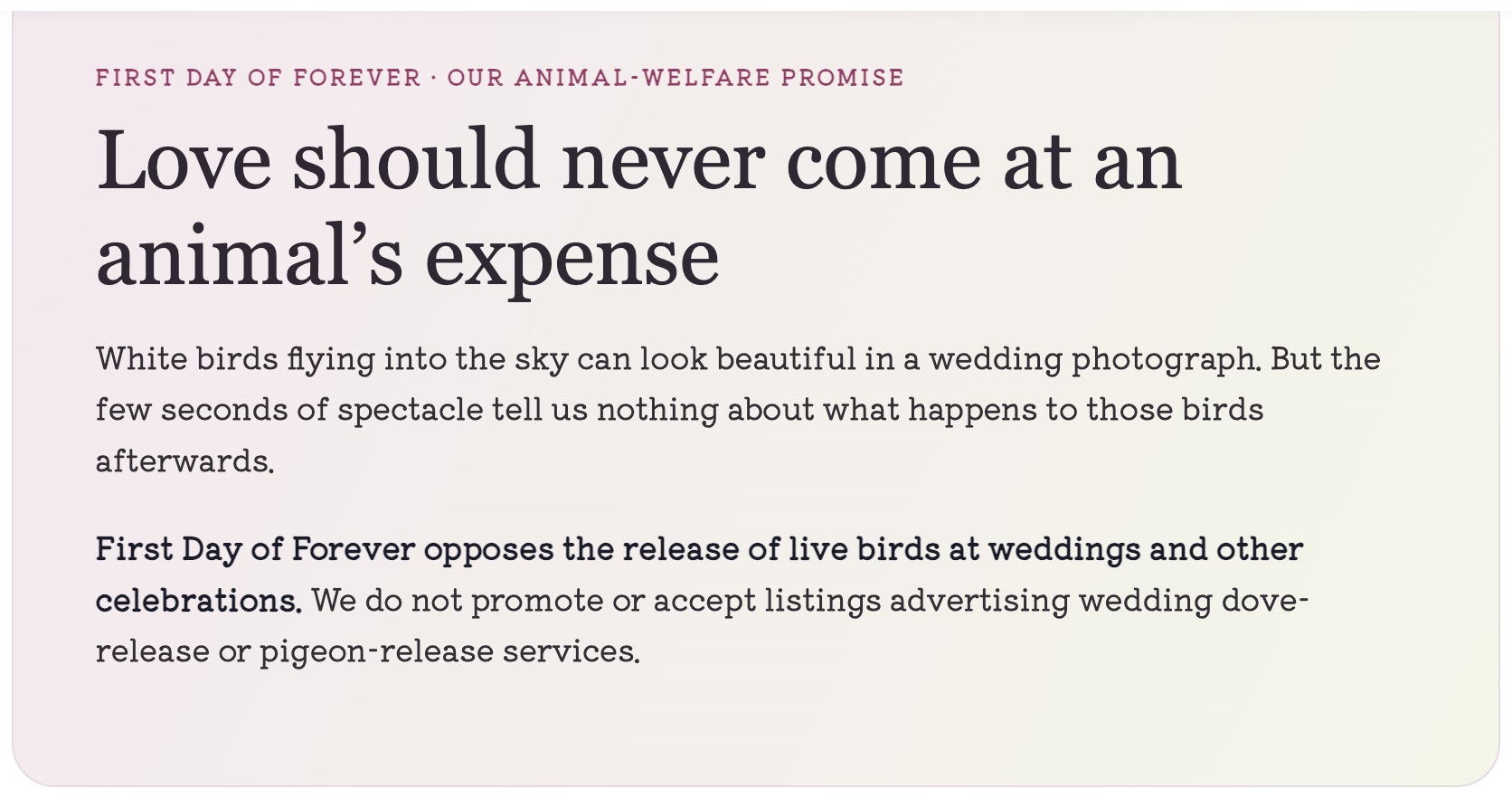
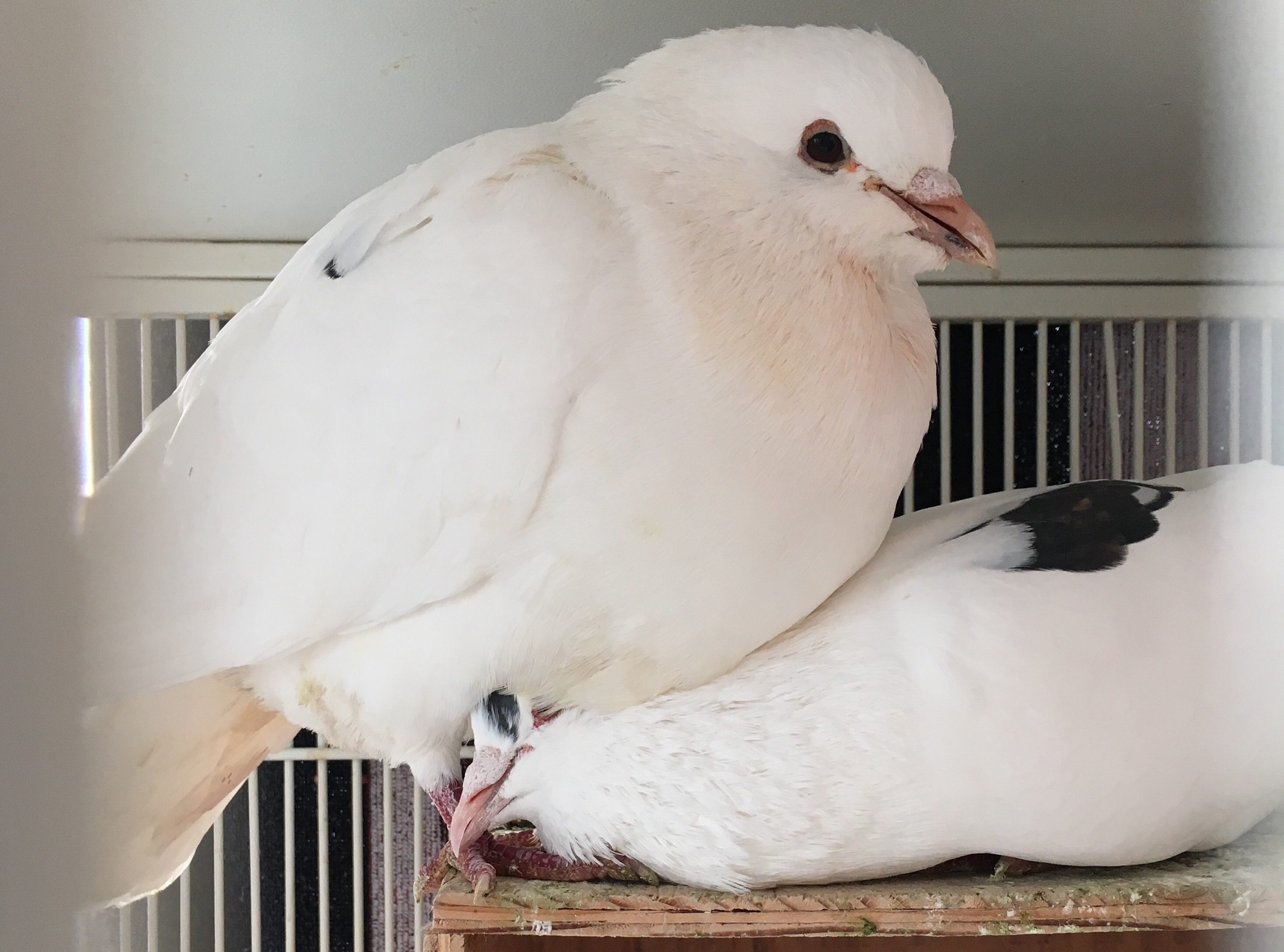
Real rescued pigeons, real companionship: Shimmy and Dallas, photographed by Elizabeth Young, founder of Palomacy. Their extraordinary bond is documented in Shimmy & Dallas: A Pigeon Love Story. Photo reproduced with Palomacy’s permission.
Doves can form lifelong bonds. Why should celebrating our love put theirs at risk?
There is something especially heartbreaking about using a bird as a symbol of love when that bird may have a devoted partner of its own. Pigeons and many doves form strong, enduring pair bonds, often lasting for life. They return to familiar nests, share the work of incubating eggs and both parents feed and raise their chicks. Their relationships are part of their lives, not decoration for ours. The RSPCA explains the social and emotional lives of pigeons, including their close bonds and the effects of isolation.
Is separation from a mate used to make them fly home?
Yes, in some pigeon-racing systems. A practice known as “widowhood” involves separating bonded birds and keeping one partner at the home loft so the other is strongly motivated to return. Published research on homing pigeons describes how attachment to a mate and nesting place can influence a bird’s motivation to return. SPCA New Zealand warns that deliberate separation from a mate in these systems may cause distress.
Think about what that means. A bird can have a mate waiting at home, a nest it knows, perhaps even young that depend on both parents. If the released bird becomes lost, injured or exhausted, it is not just a pretty image that has gone wrong. A living creature is suffering, and its bonded partner and young may also be affected. We should not dismiss this simply because pigeons cannot tell us in words how they feel.
Why do wedding dove releases raise welfare concerns?
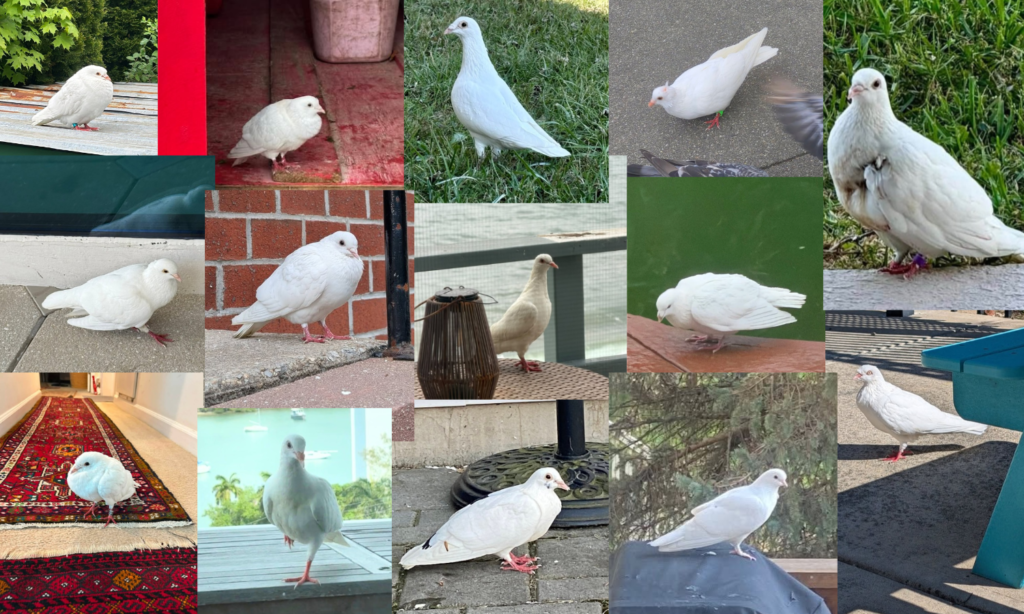
These are real pleas for help, not wedding photo opportunities. Palomacy shared this collection of white birds reported found after releases. It represents just a few of the “I found a white bird, what do I do?” messages the rescue received in less than a month. While none of the photographs shows graphic injuries (we spared you from those), Palomacy says these particular birds were generally starving, exhausted or had injuries hidden beneath their feathers. Image: Palomacy.
Birds marketed as “wedding doves” are often white domestic homing pigeons. Even trained birds can become exhausted, disoriented, injured or lost while attempting to return home. Domestic ringneck doves and other non-homing birds face particularly serious risks if released into unfamiliar surroundings, where they may lack the skills to find food or shelter and may be vulnerable to predators.
Not every released bird has the same outcome, and we won’t claim that every homing pigeon dies. The welfare concern is that even a professionally organised release exposes living animals to avoidable danger for the sake of a photograph or short ceremony moment.
What happens after the wedding photo? Real rescue stories
These aren’t hypothetical risks. Rescue organisations have documented white birds being stranded, exhausted and in need of care after ceremonial releases. Here are two real reports, with links to the original coverage and photographs.
Two rescue stories, with the birds’ own photographs
Palomacy Pigeon & Dove Adoptions has kindly given us permission to share photographs of real birds who survived being released. These aren’t stock images or illustrations: they show individuals whose lives were changed by rescue.
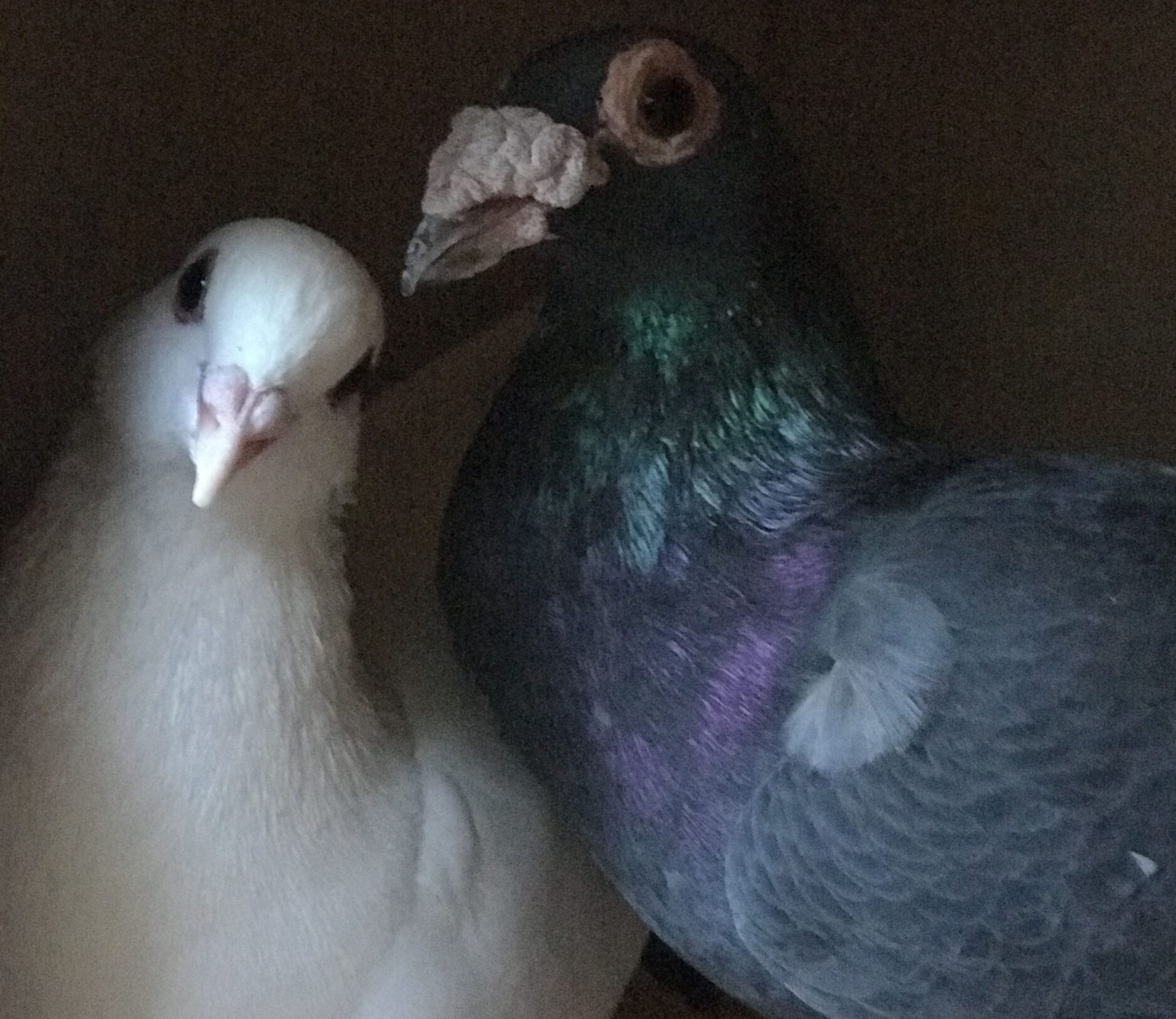
Photograph: Cynthia Bardouka-Large, via Palomacy. Reproduced with permission.
Pearl: a wedding release survivor who found love
In California, a young white King pigeon landed in a family’s garden with the bride and groom’s names written across her wings. She had been released at a wedding, with no ability to navigate home. The family named her Pearl, and with Palomacy’s help she found a safe home. She later bonded with another rescued pigeon, Rango. Read Pearl’s story at Palomacy
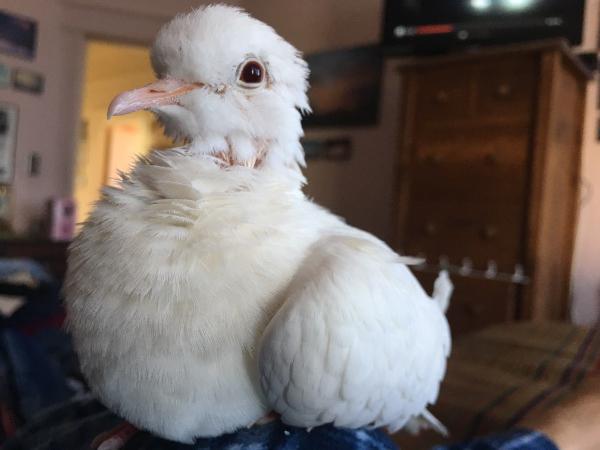
Photograph courtesy of Palomacy. Reproduced with permission.
Melvin: A released dove who needed saving
Melvin is a white ringneck dove who survived a release and needed care afterwards. Unlike trained homing pigeons, ringneck doves don’t have the homing ability needed to return to a loft. His photograph shows what a surviving bird can look like after the ceremony is over. Read Melvin’s rescue information
Recent UK Reports:
A white wedding bird was found in a canal (21 August 2026 – Milton Keynes)
A member of the public rescued a white bird from the water. Milton Keynes Swan Rescue arranged for her to be collected and transferred to Luton Wildlife Rescue for specialist care. Wildlife rehabilitator Nickie Pearson later said the bird had been dehydrated and starving but was recovering and would remain in safe care. See genuine rescue photographs and follow up. (Original reporting and photographs: Milton Keynes Citizen, 26 August 2026. Photographs remain with the publisher and rights holders.)
A rescuer warns about birds who never find their way back (November 2026 · Rescue experience)
Helen Motteram, co-founder of Russell’s Rescue, has described helping white and fancy pigeons that could not safely find their way home after release events.
The story reinforces an important distinction: a ceremonial bird may be domesticated, even when a release is described as setting a bird ‘free’. Read the rescue testimony. (Animal News Agency, November 2026.)
About the photographs: The Palomacy images above are genuine rescue photographs reproduced with permission and credited to their creators. Photographs from the two UK news reports remain with their publishers, so we’ve linked to those original reports rather than reproduce their images.
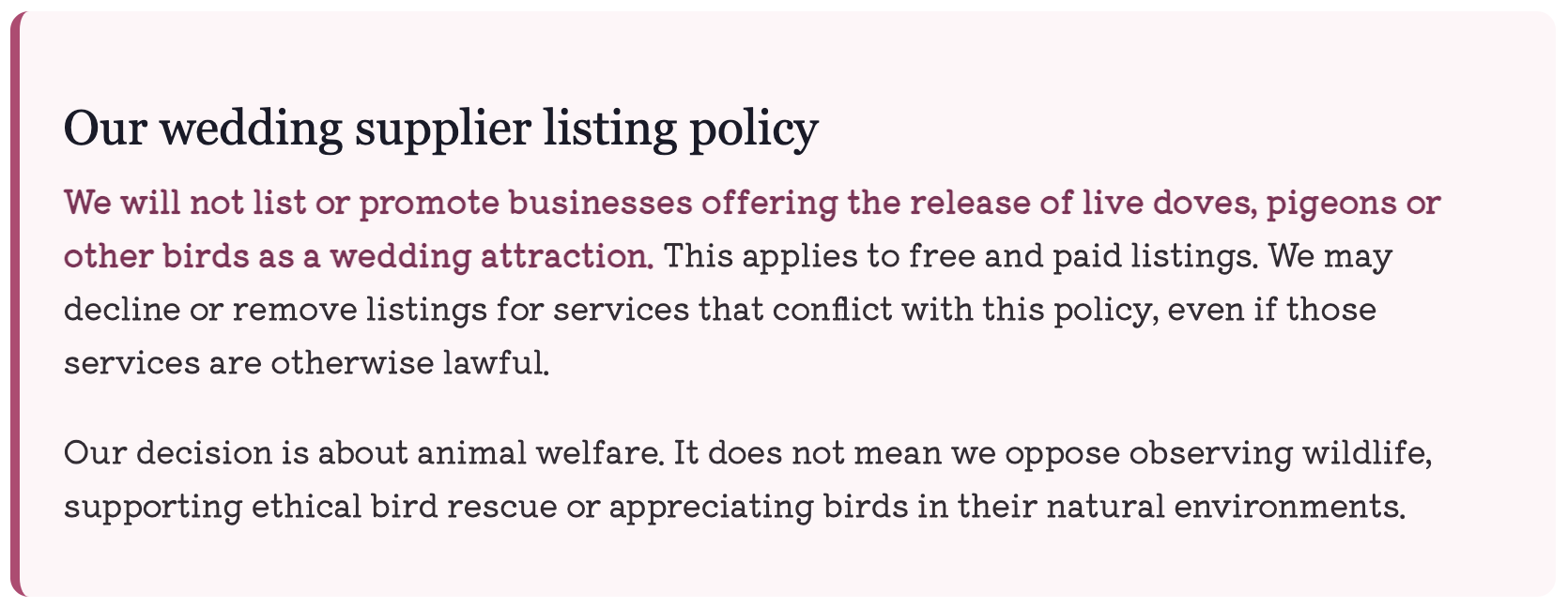
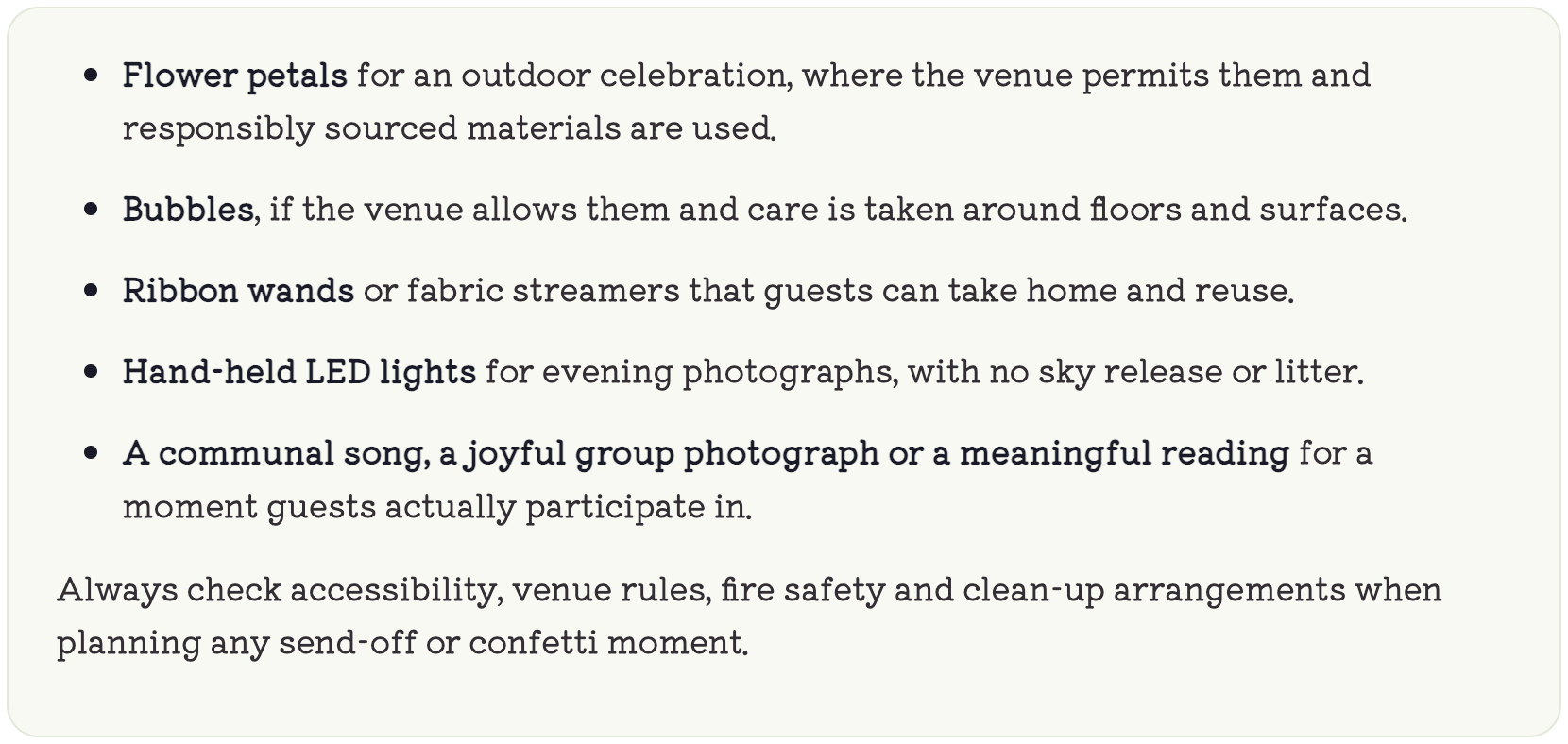
Beautiful alternatives that don’t put animals at risk:
What we’d like couples and suppliers to do:
If a venue offers live bird releases, ask them to remove that option from their wedding packages. If a supplier markets them, consider choosing a different celebration service. If someone you know is thinking about one, share reliable welfare information kindly, without shaming them for not previously knowing the risks.
We want First Day of Forever to make wedding planning more creative, personal and compassionate. Beautiful weddings should leave good memories, not stranded animals.
Please visit the original statement on First Day of Forever to find links to share this article on social media and by email, and to find further reading and resources. And if you are planning a wedding in the UK, consider using this compassionate and useful wedding website to plan your special day!
More reading:
Dove Releases: A Plea to Cemeteries and Funeral Directors
Help Spread the Word: “Dove Releases” Kill
The Truth About “Dove Releases”
Guest Post: Victory for “Dove Release” Birds
