July 5, 2026
by Cynthia Bardouka-Large
Comments Off on The Rescue of Hydrox and Rainbow Bob

The Rescue of Hydrox and Rainbow Bob

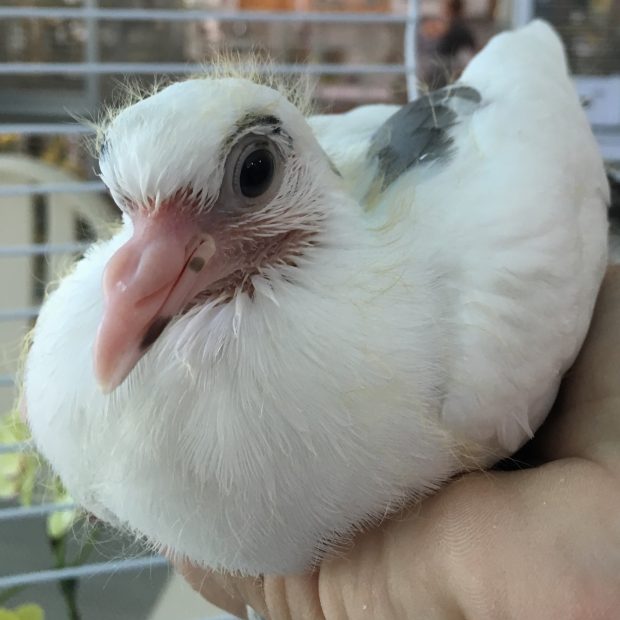
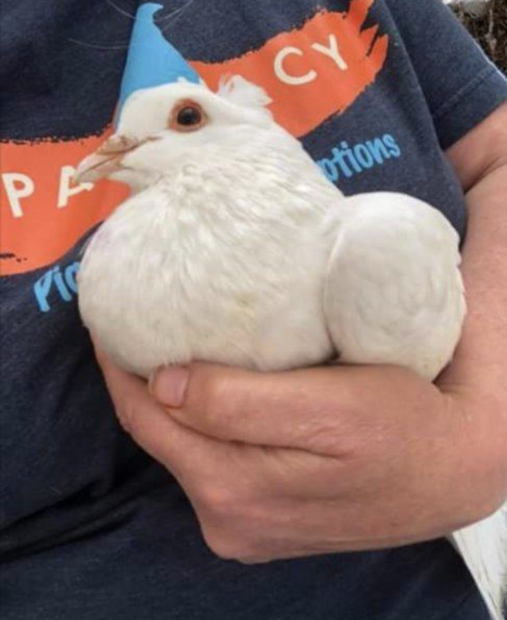
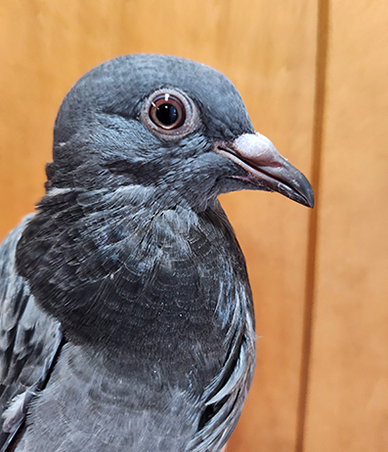
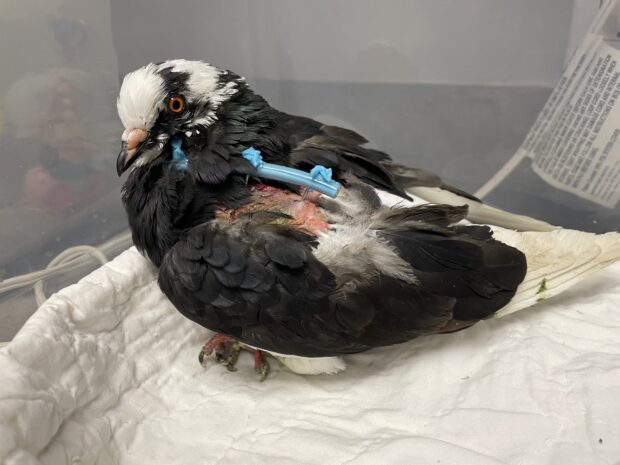
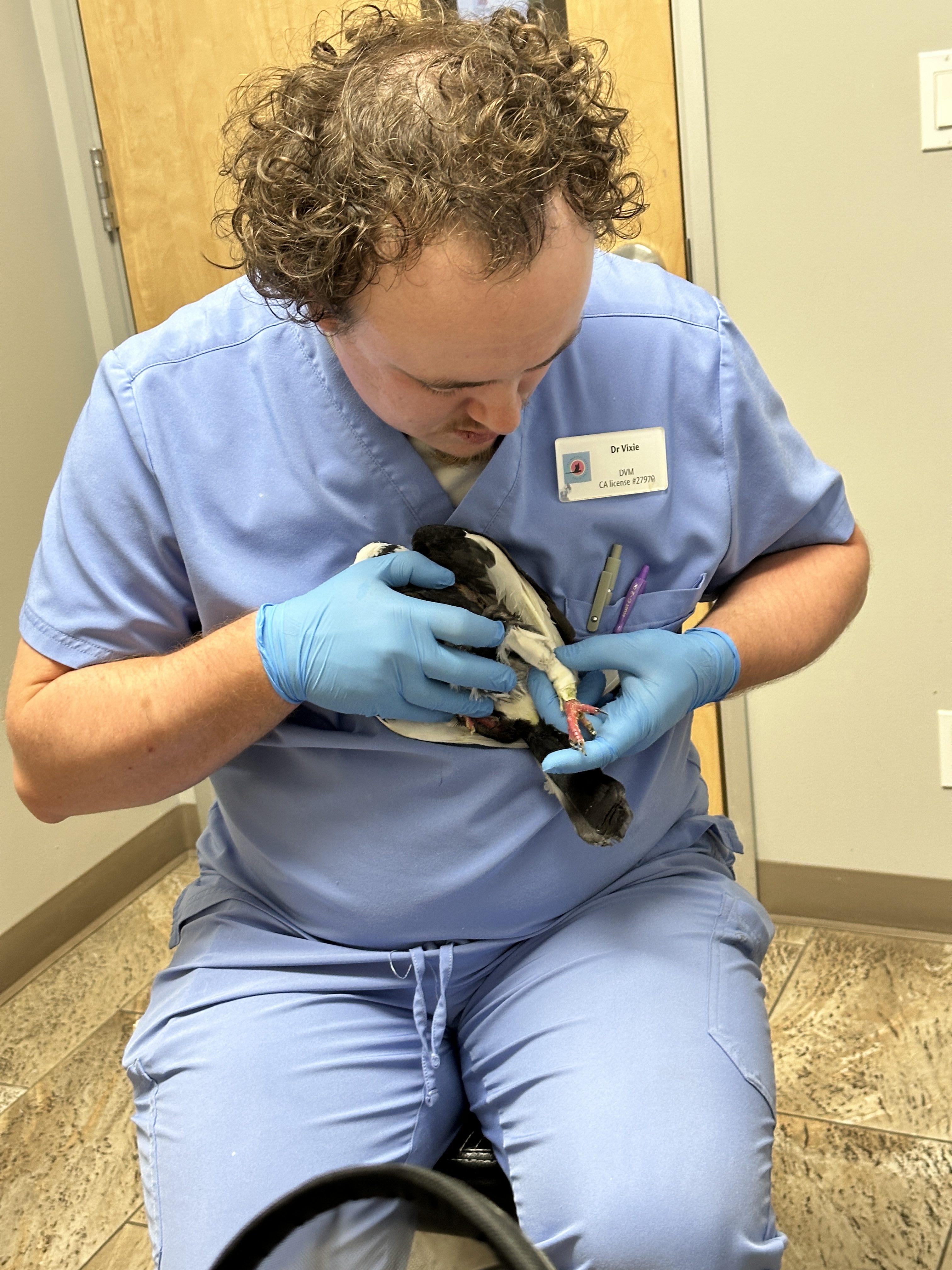
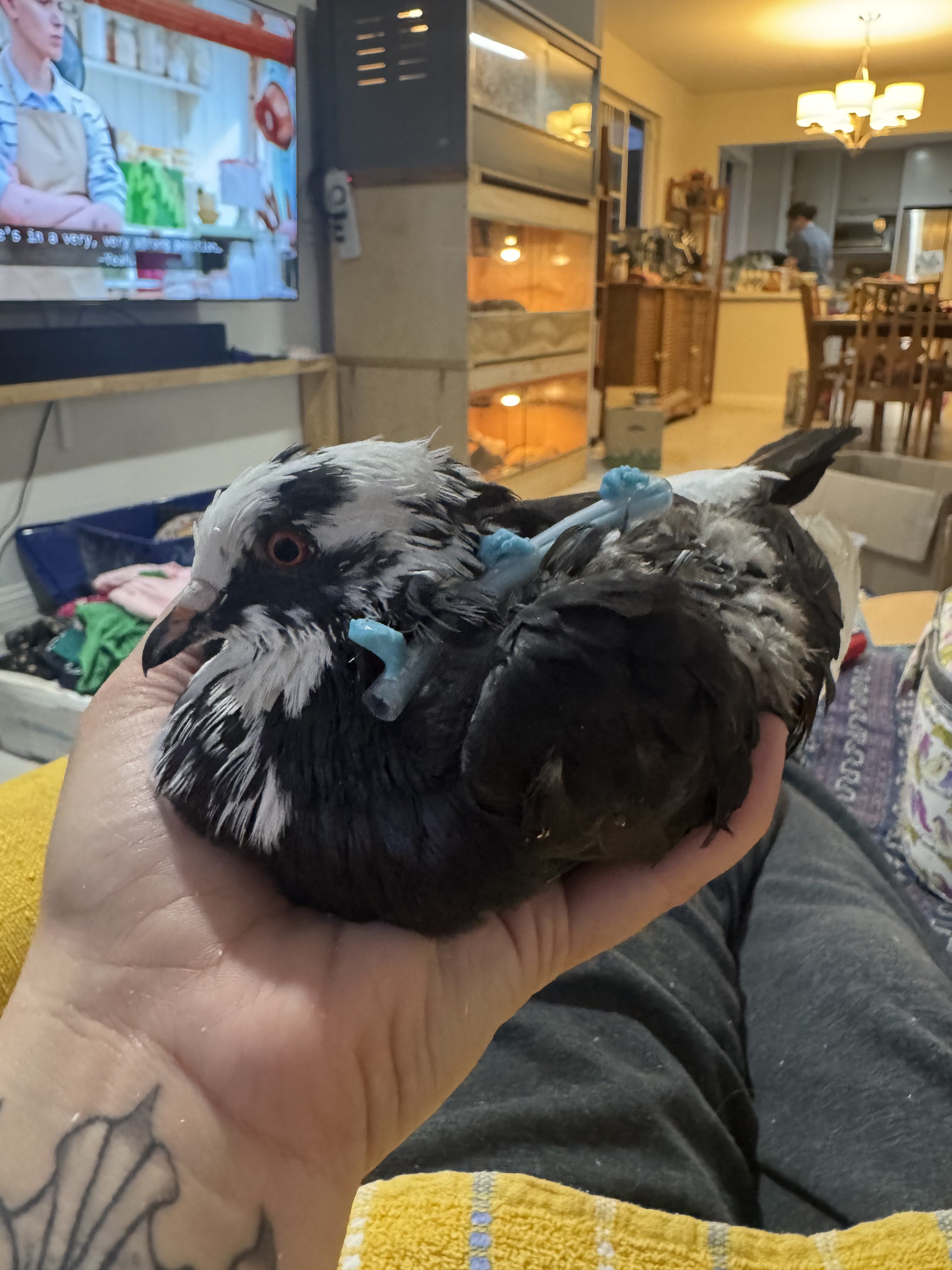
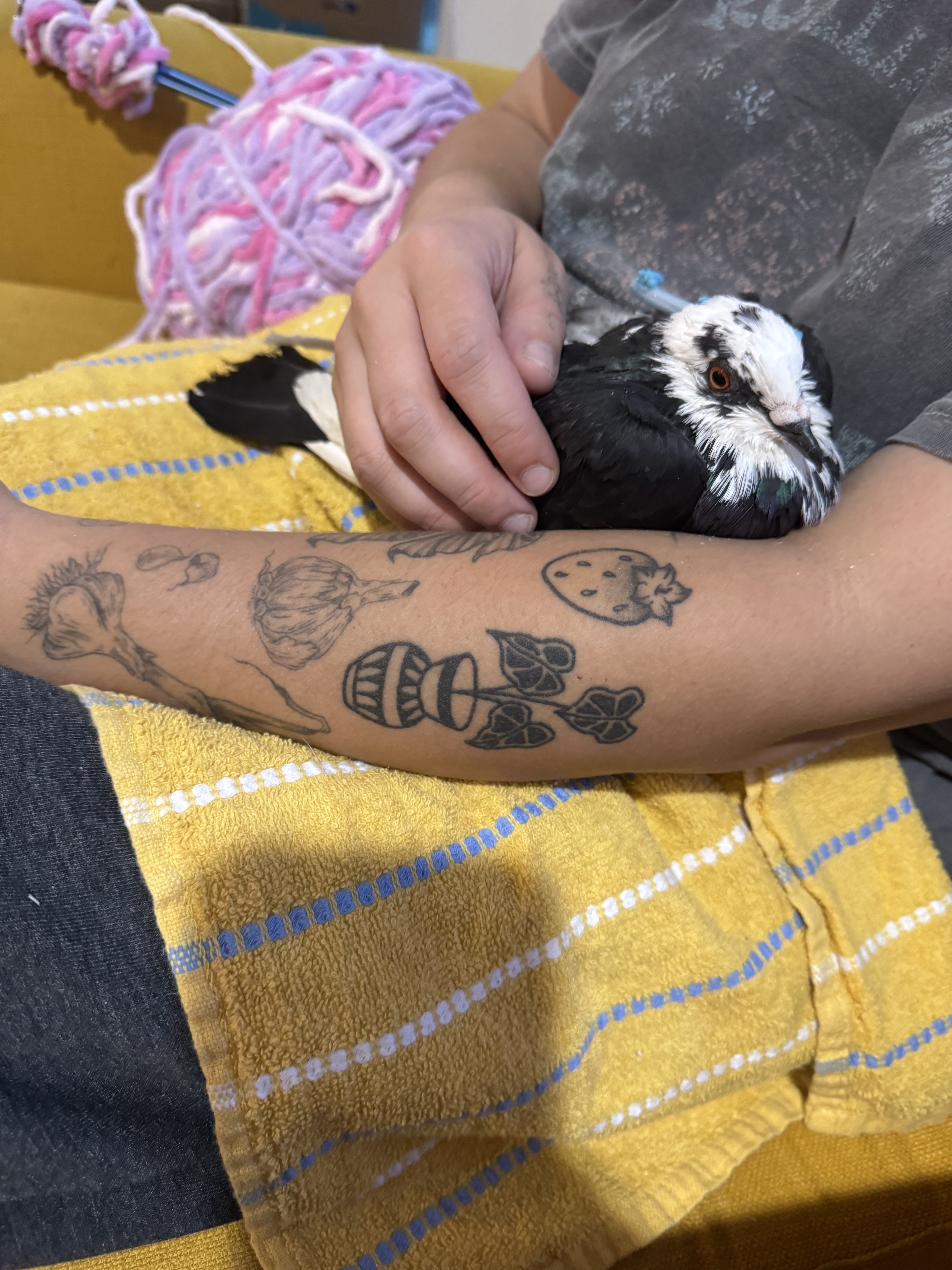
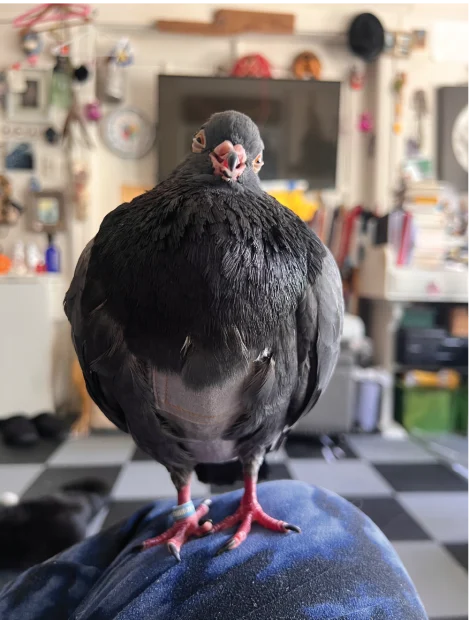
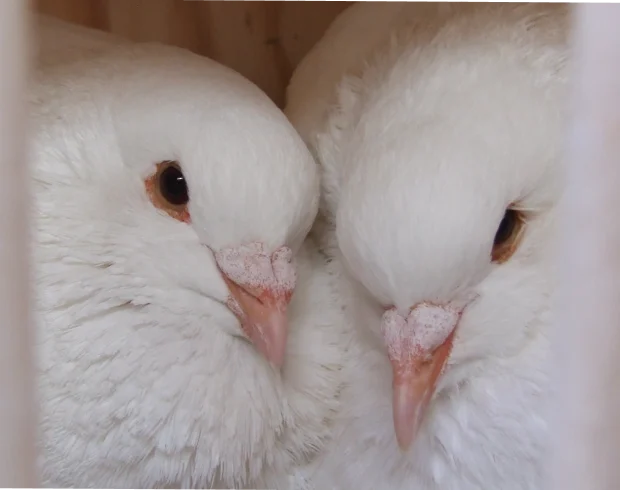
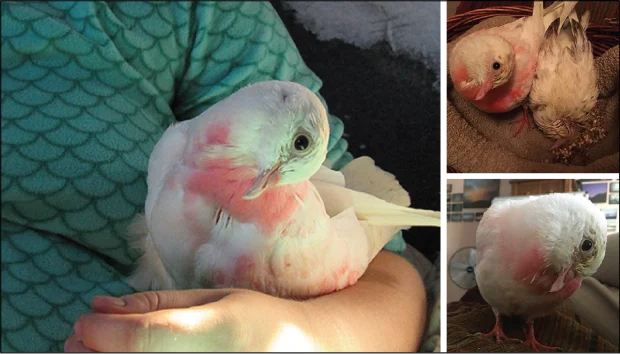
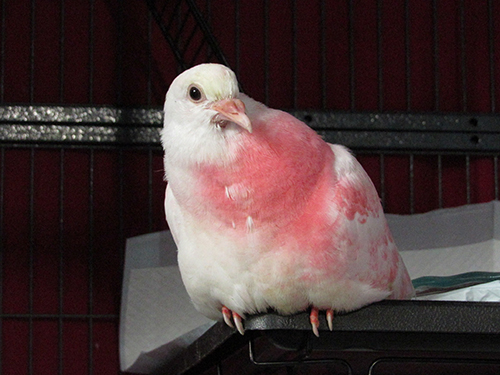
Hydrox, surrounded by helping hands! Photo by Jill Shepard

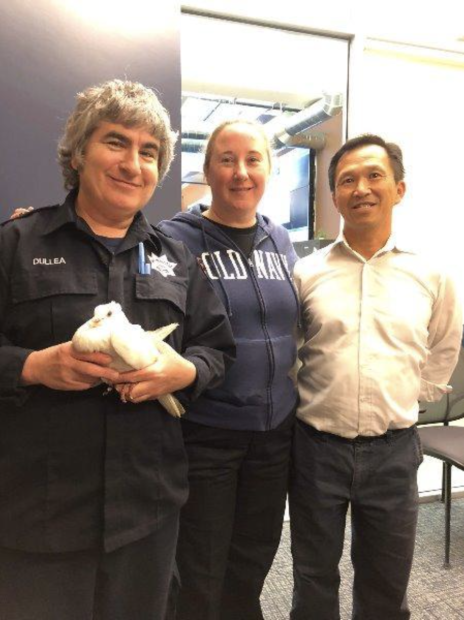
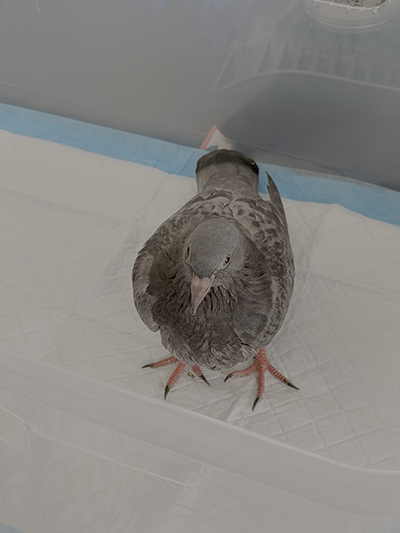
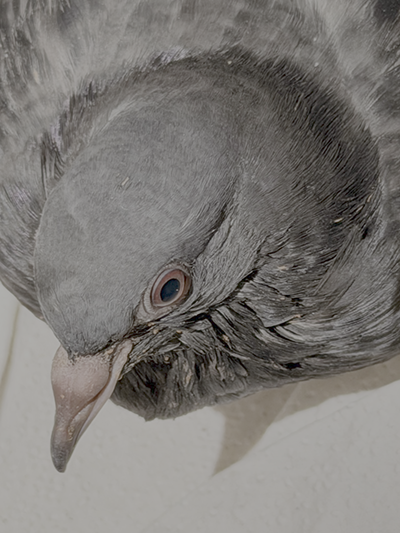
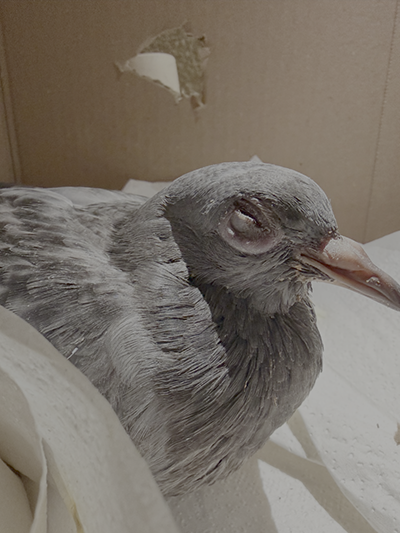
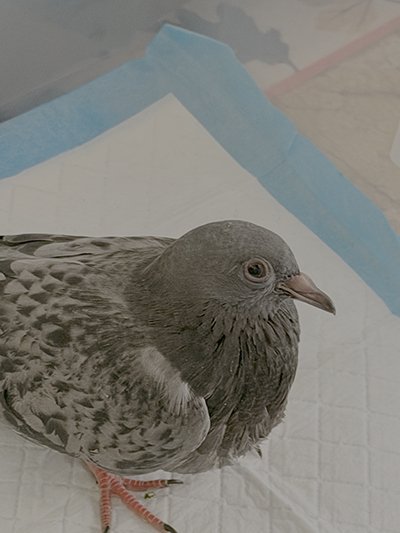
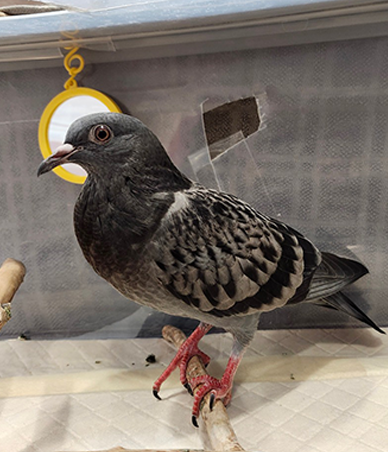
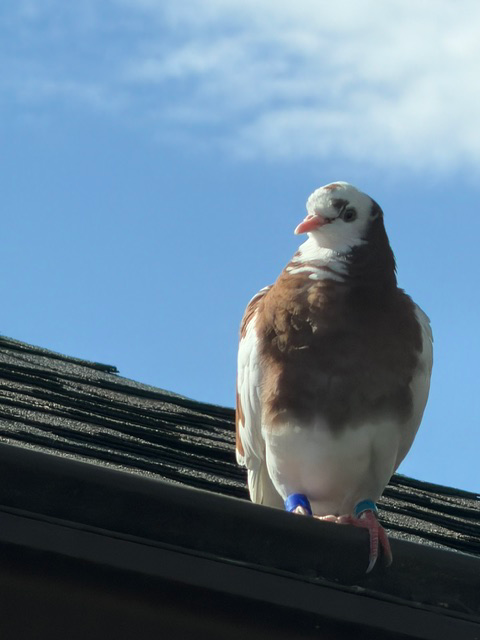
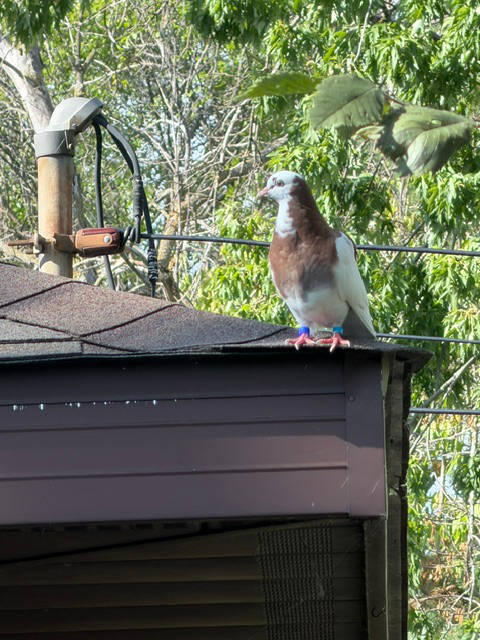
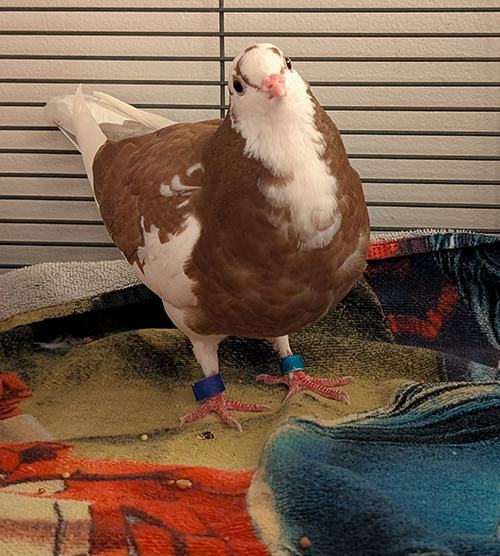
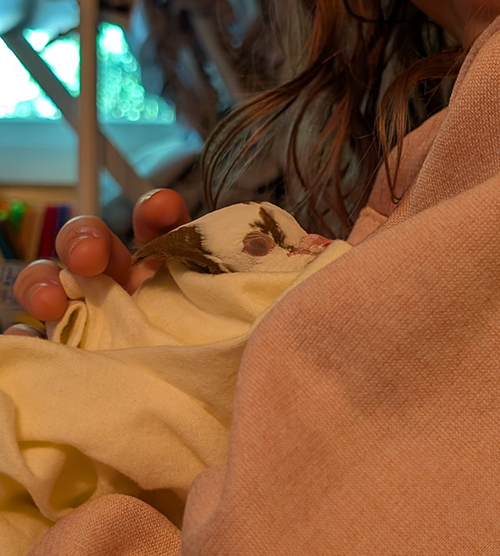
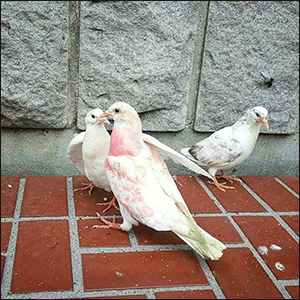
In early June, a call came in from an elementary school principal in Richmond. Two pigeons were hanging around the school yard. The children, ages 4 to 12, were picking up the birds and carrying them around, and the principal was concerned that this might not be good for the birds or for the kids. Care Director Jill looked at the photos sent over and realized immediately that these were domestic pigeons. She drove to the school and discovered two baby fantails who had been dumped by their breeder, probably for failing to meet some arbitrary breed standard. With a great deal of enthusiastic and noisy help from the children, Jill collected the two young birds. She also told the children about our rescue work and thanked them for their part in saving the feathered schoolyard visitors.

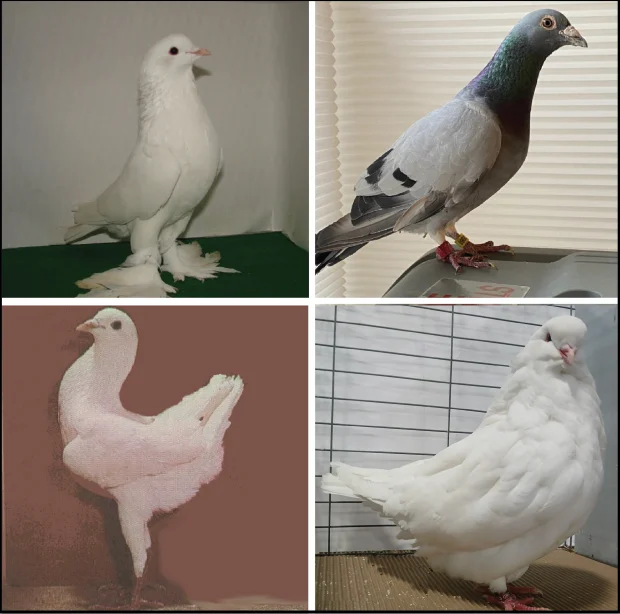
The babies, now named Hydrox and Rainbow Bob, were thin but not in bad shape otherwise. They would not have survived long out in the world, though — domestic birds have no survival skills and fancy breeds like fantails are inbred in ways that affects their ability to fly. These birds need safe homes, either in a house with a human family, or in a safe, predator-proof aviary.

Rainbow Bob had to be separated from Hydrox for the car ride! Photo by Jill Shepard

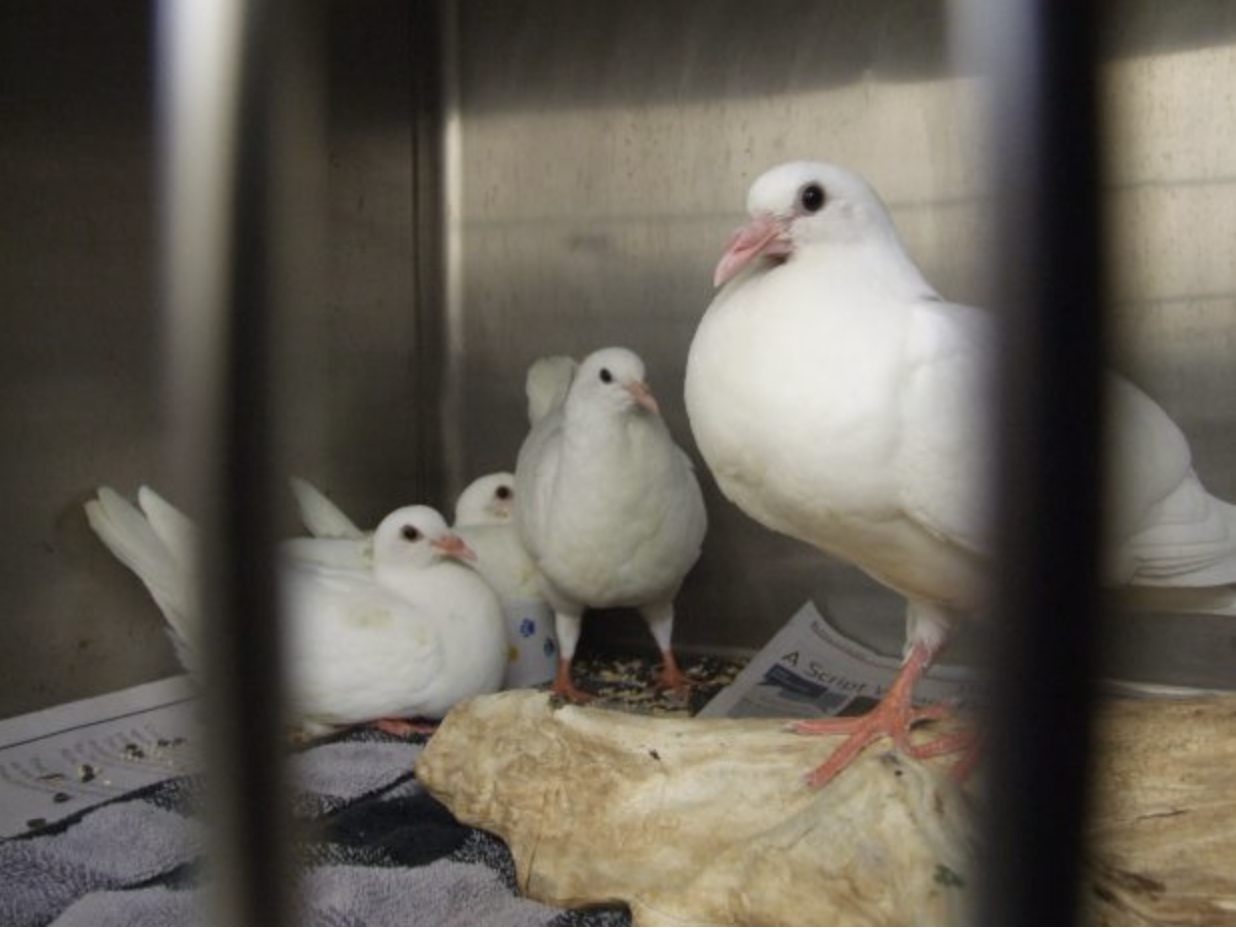
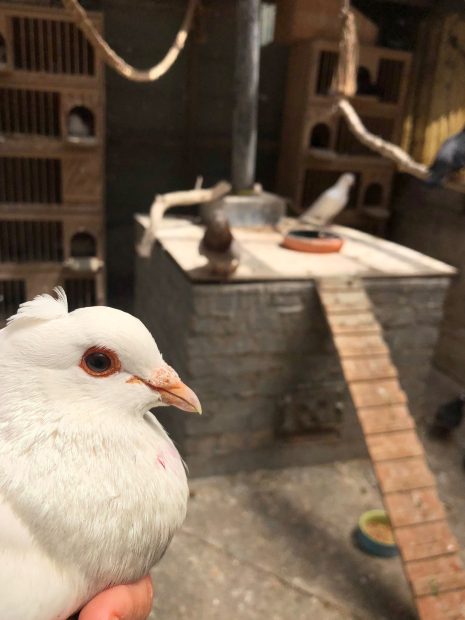
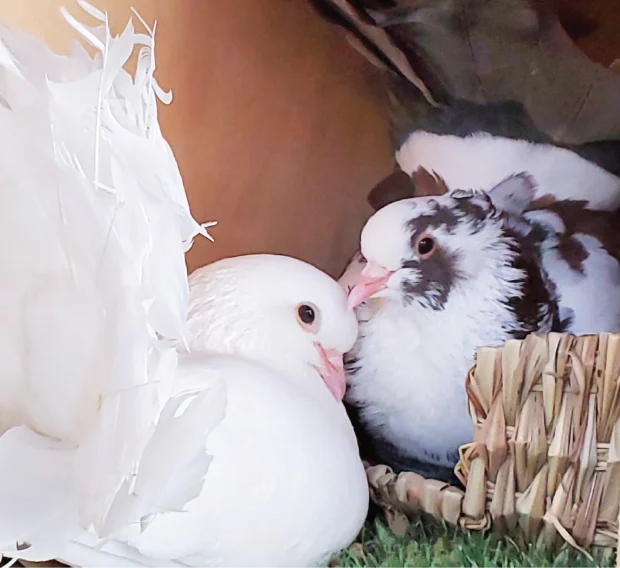
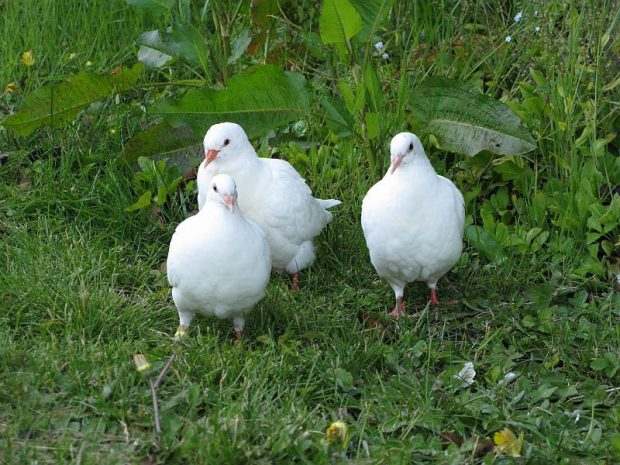
Hydrox and Rainbow Bob act just like human siblings — they squabbled so much in the car on the way home that Jill had to pull over and separate them. In the aviary, they insist on being right next to each other…all the better to endlessly bicker!

Hydrox and Rainbow Bob are inseparable…and always quarreling!

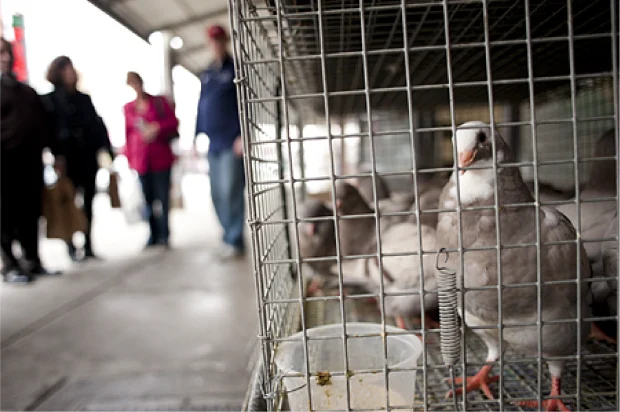
Breeders and fanciers treat pigeons as disposable, discarding them without a second thought. You can read more about these practices here. We believe they are precious and deserving of care, so these adorable, funny little birds join the nearly 300 in Palomacy’s foster network. They need a home! Could you be their foster or forever person? Apply to foster or adopt today! 

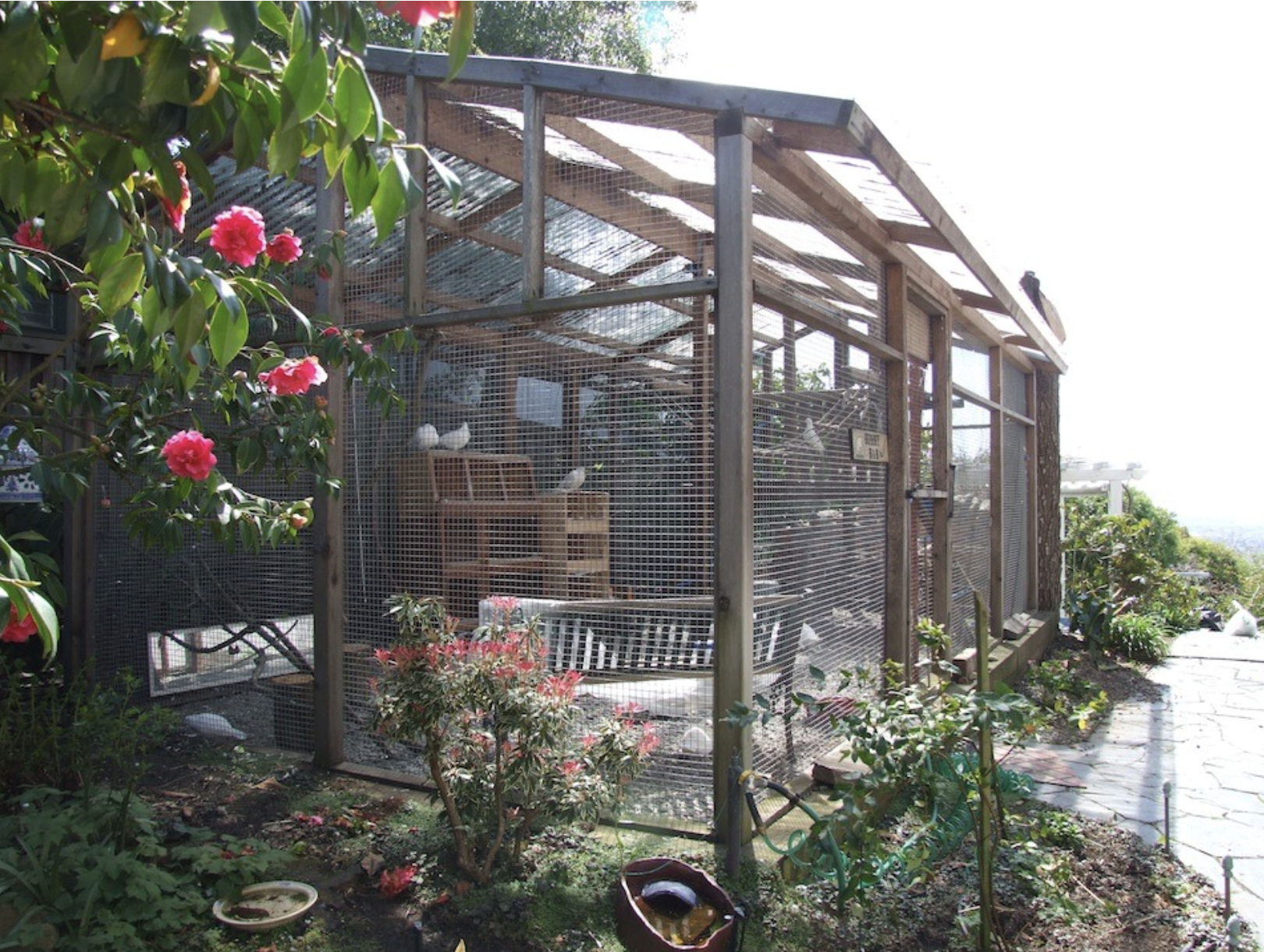
Do you have space for an aviary, to give a home to a small flock of rescued pigeons? Here’s how to build one! Email cynthia@pigeonrescue.org and let’s talk about how we can work together!


Share

July 1, 2026
by Cynthia Bardouka-Large
Comments Off on Pigeon Ambition: To Love and Be Loved

Pigeon Ambition: To Love and Be Loved

Christiana Reed making magic happen! Photo by Dion Campbell

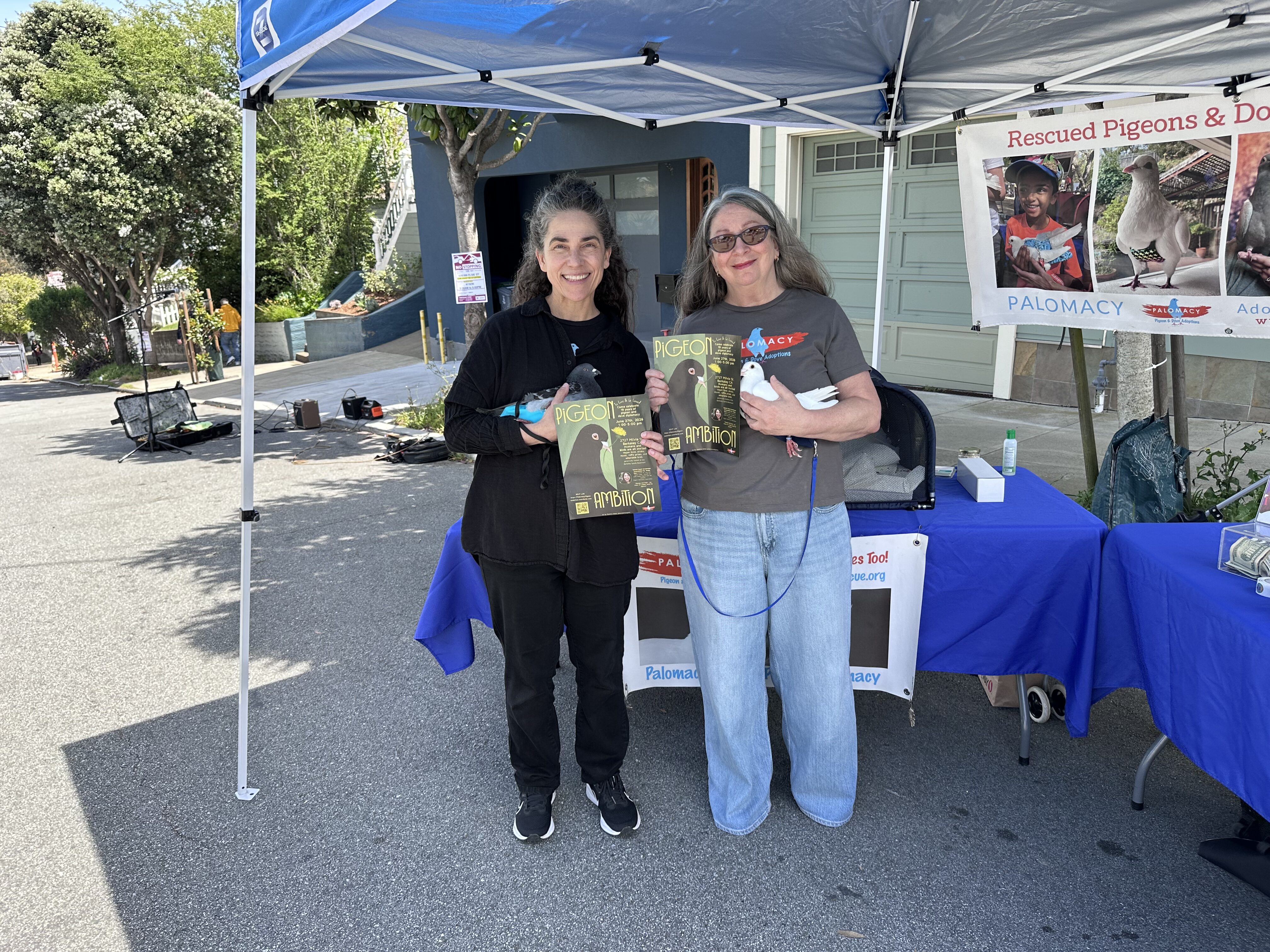
Palomacy’s founder and retired Director, Elizabeth Young, pulled out all the stops and brought so many people together for a celebration of 19 years of pigeon diplomacy! Old friends, new friends, art, music, birds, and love filled the room as we honored and celebrated pigeons and doves and those who care for them. And between the party and online auction and a $4k match pledge from a super-donor, we raised $12,224 to help the birds!

photo by Dina Kharagg

A pigeon’s ambition is…to love and be loved. At the end of the day, isn’t that the heart of it?

LOTS of beautiful pictures when you scroll down but first some THANK YOUs!

Everything that went into Pigeon Ambition was donated or created by willing, talented hands. All of it! The visionary Christiana Reed transformed the community room at the Sports Basement in Berkeley, Susan Joyce (founder of Little Green Pigeon and the National Pigeon Advocacy Association live streamed her presentation: “Change and Hope — My Vision of a Better World for Pigeons”.

More of the wonderful people who offered their time, creativity, and lots of goodies: Madalina Kelner designed the iconic party graphics, Jazelle Lieske created gorgeous hand-made signs to guide partygoers, Dion Campbell and Dina Kharag  and Ash Z took beautiful photos. Aileen Patterson organized a delicious vegan buffet and worked the bar, Elizabeth supplemented that with emergency vegan pizza when the turnout surpassed our highest hopes, Legacy Cellar donated a fine assortment of wine, Oakland United Beerworks donated their best brews, Josette and Luis Maury took care of the non-alcoholic beverages, Heather Hohlowski made sure that people far and wide knew about the party (and brought amazing vegan desserts!), Sarah Lemarie of Mickaboo Companion Bird Rescue ran the livestream and overcame so many tech challenges for us, Neetra Chakraborty hosted the Facebook Live, Larrie Noble Sr  bought the magic that only live music can. Our raffle and fundraising auction were full of handcrafted beautiful items, original works of art, books, and unique experiences, and the auction was entirely organized by Heather Hamilton — all from Morocco! With a new baby!!! (Scroll to the bottom for the complete list of these heroes.) Many others worked behind the scenes and on the day, setting up, acting as docents with our adoptable birds, contributing joy and positivity and financial support, and finally helping to wind down and clean up the space. Our parties are DIY fun events, and we treasure this time together as a community.

Check out the photo slide show, with pictures from Dion Campbell, Dina Kharag, Ash Z, Jenna Close, Cynthia Bardouka-Large, and Elizabeth Young

Previous Image
Next Image

info heading

info content


Our Talented and Heroic Auction and Raffle Donors! Auction wrangled by Heather Hamilton all the way from Morocco! 


Heather Hamilton with helper Amira

Treasures were donated by Be Nice To Pigeons, Flea Circus Designs, BeanMilk, Bev’s Bird Boutique, Blair Cacoyannis (reiki healer), Rosemary Mosco (author), the Oakland Ballers, the Oakland Zoo, Goatlandia, Velvet & Sweet Pea’s Purrfumery, Rose Lalla Jensen, Aileen Patterson, Shae Irving (artist), Christiana Reed, Courtney Miller, Anna Czulewicz, Dirty City Pigeon (artist), Friendens Pets, Flor Blum, Jaclyn Alderete (artist), Janice Lipsky (author), J Lin, Lauren C Johnson (author), Marie Cimaglia, Melne Murphy, Penny Noel, Pet Food Express, Realm Home, Sandra Nickel (author), Slevit Studios (artist), Kaur Fine Art Portraits. We are deeply grateful to you for helping us raise money for the vulnerable, sweet, sassy birds that we all love.

And check out the slideshow that ran during the party!


Share

June 30, 2026
by Heather Hohlowski
Comments Off on GlobalGiving’s July Bonus Day Is July 15, 2026

GlobalGiving’s July Bonus Day Is July 15, 2026

Mark your calendar! GlobalGiving’s 2026 July 15 Bonus Day is just around the corner.

July Bonus Day is a 24-hour crowdfunding campaign designed to celebrate high-dollar donors ($100 or more). Eligible donations between $100 and $1,500 will receive a portion of GlobalGiving’s $150,000 bonus pool (up to $2,000). The more we raise, the more matching funds we will receive. Additionally, $9,000 in bonus prizes available for top-performing projects!

Details to follow as GlobalGiving makes them available.

Share

June 30, 2026
by Heather Hohlowski
Comments Off on 2027 Calendar Contest Starts 7/1/26

2027 Calendar Contest Starts 7/1/26

Get ready to submit lots of pictures! Palomacy’s 2027 Calendar Photo & Art Fundraiser runs July 1st through the 31st.

Your photo entries and votes support Palomacy and our culture-changing work. We appreciate your help celebrating these incredible, under-appreciated birds every day of the year! We know how special pigeons and doves are and we are showing the world!

Starting Wednesday, July 1, submit your best photos (free to enter!) and share with family and friends and ask them to vote! ($1/vote). All proceeds will help Palomacy to help more birds. You are literally shaping Palomacy’s future with your support.

Wall Calendar

Thirteen carefully selected winning photos will be immortalized in the 2027 Palomacy Wall Calendar. Your bird’s photo will be representing for rescued pigeons and doves in homes and busineses all over the world! Winners will also receive two full-color 2027 calendars and everyone can order them while supplies last.

Pre-Order Your Wall Calendar Here!

Virtual Calendar

Our 365 Bird-A-Day calendar will be virtual again this year. Subscriptions are free — subscribe here. The top 190 vote-getting entries will be featured in the virtual calendar, and the top 10 vote getters will be allowed to select the date they’d like their photo to appear and will receive a free wall calendar.

Share

June 30, 2026
by Cynthia Bardouka-Large
Comments Off on Pigeon Story Time at the Berkeley Public Library with Pickles, Peck, and Mardi Gras!

Pigeon Story Time at the Berkeley Public Library with Pickles, Peck, and Mardi Gras!


Pickles the pigeon, and all his new friends. Photo by Dion Campbell

We sat in the front of the room with Emma Coleman, the marvelously talented librarian at Berkeley’s central location. On our knees sat three pigeons: Peck, Pickles, and Mardi Gras. One small, one medium, one party-sized! We looked out into a sea of 134 eager and curious faces, all there to hear pigeon stories in the company of real pigeons!

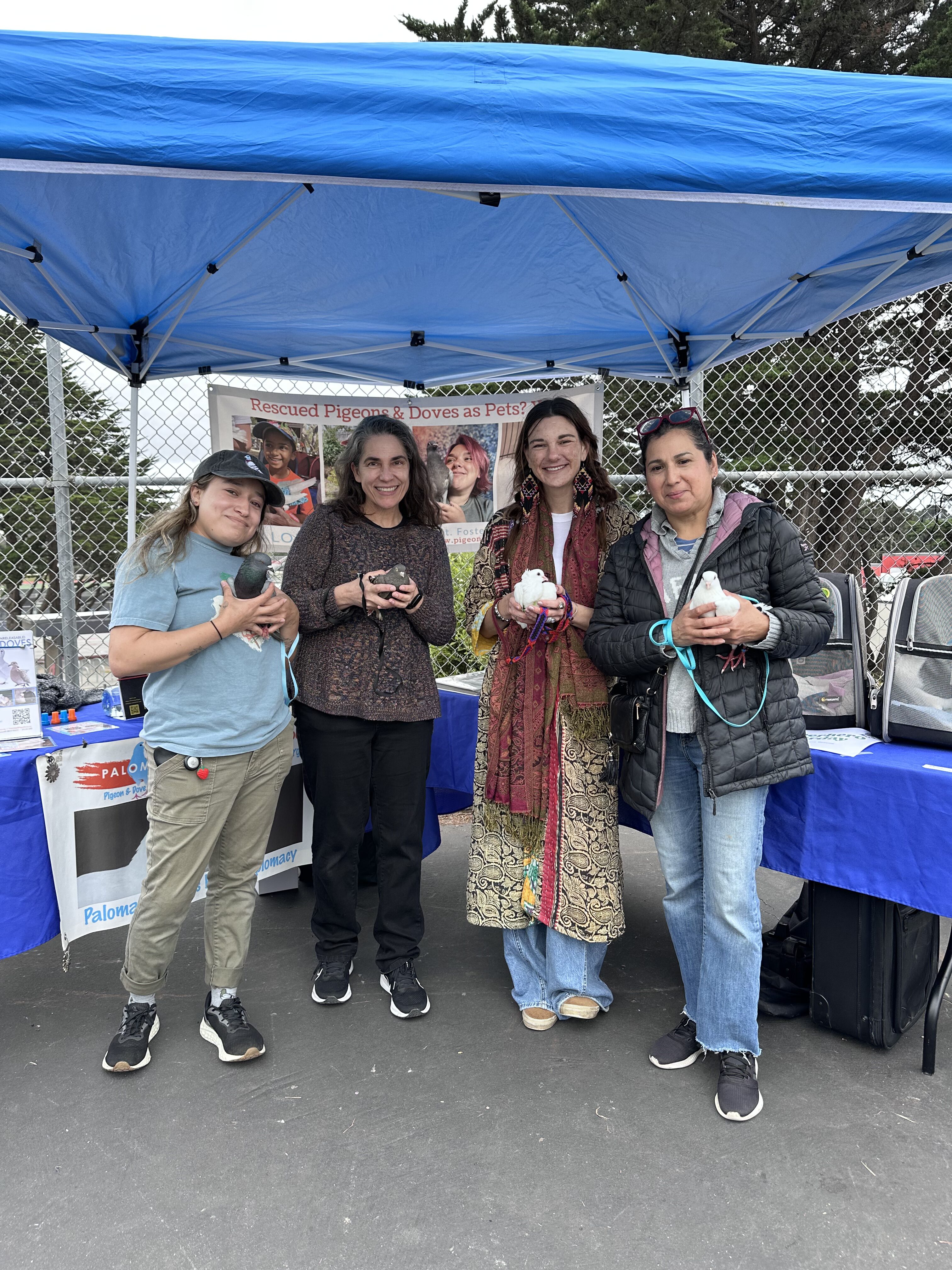
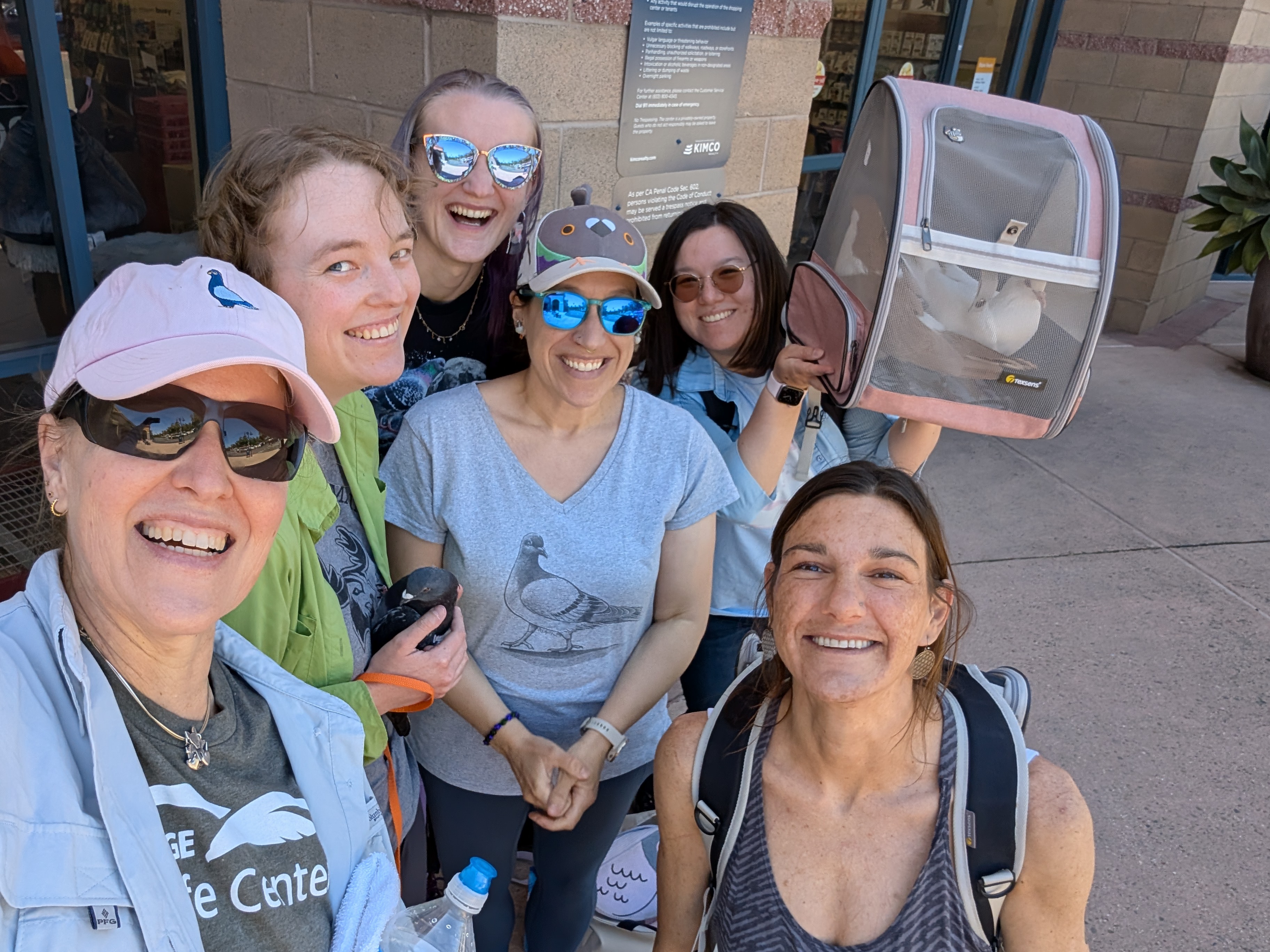
Palomacy Pigeon and Dove Adoptions finds forever homes for rescued domestic pigeons and doves in the Bay Area. Along the way, we spend as much time as possible sharing these amazing birds with people who want to learn more. We had been waiting for this day for weeks! 

Emma led the group in a sing along, and read some pigeon-themed stories. Our favorite was one that is dear to our hearts as rescuers: “How to Heal a Broken Wing” by Bob Graham. It shares the lesson that you shouldn’t just walk by if you see a bird in need of help! 

After the stories there were pigeon crafts, designed by the – again, brilliant – Emma, while we mingled.

Coloring book pages by super-librarian Emma Coleman. Photo by Dion Campbell

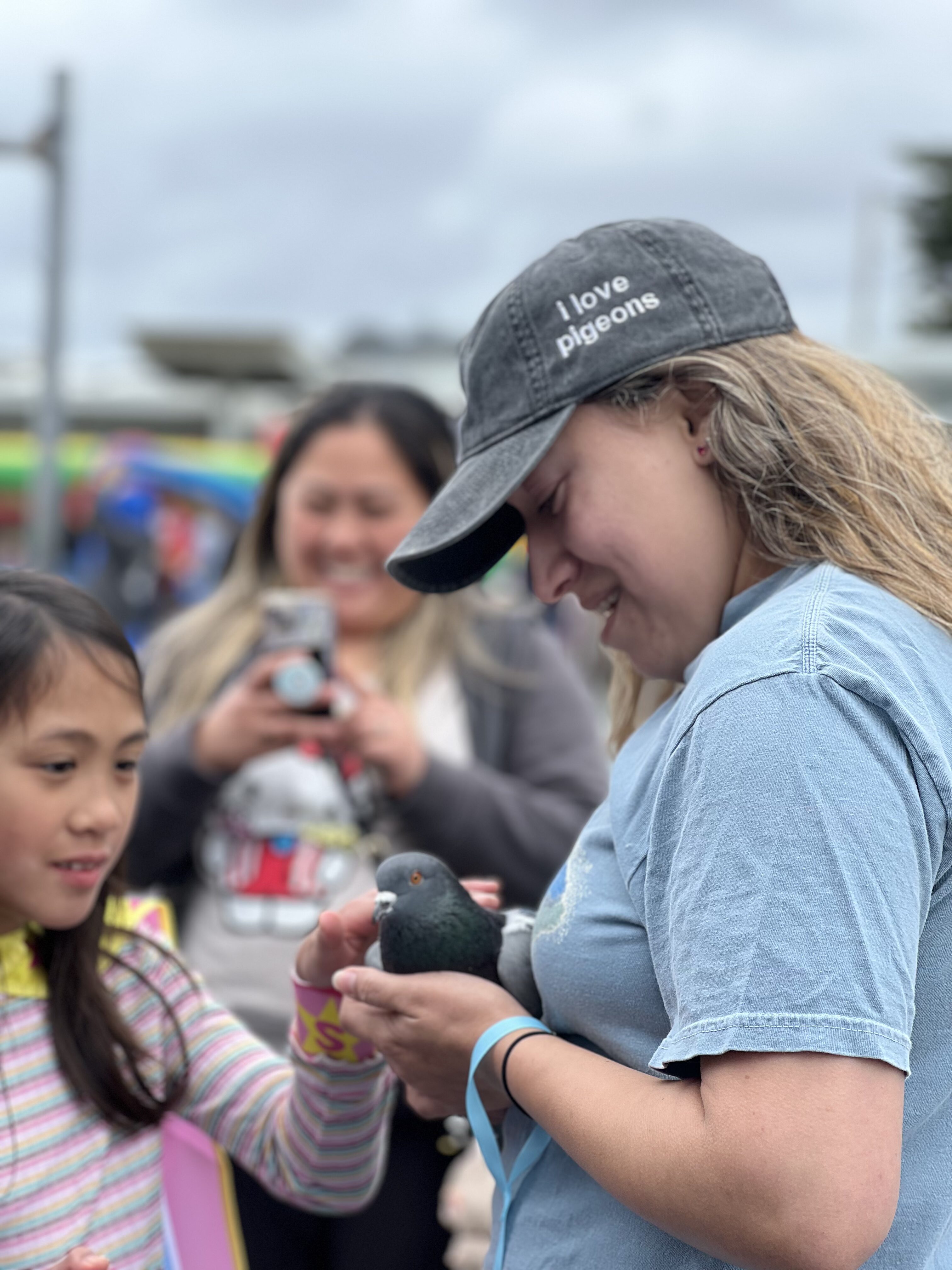
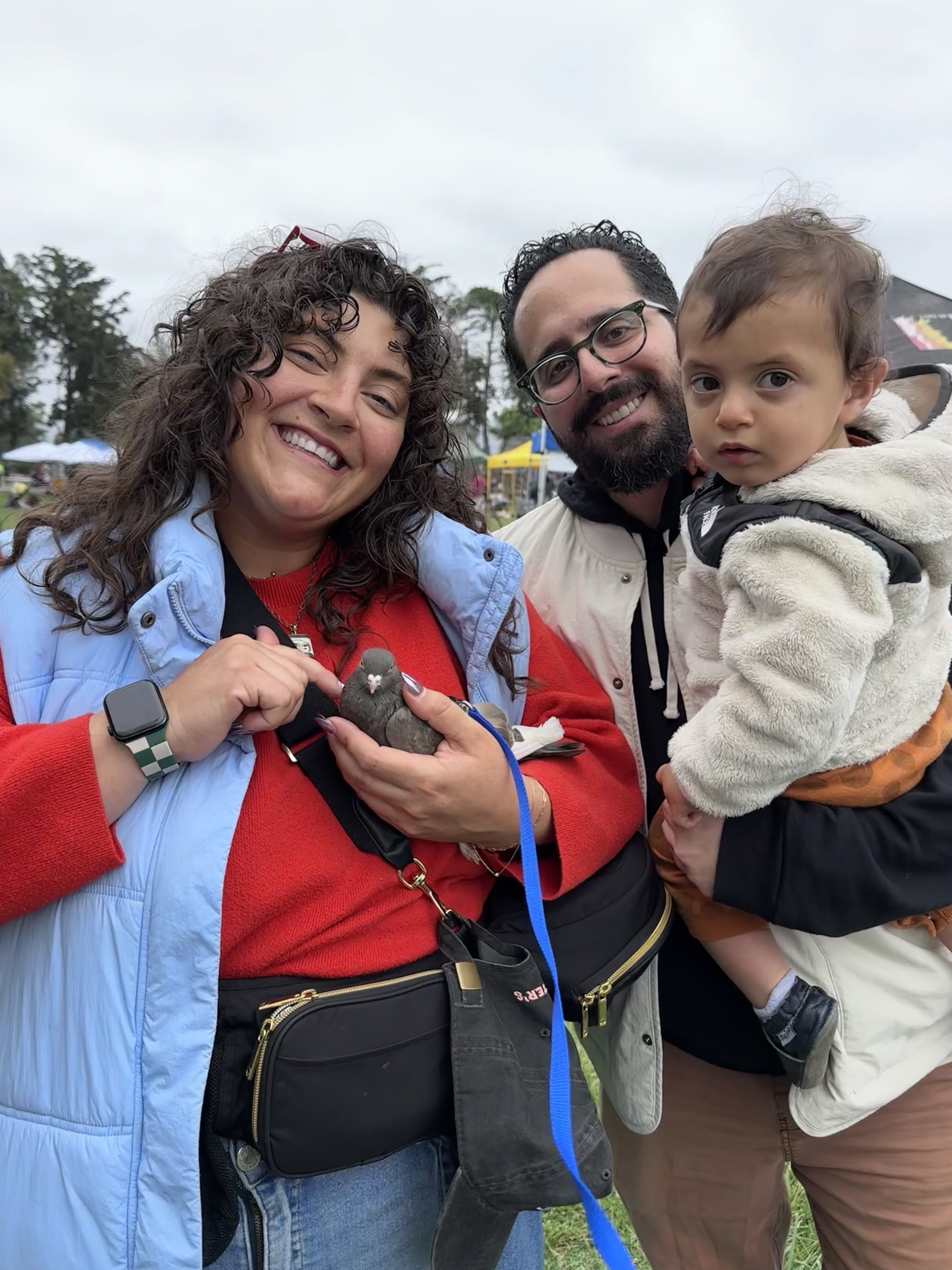
We got to meet the children and their grown-ups, and they got to meet the pigeons. Big Mardi Gras met a family from New Orleans, gentle little Peck was a more approachable bird for some of our new friends who were feeling shy, and Pickles, of course, owned the room! 

Peck is a sweet, approachable bird. Photo by Cynthia Bardouka-Large

Cal, one of our new young friends, went home and spent the day drawing pigeons to illustrate all the things he had learned. His grown-ups helped with the written part and gave us permission to share his delightful pictures.

Cal and Pickles were friends right away! Photo by Dion Campbell

Are you a  librarian in the Bay Area? Would you like to have pigeons help with story time? They like to help! Reach out to cynthia@pigeonrescue.org

Cal’s grownups helped with the writing: “Pigeons will come to you if you sit still and quiet.” Photo by Cal and family

Learn more about who Palomacy is and what we do here:

What is Palomacy? It’s Pigeon Diplomacy.

Share

June 24, 2026
by Cynthia Bardouka-Large
Comments Off on Backpack Pub Crawling with Francis and Beacon

Backpack Pub Crawling with Francis and Beacon

Guest Post By Bryan Lester

“I think someone has a chicken in here! What kind of bird is that?!”

Beacon enjoys Happy Hour at Molotov’s

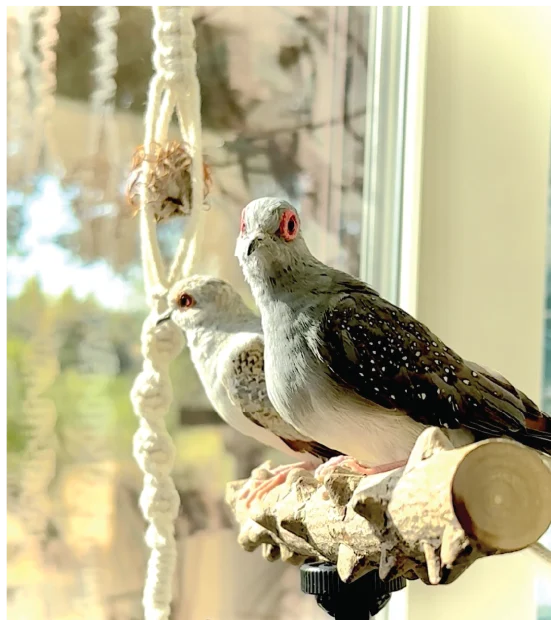
My Palomacy-adopted fantail pigeons, Francis and Beacon, love a good outing in their backpack, especially when they can get a little time to relax and take in the surroundings. As both a bar-industry worker and patron, I love taking my birds on short (1-2 hour) trips to local watering holes. They seem to love the sights, sounds, and attention: pigeons are, after all, flock creatures! It didn’t take much to get Francis and Beacon to understand the benefits of regular backpack adventures, and now they can hardly wait until it’s unzipped to try and climb in.
Here are my suggestions on taking your feathered friends to your local pub!

Have a Comfy Backpack Setup

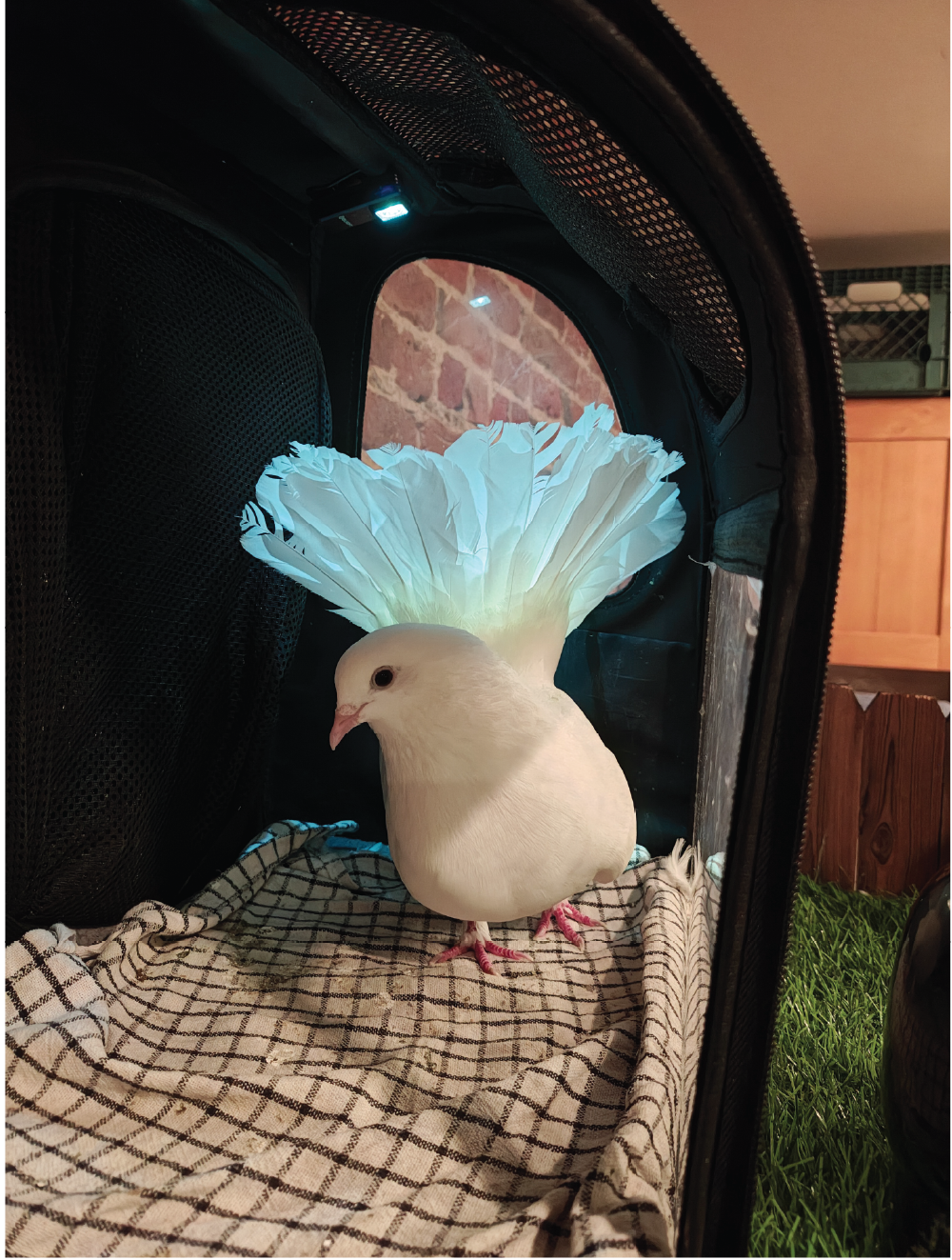
When taking my birds out, I ALWAYS keep them in the backpack — my birds don’t love hands constraining them, and I feel safer knowing they’re enclosed when in more chaotic environments. I use a reasonably priced cat backpack made from PetCute.

PetCute Backpack, purchase here

This backpack is available directly from the PetCute website or through retailers like Amazon, Walmart, etc, in a couple of colors/sizes. The reason I chose this backpack is that it has a washable flat bottom (pigeons don’t love being on a perch all day), has a nice plexiglass window the birds can see out of, and has an expandable back area if the birds need to stretch out or step out of the limelight for a while. It’s nice to know that all the zippers lock and won’t accidentally open.

On the bottom of the backpack I have a towel laid down for easy cleanup, and a small bowl for some treats (unsalted sunflower seeds). On longer trips I sometimes bring a small water dish, and introduce it from the top flap once they’re off my back and on more stable ground.

Beacon trying to get the seed-tender’s attention for another round at Finnegans Wake

Finally, I found an excellent clip-on, USB rechargeable light made by “Olight” that has adjustable brightness. The lowest moonlight setting is just right. I’ve found my pigeons have poor low-light vision and this helps them see, feel safe, and be seen! The light clips perfectly onto a seam on the inside ceiling of the backpack.

The Olight “OClip” light. Purchase here

Pick the Right Location, Time, and Seating Area

Location: Anywhere unpretentious, with a diverse crowd. Generally, if it’s a bar that people bring dogs into, it’s probably going to be OK for a bird-backpack trip. I avoid locations where food is served, as they might not be as welcoming due to their health-code requirements.

Time: This really depends on the bird, and you’ll need to observe how they react to different times of day. For the first outings, I’ve found that early evenings, on less crowded days (Sunday through Wednesday) are a good start. Over time, I’ve found that my female, Beacon, is more of a Happy-Hour-while-the-sun-is-still-out bird, whereas Francis prefers lively evening crowds. Astonishingly, both birds seem unbothered by louder environments (in fact, it often results in them taking a nap, of all things).
Seating area: Start with a place that’s less crowded and out of the way…a table in the corner, or the end of the bar. My birds definitely prefer to have the back of their carrier against a wall or a chair back.

Check in With the Bartender

Francis loves watching the bartender work at Trax Bar

I always ask the bartender if it’s ok to have my pigeon in the bar. Just keep it simple:

“This is my bird Francis, is it ok for him to be here inside his backpack?”

The answer is almost always an emphatic “OMG YES!! What kind of bird is that? What’s their name?” If not, try someplace else. There’s a whole world out there!

Be Prepared For Lots of Attention and Questions!

“What kind of bird is that?”

“Does it fly around your house?”

“Can I take a picture with your bird?”

“If I put my finger in there, will it bite me?” (yes, but it won’t hurt and Francis loooooooves to playfight!)

Francis bathing in the attention of his adoring fans.

You’ll be surprised these days that a lot of people know about the history of pigeons, from being domestic pets, to being discarded and having to live feral. Folks are also very interested to hear about Palomacy and what they’re doing, so it’s a great time to advocate.

Occasionally you may encounter someone (usually inebriated), who is convinced that it’s inhumane to have a bird in captivity. I usually try to explain that my birds are adopted, can’t survive in the wild, and fly around freely in my house (in pigeon pants). These experiences are rare, but if you ever feel uncomfortable, my advice as a doorman is to leave the fools where they are and go somewhere else!

Know Your Bird’s Limits (And Your Own, Too!)

Birds should never be given alcohol in any quantity, period. It will kill them! And you should watch your own limits as well, since you’re going to be the one taking your feathered friend home at the end of the night. Generally, I limit our outings to an hour or two; beyond that my birds will either just nap in the carrier (which is ok), or indicate that they want to go home to see their mate.

When taking them out to social places for the first time, expect that they may only last 30 minutes or so. This is a natural part of them getting used to new environments. Gradually you will discover what times and places they like to go, and work your way up to longer sessions. After a while, you may find your birds fighting over whose turn it is to go to the pub!

See you later, Francis, it’s my turn to go out tonight!

Share

June 11, 2026
by Nicole Borman
Comments Off on More Than “Street Birds”: Palomacy’s Fight for Rescue Pigeons

More Than “Street Birds”: Palomacy’s Fight for Rescue Pigeons

By Nicole Borman — the Hearst Journalism Foundation

Dennys Balestra asks guests to take their shoes off before walking into her apartment. Most would expect to step into a sterile environment, with a shine on every service. Immediately, they are met with a chorus of “coos.”

Inside her 45th Avenue apartment live four pigeons: Higgins, Cookie, Dearheart and Revali. Revali is a homing pigeon, while the others are rock doves. Each bird has a distinct personality. Higgins craves attention and loves being social. Cookie is shy and prefers the comfort of her cage. Revali spends his days loafing proudly on high platforms beside his mate, Dearheart, who is strong-willed and fiercely devoted to nesting.

Balestra steps out for a breath of fresh air with Higgins by her side. He’s not used to traveling without his wife, Cookie, so he stays close to Balestra’s side for comfort. (Nicole Borman/ Hearst Journalism Awards Championship)

Balestra has loved pigeons for as long as she can remember. Years before adopting her birds, she even got a pigeon tattoo. As a child, she cared for 16 parakeets. Now, at 25 and working as a nurse practitioner, she considers her pigeons another kind of patient.

“I don’t want to just give them a place to stay, I want to give them a place to live,” Balestra said. “A place to kind of just be themselves and do as much as they possibly can.”

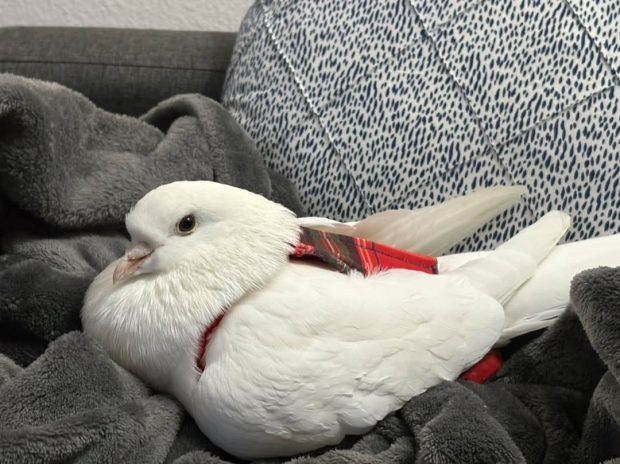
Because domesticated pigeons cannot survive in the wild, Balestra constantly refreshes their environment to keep them stimulated. Her apartment is filled with repurposed pet supplies: cat towers, dog crates, ladders and hanging bells. To let the birds fly freely indoors, she outfits them with “pigeon pants,” small fabric diapers that prevent droppings from spreading around the apartment. For sunlight and outdoor enrichment, Balestra straps their travel crates onto a cat stroller and walks them through the neighborhood. When she takes them outside individually, the pigeon pants can be fitted with tiny leashes, allowing the birds to stretch their wings safely.

Balestra and Higgins decide whether or not to go outside. After much debate, Higgins agreed to get some sun. (Nicole Borman/ Hearst Journalism Awards Championship)

None of Balestra’s birds were rescued randomly off the street. Each has a reason they cannot survive independently. Higgins and Cookie were former pets and are fully domesticated. Dearheart suffered a broken wing and can no longer fly. Revali was once used as a racing pigeon.

Balestra adopted all four through Palomacy, a foster-based pigeon rescue in Alameda, California. Because many animal shelters do not accept pigeons, fostering helps relieve overcrowding at specialized rescues. Before approving adoptions, Palomacy requires birds to spend time in foster homes to ensure a good fit.

“Pigeons are very much all about home,” Cynthia Bardouka-Large said, Palomacy’s Co-Director.

Originally, Higgins and Cookie were only supposed to stay temporarily. After three months together, Balestra couldn’t imagine giving them back. In rescue communities, situations like hers are jokingly called a “foster failure,” when temporary care quickly becomes permanent love.

“I just fell in love with them pretty quickly,” Balestra said.

The name Palomacy combines “pigeon diplomacy” with paloma, the Spanish word for pigeon or dove. The nonprofit’s mission is to find foster and adoptive homes for injured or domesticated pigeons that cannot survive on their own.

Click here to see how pigeons end up in foster care.

They stay in touch with all the families who foster, whether they took their pigeon in recently or multiple years ago.

Bardouka-Large didn’t discover her love for pigeons until her daughter, Maryam, developed a fascination with the birds at seven years old. While living near Ocean Beach in San Francisco, the family was constantly surrounded by young ravens. Curious and playful, the ravens often approached people, but Bardouka-Large was wary of how safe it was to befriend them. Having lived in New York for 20 years, she encouraged her daughter to connect with pigeons instead. Soon, Maryam began spending time with a group that rescued injured street pigeons suffering from “string foot,” a condition caused by debris becoming tangled around their feet.

After a quick Google search to learn more about pigeons, Bardouka-Large stumbled across Palomacy.

As Maryam pleaded for a pet pigeon, Bardouka-Large told her she could have one when she turned 12, assuming the obsession would fade by then.

“The week before her ninth birthday, a big white king pigeon just fell out of the sky into our yard,” Bardouka-Large said. “She picked her up and she said, ‘My pigeon’s here!’”

The pigeon had been released at a wedding. The bride and groom’s names were written across the bird’s body in Sharpie. Bardouka-Large reached out to Palomacy to see if the rescue would take the bird in, but she ultimately decided to keep it.

“They knew that we were going to be a home for pigeons,” Bardouka-Large said.

Later, after deciding to leave her career as a cook, Palomacy founder Elizabeth Young approached Bardouka-Large about becoming the organization’s co-director. After some convincing, she accepted the position.

“It was really the right offer at the right time,” Bardouka-Large said. “It was something that I cared about so much that I couldn’t believe somebody was offering me a job doing it.”

Bardouka-Large cleans the Ploughshares Nursery aviary, housing their Bay Area rescues. (Nicole Borman/ Hearst Journalism Awards Championship)

This pigeon rescue was one of the only rescues in the country when it was first founded in 2007. Now, the movement has expanded across the world.

“If somebody calls our helpline and says, ‘I’m in New South Wales, Australia, and I just found an injured pigeon,’ we can probably find someone within 100 miles of them to help,” Bardouka-Large said.

Palomacy’s oldest domesticated pigeon lived to be 29-years-old. Most wild pigeons live 4 years.

Two married pigeons wait patiently for Bardouka-Large to serve lunch, but more importantly, to find a forever home. (Nicole Borman/ Hearst Journalism Awards Championship)

Pigeons arrive at Palomacy through many different circumstances, but one of the most common is pigeon racing. In the sport, competitors bet on which bird can return home the fastest. During training, racers sometimes release groups of young pigeons and allow predators to target weaker birds, a practice known as a “basket toss.” The idea is to strengthen the genetics of the remaining flock by testing which pigeons survive.

“Some of the most harmful anthropomorphizing of pigeons is people who claim that racing pigeons are athletes,” Bardouka-Large said. “I have seen no evidence of that, I’ve seen plenty of evidence to the contrary.”

When rescued pigeons arrive at Palomacy, each bird receives individualized care. Veterinarians first evaluate them for injuries and disease before the rescue determines the next steps.

“There are some injuries that are catastrophic, and they’ll be in pain forever,” Bardouka-Large said. “We don’t want that for them, so we can’t save them.”

If the bird can recover, Palomacy provides housing, food, medical treatment and foster support tailored to each pigeon’s needs. Healthy domesticated pigeons are sometimes referred to city shelters, but many shelters still do not classify pigeons as companion animals and refuse to accept them.

“They can see their dogs, they see their cats, but they don’t really see pigeons, so people don’t see the hundreds of pigeons that need to be adopted,” Bardouka-Large said.

Back in Balestra’s apartment, the coos that greet visitors are no longer the sounds of forgotten “street birds,” but of animals that found permanence and care. For Balestra and organizations like Palomacy, rescuing pigeons is about challenging the idea that some animals are too ordinary to deserve compassion, one bird, and one home, at a time.

Balestra shares an emotional moment with Higgins, thanking him for being in her life and promising him she’ll always take care of him. (Nicole Borman/ Hearst Journalism Awards Championship)

Share

June 9, 2026
by Heather Hohlowski
Comments Off on Let’s Ban the Retail Sale of Animals in SF (and Everywhere)

Let’s Ban the Retail Sale of Animals in SF (and Everywhere)

Palomacy’s Co-Director recently sent a letter to the San Francisco Board of Supervisors, urging them to outlaw the sale of retail animals in San Francisco.

Dear San Francisco Board of Supervisors,

My name is Cynthia Bardouka-Large and I’m the co-director of Palomacy Pigeon and Dove Adoptions.

I’m grateful to you for considering this ban on the retail sale of animals in San Francisco. I hope it’s approved and that San Francisco can lead the way for other parts of California and eventually to other cities, counties, and states across the country.

My knowledge is mostly about birds, and I can tell you that the horrors of breeding mills, along with the crisis of birds kidnapped from the wild for the pet trade, are reasons enough to cut off the supply of trafficked animals in this deadly commerce.

Rescues like Palomacy are overflowing with surplus, unwanted, and dumped birds, and those of us doing rescue work are outnumbered (by a factor of many thousands) by those who continue to breed, sell, and treat as disposable these sensitive, social beings.

And when you purchase a poorly bred or trafficked bird from a store like Petco, they will also sell you a heartbreakingly small cage that no sentient creature should be confined to. Their pamphlets on animal husbandry are often flatly wrong. I have seen them distribute a pamphlet on keeping doves, with a picture of a white pigeon on the front (“pigeons” and “doves” are not interchangeable when it comes to the species commonly found in the pet trade and the care needed). I alerted them to the issue and they doubled down on their incorrect information and said that it didn’t matter since the care advice was the same for both (so very wrong!). With bad advice like that, it’s clear that the point of sale at the pet shop is not an end to the animal’s troubles. Birds are one of the most frequently re-homed and discarded pets, as customers walk away from the store with their bird and their little cage, and no real information about the commitment of sharing a life with a species so different from our own.

And that’s just birds! Please spare a thought for the inbred “naked” guinea pigs, unable even to stay warm by themselves, the reptiles confined to tiny aquariums, the goldfish drowning in the ammonia of their own urine, the beta “fighting fish” kept in 8 oz cups, listlessly floating and staring at nothing all day on account of their beautifully colored scales.

Chains such as Pet Food Express, along with many small independently owned pet supply shops, have demonstrated a robust business model where no live animals are bought or sold, and rescue is at the forefront of the conversation about where to find companion animals. These ethical pet supply shops are the majority in the city of San Francisco, and they prove every day that it can be done.

When the retail sales of dogs and cats were banned, Petco readily partnered with local rescues to feature adoptable kittens in their stores. They know how to do this. They were allowed to keep selling birds, reptiles, and fish, and I ask you to consider how those animals have fared — inbred for novel effects and sold as merchandise to anyone willing to pay.

I expect you will soon hear from breeders around California — and out of state — who will protest that we are trying to “outlaw pets” and that breeding will be driven into the black market. Please don’t listen to them. Listen to those of us who are left to pick up the pieces and repair the harm caused by those breeders and retailers, every day. This ban will absolutely prevent a great deal of suffering.

In gratitude,
Cynthia Bardouka-Large

Share

May 15, 2026
by Heather Hohlowski
Comments Off on 60 Minutes — The Pigeon Mafia: A Review

60 Minutes — The Pigeon Mafia: A Review

By Cynthia Bardouka-Large

Tom Van Gaver’s prize racing pigeon Finn was stolen. We discuss whether Tom Van Gaver is the victim — and how you can help set the record straight.

Many members of the Palomacy community watched the 60 Minutes piece about “The Pigeon Mafia” like we’d watch a horror movie, peeking out from behind our fingers. We knew that outreach events for the next few months would involve encounters with people whose eyes had been newly opened to the big-money world of champion racing pigeons, without having learned about the true cost to the birds. And why should they know about that? 60 Minutes didn’t mention it. Not one minute in a 13-minute piece was devoted to the inherent cruelty of this blood “sport”.

In the television story, Sharyn Alfonsi narrates the theft of Finn, one of Tom Van Gaver’s most valued birds. Van Gaver is a Belgian pigeon racer, from the birth country of the modern “sport” and he is featured as the victim of the story. But before we accept this premise, let’s talk about pigeon racing.

Pigeons are all about love and connection, and in racing, those beautiful qualities are exploited for profit. Pigeons mate for life, both parents take care of the babies, and couples spend most of their time together – snuggling, preening each other, feeding each other, sitting on each other’s heads – bonding, bonding, bonding. That is the life they choose, when they are allowed to choose.

Pigeon racers separate these couples, taking one bird away from their mate (even better, to them, if there are babies in the nest to make the pigeon parents more frantic), and transporting the racing bird hundreds or even thousands of miles from home in crowded trucks before tossing them into the air. The desperate pigeons fly their hearts out, burning up to half their body weight trying to get home. Most don’t make it home — they are killed by predators, shot for sport, downed by storms, exhaustion, and starvation. Rescues save hundreds that are lucky enough to be found alive. For every prize “athlete” there are untold hundreds of birds who don’t survive their first year.

Pigeons are taken far from home and tossed into the air

Pigeon fanciers do not care enough about these birds to keep them safe – they only care about the winners. They will say they love their birds – a love demonstrated by spotless lofts, high-quality food, and extensive vaccinations. But none of those things matter if you are then going to send your beloved birds out to play on a busy freeway – which is what the wild skies are to domestic pigeons. These fanciers rarely want a failed racer back, if the fallen, lost, or wounded bird is found by a member of the public. They don’t want those “loser” genetics in their loft. And then, at the end of the racing season, when it’s time to breed the next generation of money-makers, they force mated couples apart again, in order to pair up birds with winning track records.

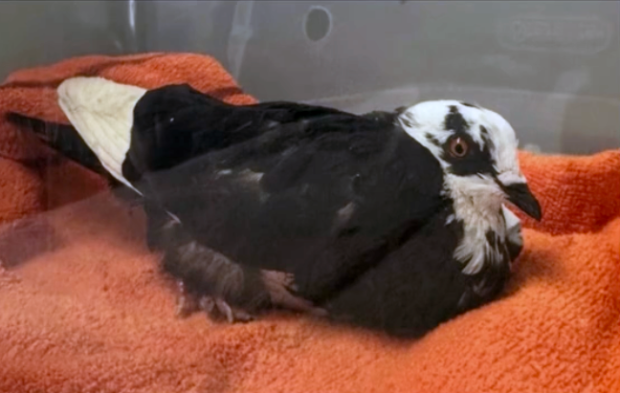
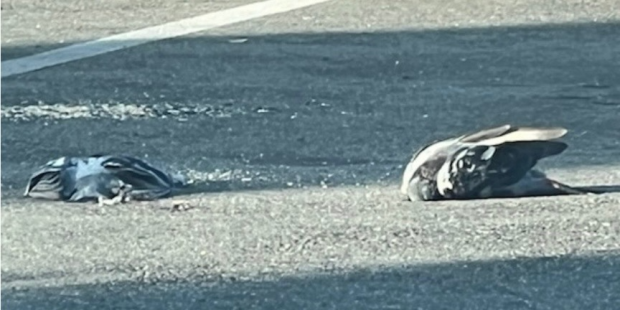
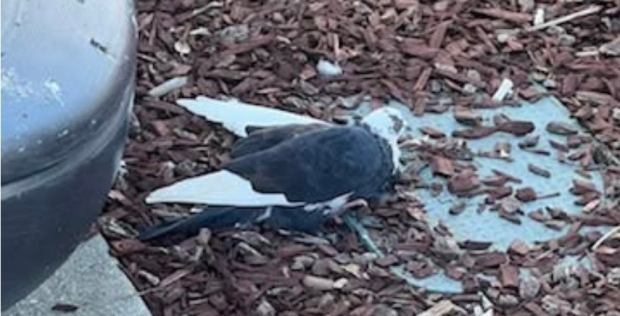
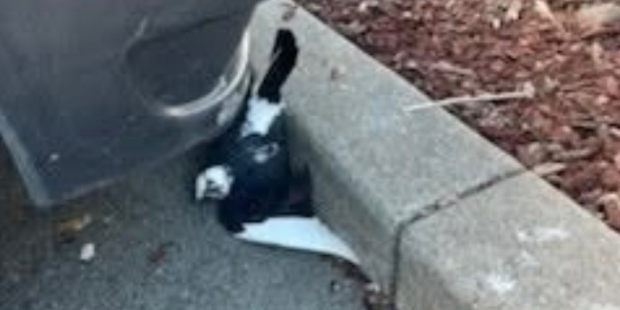
Emily almost didn’t survive her first flight.

Please, read for yourself the mentality of fanciers. Not only does the sport kill the pigeon, many of the pigeon owners kill the pigeons – blatantly, and boastfully.

CONTENT WARNING — this is upsetting:

From PigeonInsider.com: The Secret of the Champions

“When you are putting bands on one week old babies you may notice that one has thinner legs than birds of the same age. Such a bird will never be a strong, vital, healthy bird either. Get rid of it. It is a pigeon without a future.”

From Urban Wildlife Society: Killing Pigeons for Ego, Money, and Fund

“I know a LOT of nice people in the Roller Hobby, and I don’t know ANY of them that are successful and don’t Cull/Kill birds when it is necessary. These are good people who believe that the proper way to create and maintain a loft filled with respectable Rollers is to Cull the ones that can’t make the GRADE! …the GOOD Rollermen … do NOT want to spread Roller-Trash around the country…”

Racers like Tom Van Gaver force pigeons like Finn to compete, by separating them from their mates and sending these vulnerable, domestic, prey animals out to run the gauntlet of predators, bad weather, and grueling distance. They do it to these birds again and again and again.

Please, let’s keep in mind who the real victims are.

Learn More About the Reality of Pigeon Racing

What’s Pigeon Racing?
A Pigeon Tale

Left: Emily, with broken wing, self-rescues to a porch; center: exhausted but safe in a carrier; right: treated and recovering with Palomacy

What You Can Do

Looking for a way to help? Take to YouTube and challenge this limited perspective — with civility so that you are heard — in the comments section of the 60 Minutes video. So many people have watched this piece and come away thinking they know about pigeon racing — and how can they know better if no one points it out to them? The public perception of pigeons is slowing improving, and we hear from more and more people who understand how pigeons came to live in our cities and how they deserve better. Let’s keep that positive progress going! Pigeons don’t deserve to be persecuted, and they don’t deserve to be used in racing or other hobbies and businesses. They deserve to be themselves!

Leave a Comment on YouTube

Share

April 18, 2026
by Cynthia Bardouka-Large
Comments Off on Welcome to New Board Members and Gratitude to Those Retiring

Welcome to New Board Members and Gratitude to Those Retiring

Palomacy is excited to be welcoming some new members to our Board of Directors!


Elizabeth Young

When she retired as Director of Palomacy, founder Elizabeth Young said, “I’m leaving the job but not the work.” She is making good on that promise by stepping up to serve on the Board, bringing with her all the wisdom, experience, and understanding of Palomacy’s mission.


Rose Lalla Jensen

Rose Lalla Jensen has been a Palomacy super-volunteer for years, helping to moderate our 50K+ member Help Group with patience and a calm spirit, managing the logistics of handling the orders for Palomacy’s rescue leg-bands, always stepping up to contribute thoughtful, in-depth research for any new aspect of bird care that comes up. Rose has been someone we all turn to for advice and reality checks, and we are so grateful to have her perspective in this new role.


Neil Gilfedder

Neil Gilfedder has given generously of his time and skills in taking care of our flock at the Ploughshares aviary, including training new volunteers with a warm smile and welcoming spirit! His financial background will lend valuable insight to the work of Palomacy’s Board as we put donation funds to work saving the lives of the birds who come into our care.


Dr Holly Galusha

Dr. Holly Galusha is a compassionate and skilled avian veterinarian, and has been a trusted medical provider for the birds in Palomacy’s care, as well as being a friend and an advisor. Her insights into individual bird care as well as a wider, flock-wide perspective, will help guide our decision-making as we try to serve as many birds as possible, as compassionately as possible.


We also want to offer our deepest gratitude to two long-serving members as they step down from their Board service.

Clare Malone Prichard

Clare Malone Pritchard has been with Palomacy since the early days when it was known as “MickaCoo”, serving as the Chair of MickaCoo’s Advisory Committee. Her strategic thinking and goal-setting helped Palomacy every step of the way as we grew to become our own 501(c)(3) organization. Her warmth and steady leadership have been deeply appreciated.


Cheryl Dickinson

Cheryl Dickinson has also been an active volunteer with Palomacy since the earliest days, serving on the MickaCoo Advisory Board from 2011-2014, and later on the Palomacy Board. Cheryl has been a steady presence, offering local help to the pigeons of Pacifica, as well as guidance and mentoring to new rescuers and volunteers as they came to Palomacy with a wish to help these remarkable birds. Cheryl has given an immeasurable amount of time and experience and kindness to humans and birds alike and we are so thankful for all of her service.


Share