
Paige is a survivor of the inhumane “sport” of pigeon racing. Seven years ago, she landed in Elizabeth Young’s backyard — that’s a VERY smart pigeon who self-rescues to the Palomacy founder’s patio! That was in the summer of 2019. We adopted Paige a couple of months later, and she married our rescued King pigeon Cantaloupe almost instantly.
Over these years, she’s been an irregular egg layer – monthly for a few months at a stretch, then nothing for six months, rinse and repeat. She has always been a strong, solid bird with a sweet demeanor, and health-wise she has never presented us with anything out of the ordinary. But one day this past February (the 11th to be exact), as I walked up to the aviary for the morning cleaning routine, I saw Paige sitting with a completely different profile – fluffed and hunched.
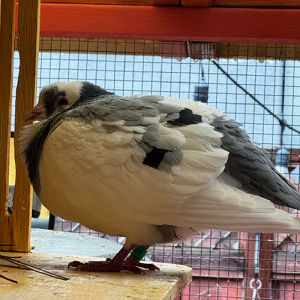
Hunched posture — not normal
My immediately concern: egg binding (see Figure 1.) — even though that had never happened before. Still, she was eating normally and flying just fine. But her droppings looked kind of funky — a little watery and with more yellow than green, so I quickly made an appointment with Dr. Holly Galusha from Winged Wellness Vet Clinic (a fantastic, mobile avian vet!). After a thorough exam, she did an ultrasound, which showed she might be trying to lay a soft egg.
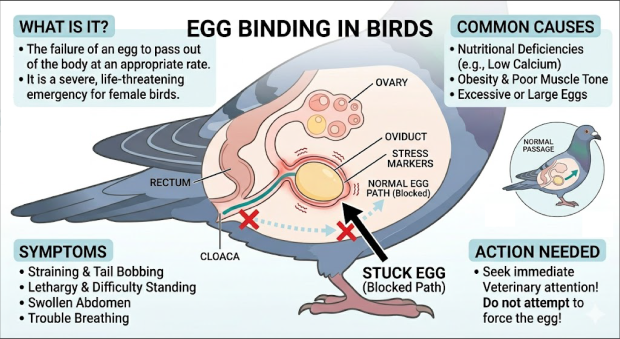
Figure 1. Egg binding is an emergency — know the signs!
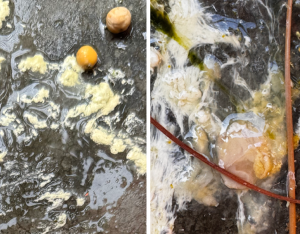
Left: Feb 11 — Right: Feb 12
The next day, she laid what appeared to be loose egg remnants (see photo). To be safe, Dr. Galusha prescribed antibiotics, and over the next ten days she seemed to improve — the hunching dissipated and her droppings returned to almost-normal. I thought we were in the clear! But then about two weeks later, the cycle began again — right when she would be due to lay another egg.
Dr. Galusha returned and another ultrasound showed an impacted oviduct. Additionally, we weighed Paige and she was only 360g — normally she weighs 420g! I was so mad at myself for not weighing her sooner. It is so important to weigh your birds regularly; a sudden change in weight is often the first sign of illness.
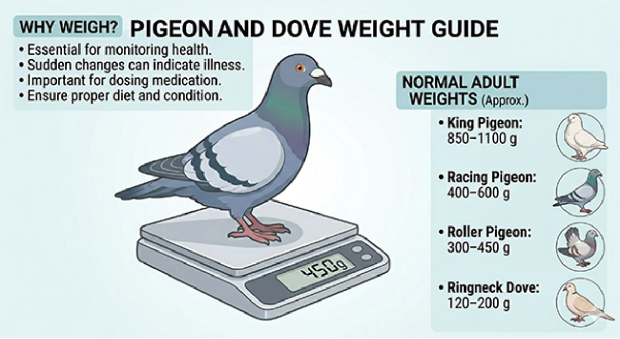
Figure 2. Weigh your bird at regular intervals and keep an eye out for sudden changes.
Dr. Galusha would have operated herself, but due to a temporary staffing shortage with her surgical support team, she referred us to Medical Center for Birds to ensure the procedure happened as quickly as possible. I brought Paige there the next day, March 11 — a month since I first saw her hunchy profile in the aviary! She now weighed just 340g — she was losing weight so fast. An impacted oviduct required surgery. Dr. Dylan Conradson performed another ultrasound and confirmed Dr. Galusha’s diagnosis and surgery was recommended. Dr. Conradson said they might try to get her weight up prior to operating, but the next day he called to say he had put her on supportive therapy overnight and she was doing really well, her blood counts were good, and he felt the time was right to proceed that afternoon.
She went into surgery at 12:30 pm, and at 2:15 Dr. Conradson called with the good news – Paige did great and was alert and bright-eyed in recovery. RELIEF! We were scheduled to pick her up that weekend, but Saturday morning the doctor called and said she’d regurgitated overnight and they wanted to continue monitoring her through the weekend. They suspected the antibiotic — trimethoprim sulfamethoxazole (“TMS”) — was causing her nausea and they wanted to switch to ciprofloxacin (“cipro”) and see if the regurgitation resolved. It did and we were able to bring her home Monday, February 16.
Dr. Conradson walked me through everything they found during the procedure. Interestingly, there was quite a bit of fatty tissue, which was a total surprise to me. Paige’s usual diet is pigeon feed with 16% protein, supplemented with oyster shell and fresh veggies. She was never overweight. They also successfully removed a fatty nodule (called a “xanthoma”) and removed her ovaries, oviduct, and the remnants of two soft eggs. Paige spent two weeks on antibiotics afterward and she’s been a superstar. It was so heartening to see her weight steadily climb back to her healthy normal: she went from 402g on 3/22 to 432g by 3/26, and as of the writing of this article, she is up to 470g.
I can’t thank Dr. Galusha and Dr. Conradson enough for helping us navigate this whole journey. Any time a bird goes under anesthesia, it’s nerve-wracking since every bird handles it differently. Because this surgery was so complex and Paige had lost so much weight, we were definitely on pins and needles waiting for the “all clear” phone call. We are just so relieved; between the amazing vet care and Paige’s resilience, she pulled through like a champ. Pigeons truly are amazing.
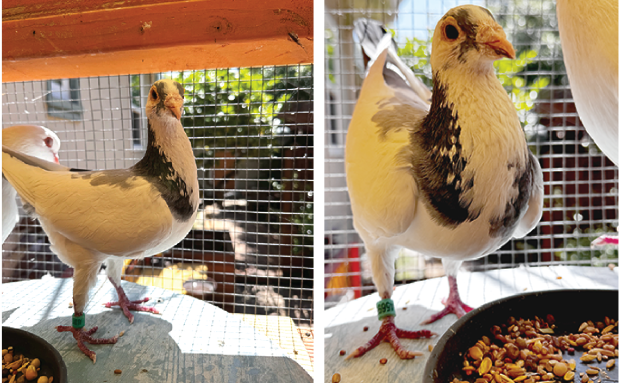
Paige back home and feeling unstoppable!
