
By Cynthia Bardouka-Large
Tom Van Gaver’s prize racing pigeon Finn was stolen. We discuss whether Tom Van Gaver is the victim — and how you can help set the record straight.
Many members of the Palomacy community watched the 60 Minutes piece about “The Pigeon Mafia” like we’d watch a horror movie, peeking out from behind our fingers. We knew that outreach events for the next few months would involve encounters with people whose eyes had been newly opened to the big-money world of champion racing pigeons, without having learned about the true cost to the birds. And why should they know about that? 60 Minutes didn’t mention it. Not one minute in a 13-minute piece was devoted to the inherent cruelty of this blood “sport”.
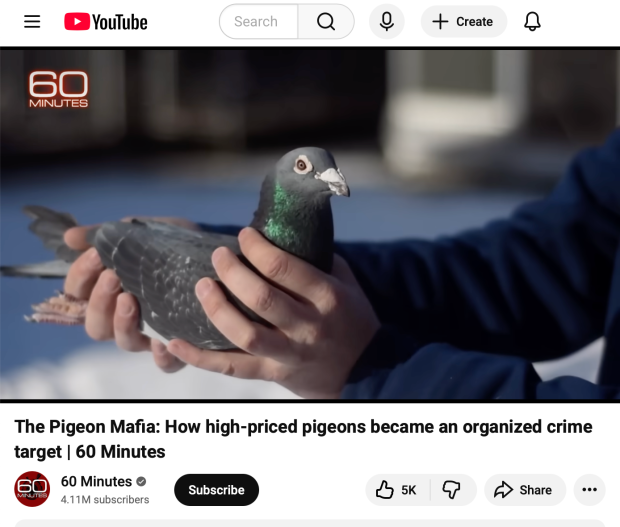
In the television story, Sharyn Alfonsi narrates the theft of Finn, one of Tom Van Gaver’s most valued birds. Van Gaver is a Belgian pigeon racer, from the birth country of the modern “sport” and he is featured as the victim of the story. But before we accept this premise, let’s talk about pigeon racing.
Pigeons are all about love and connection, and in racing, those beautiful qualities are exploited for profit. Pigeons mate for life, both parents take care of the babies, and couples spend most of their time together – snuggling, preening each other, feeding each other, sitting on each other’s heads – bonding, bonding, bonding. That is the life they choose, when they are allowed to choose.
Pigeon racers separate these couples, taking one bird away from their mate (even better, to them, if there are babies in the nest to make the pigeon parents more frantic), and transporting the racing bird hundreds or even thousands of miles from home in crowded trucks before tossing them into the air. The desperate pigeons fly their hearts out, burning up to half their body weight trying to get home. Most don’t make it home — they are killed by predators, shot for sport, downed by storms, exhaustion, and starvation. Rescues save hundreds that are lucky enough to be found alive. For every prize “athlete” there are untold hundreds of birds who don’t survive their first year.
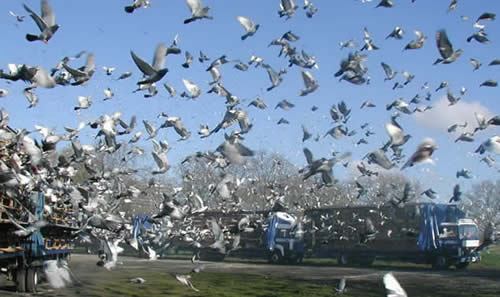
Pigeons are taken far from home and tossed into the air
Pigeon fanciers do not care enough about these birds to keep them safe – they only care about the winners. They will say they love their birds – a love demonstrated by spotless lofts, high-quality food, and extensive vaccinations. But none of those things matter if you are then going to send your beloved birds out to play on a busy freeway – which is what the wild skies are to domestic pigeons. These fanciers rarely want a failed racer back, if the fallen, lost, or wounded bird is found by a member of the public. They don’t want those “loser” genetics in their loft. And then, at the end of the racing season, when it’s time to breed the next generation of money-makers, they force mated couples apart again, in order to pair up birds with winning track records.
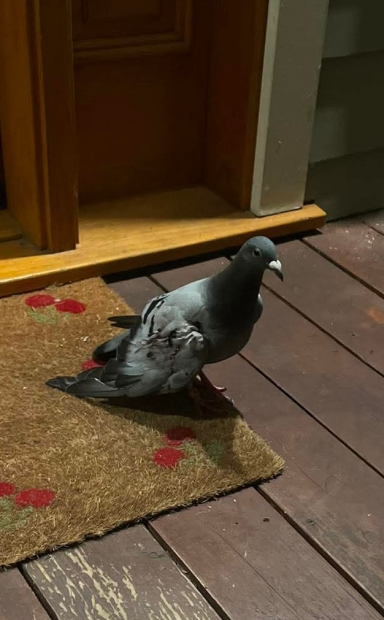
Emily almost didn’t survive her first flight.
Please, read for yourself the mentality of fanciers. Not only does the sport kill the pigeon, many of the pigeon owners kill the pigeons – blatantly, and boastfully.
CONTENT WARNING — this is upsetting:
From PigeonInsider.com: The Secret of the Champions
“When you are putting bands on one week old babies you may notice that one has thinner legs than birds of the same age. Such a bird will never be a strong, vital, healthy bird either. Get rid of it. It is a pigeon without a future.”
From Urban Wildlife Society: Killing Pigeons for Ego, Money, and Fund
“I know a LOT of nice people in the Roller Hobby, and I don’t know ANY of them that are successful and don’t Cull/Kill birds when it is necessary. These are good people who believe that the proper way to create and maintain a loft filled with respectable Rollers is to Cull the ones that can’t make the GRADE! …the GOOD Rollermen … do NOT want to spread Roller-Trash around the country…”
Racers like Tom Van Gaver force pigeons like Finn to compete, by separating them from their mates and sending these vulnerable, domestic, prey animals out to run the gauntlet of predators, bad weather, and grueling distance. They do it to these birds again and again and again.
Please, let’s keep in mind who the real victims are.
Learn More About the Reality of Pigeon Racing
What’s Pigeon Racing?
A Pigeon Tale
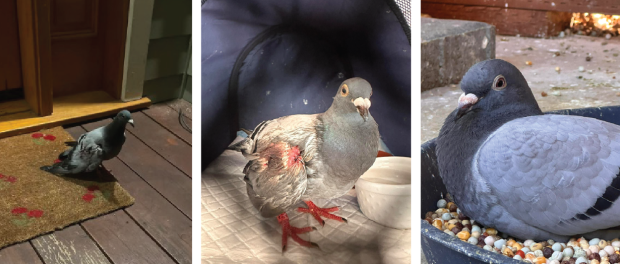
Left: Emily, with broken wing, self-rescues to a porch; center: exhausted but safe in a carrier; right: treated and recovering with Palomacy
What You Can Do
Looking for a way to help? Take to YouTube and challenge this limited perspective — with civility so that you are heard — in the comments section of the 60 Minutes video. So many people have watched this piece and come away thinking they know about pigeon racing — and how can they know better if no one points it out to them? The public perception of pigeons is slowing improving, and we hear from more and more people who understand how pigeons came to live in our cities and how they deserve better. Let’s keep that positive progress going! Pigeons don’t deserve to be persecuted, and they don’t deserve to be used in racing or other hobbies and businesses. They deserve to be themselves!
Leave a Comment on YouTube
