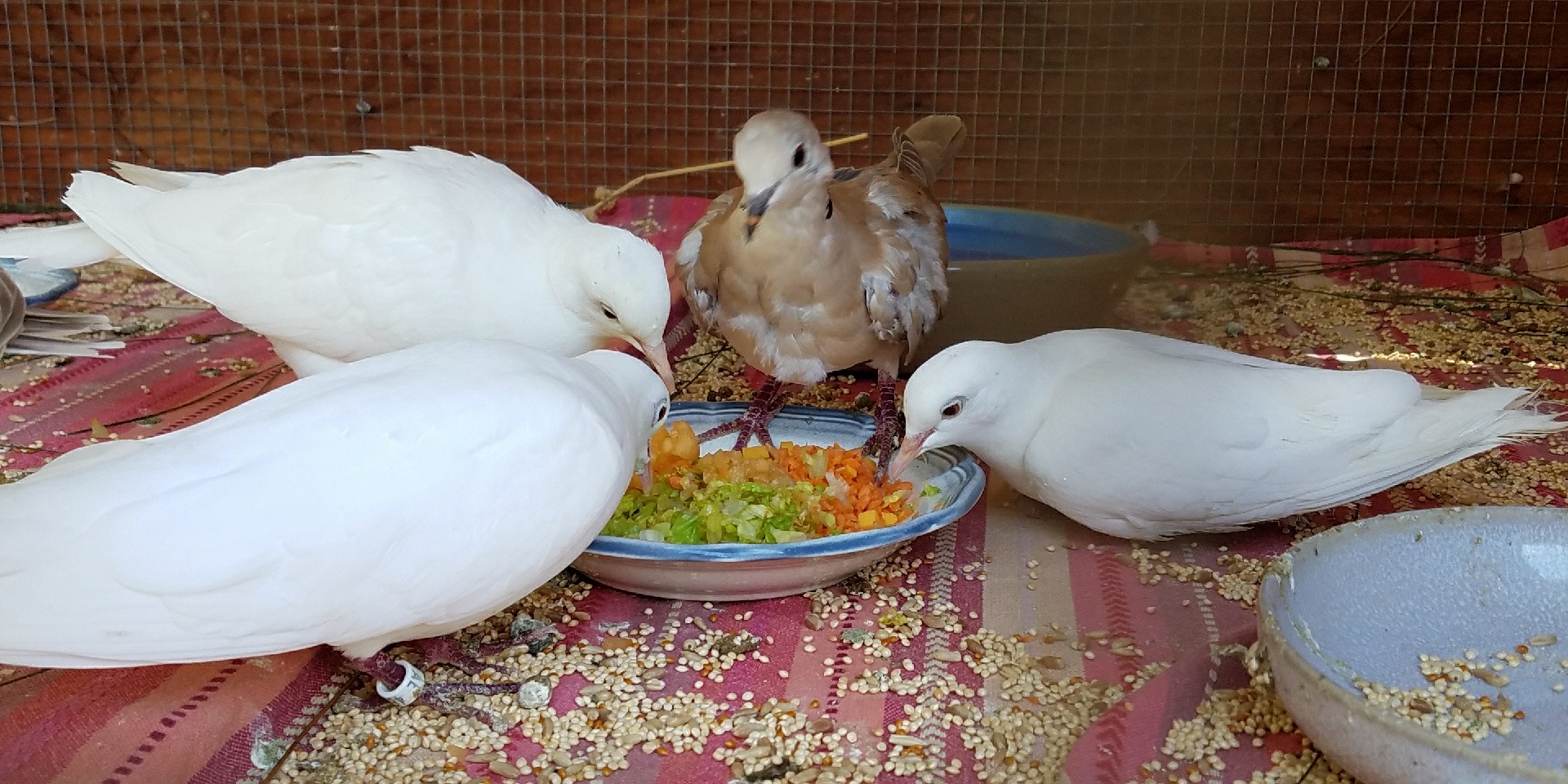
October 15, 2023
by Elizabeth
Comments Off on Opal

Opal

Guest Post by Jill McMurchy

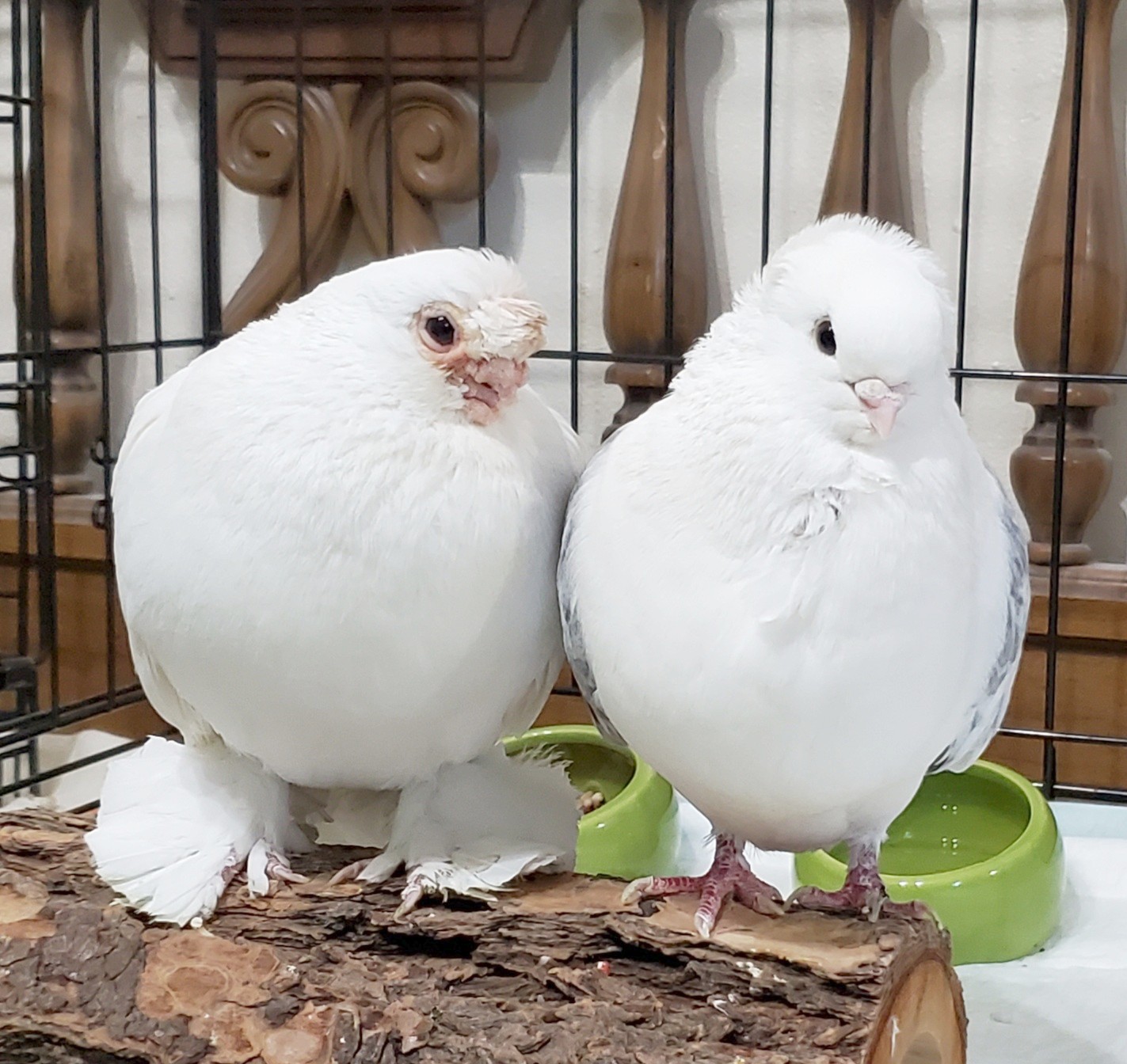
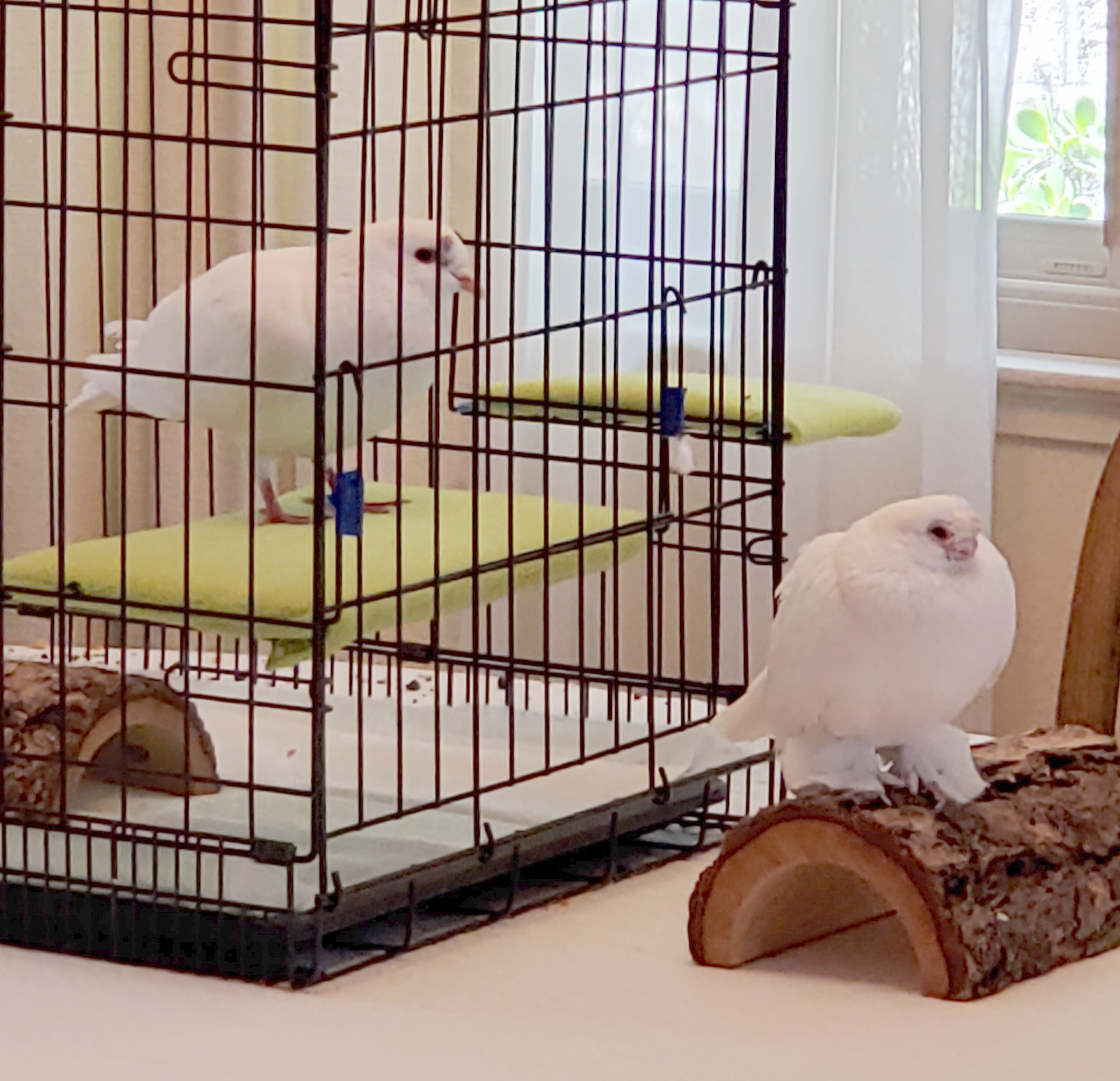
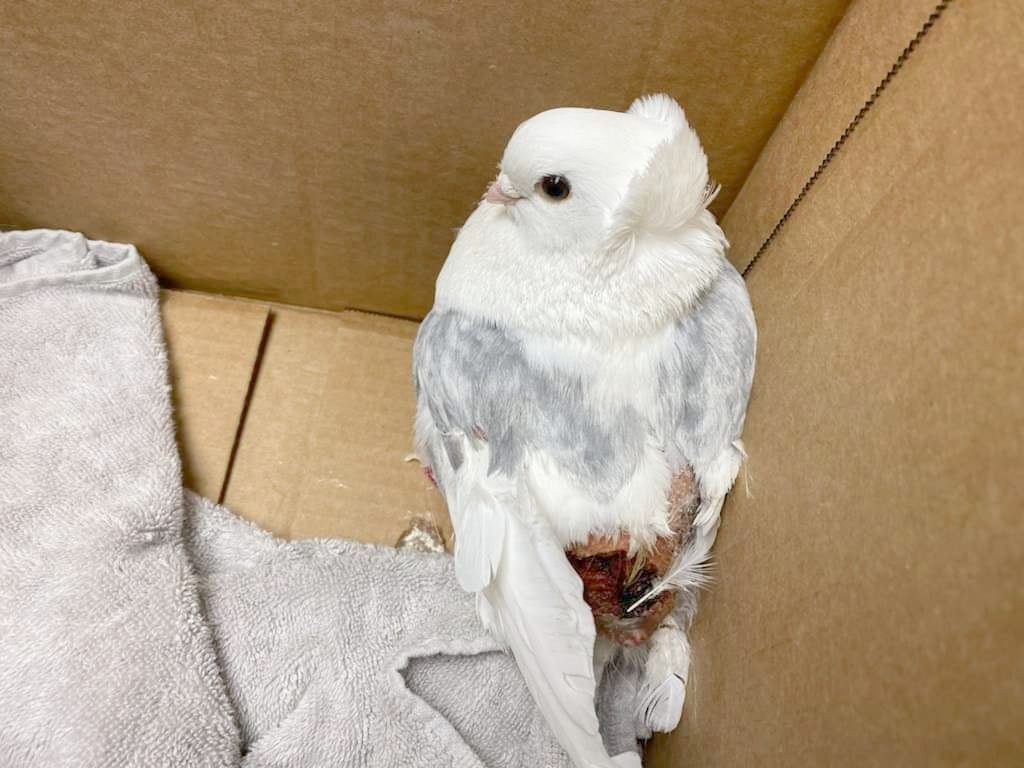
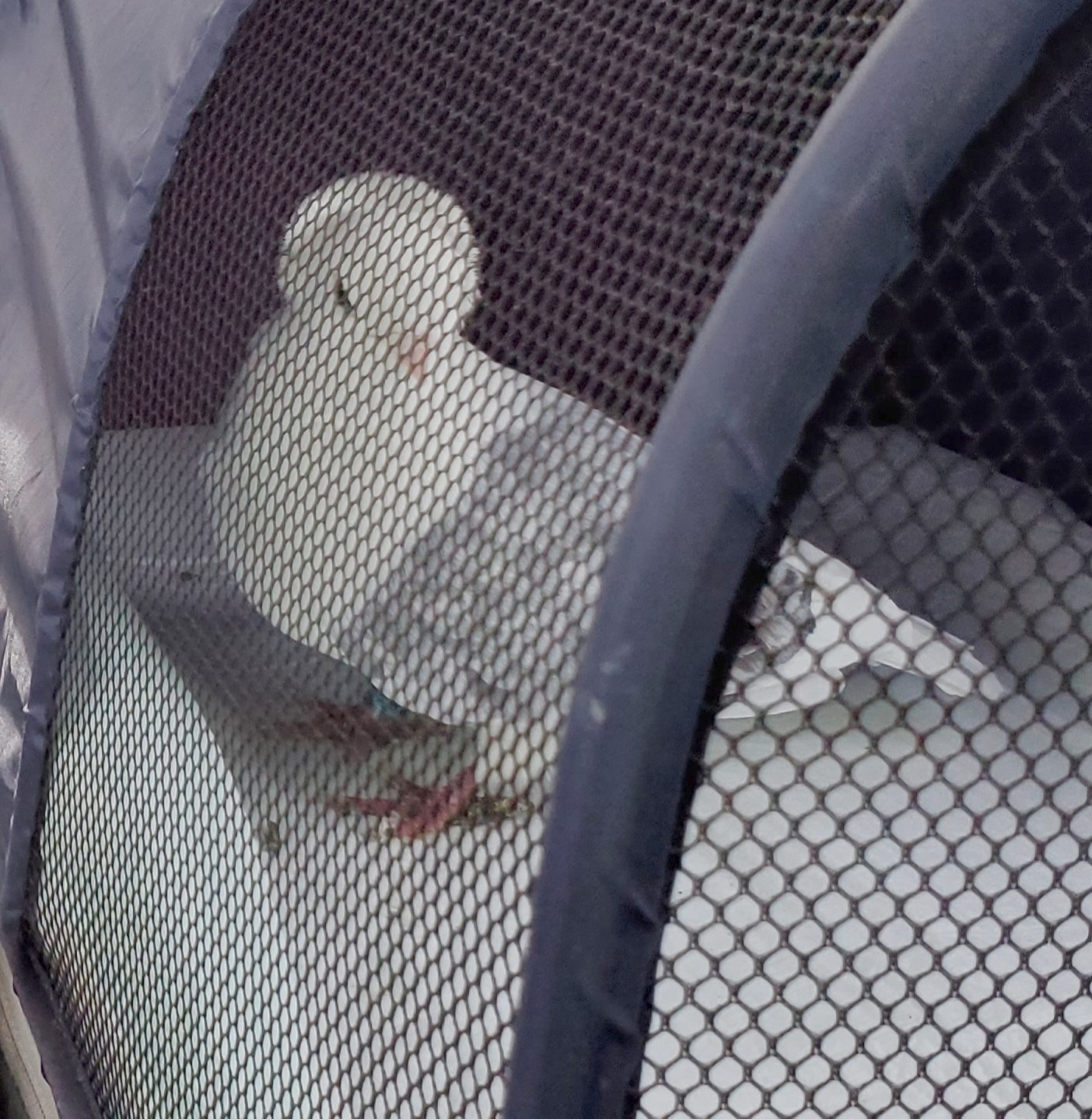
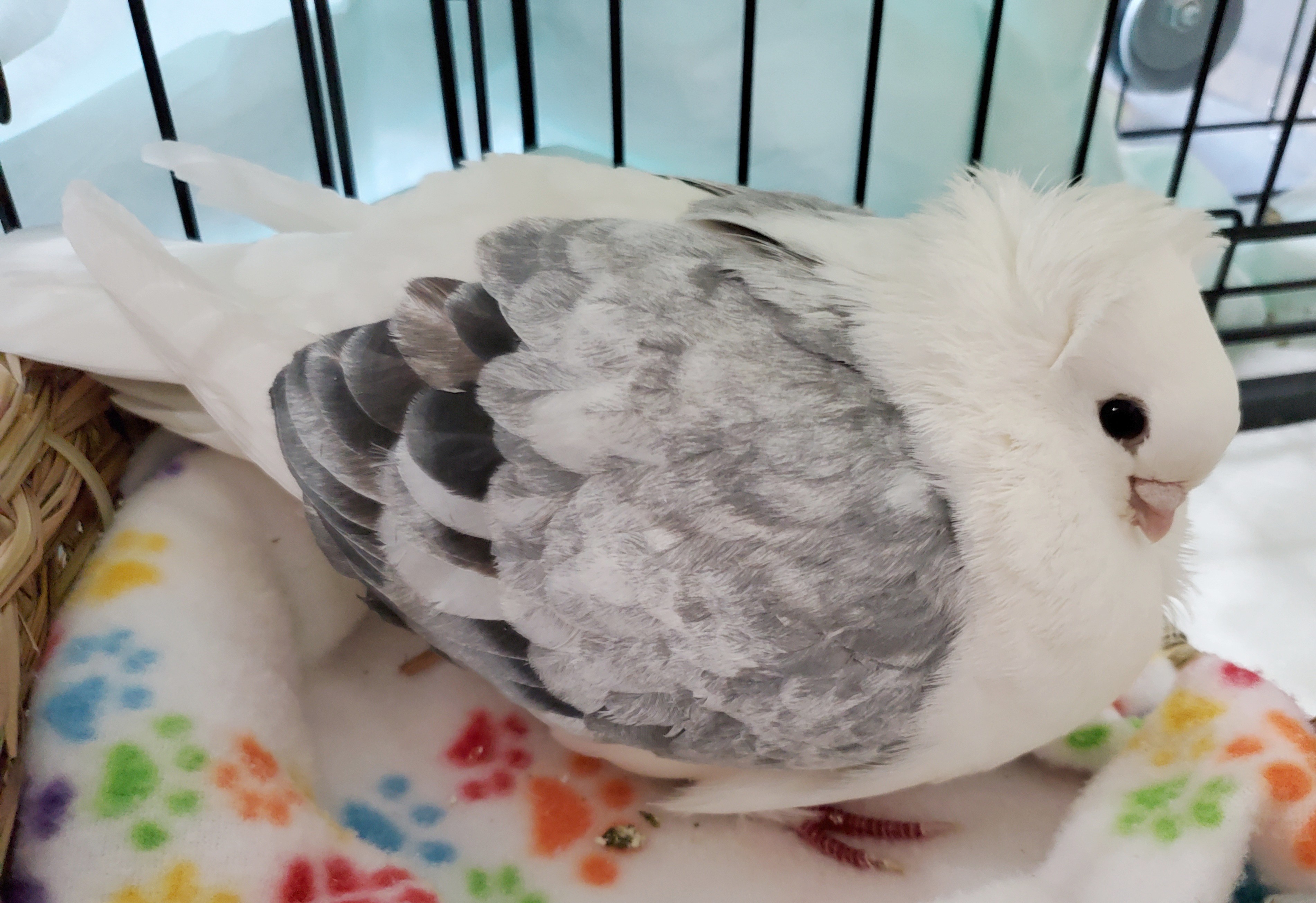
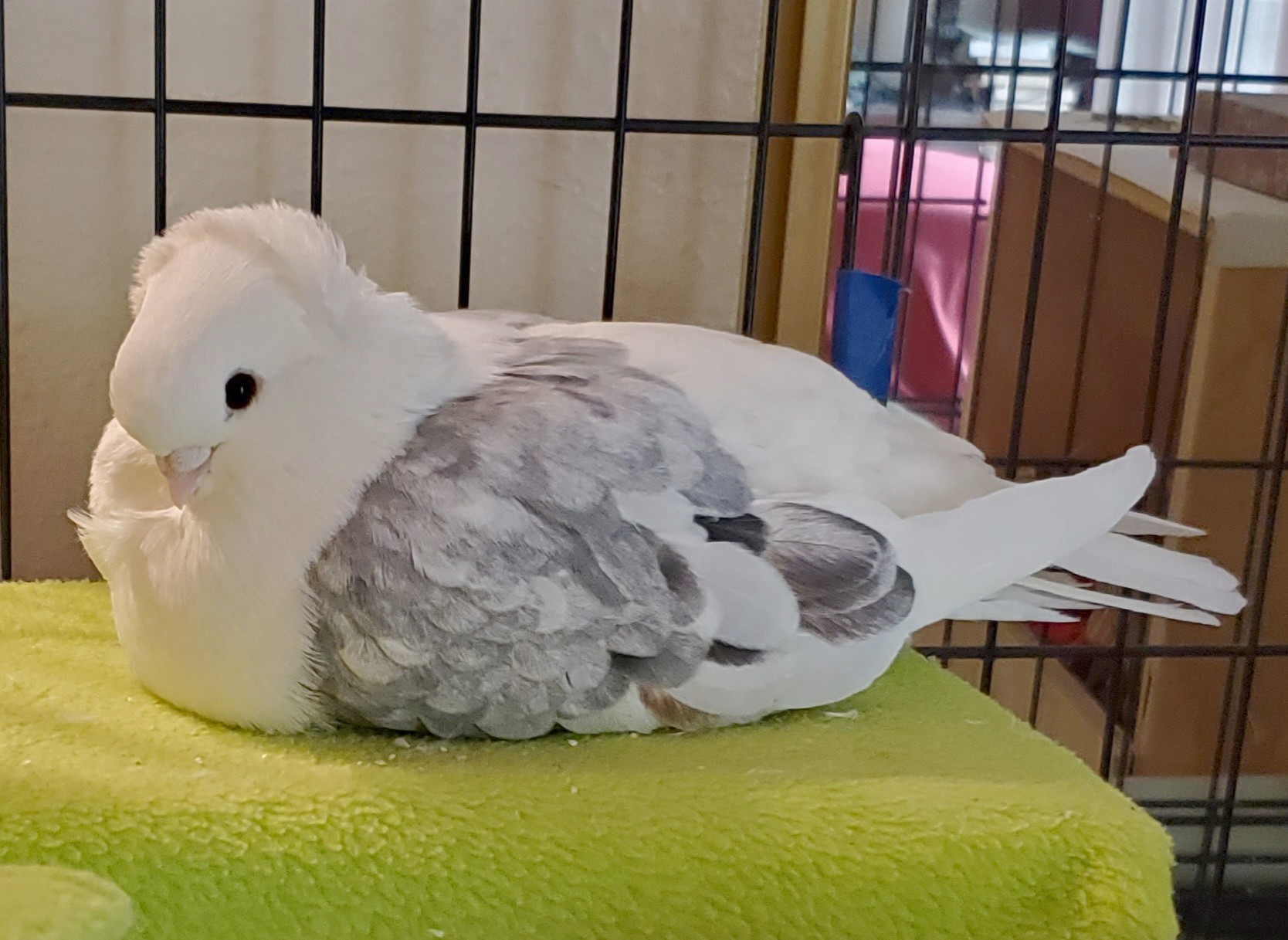
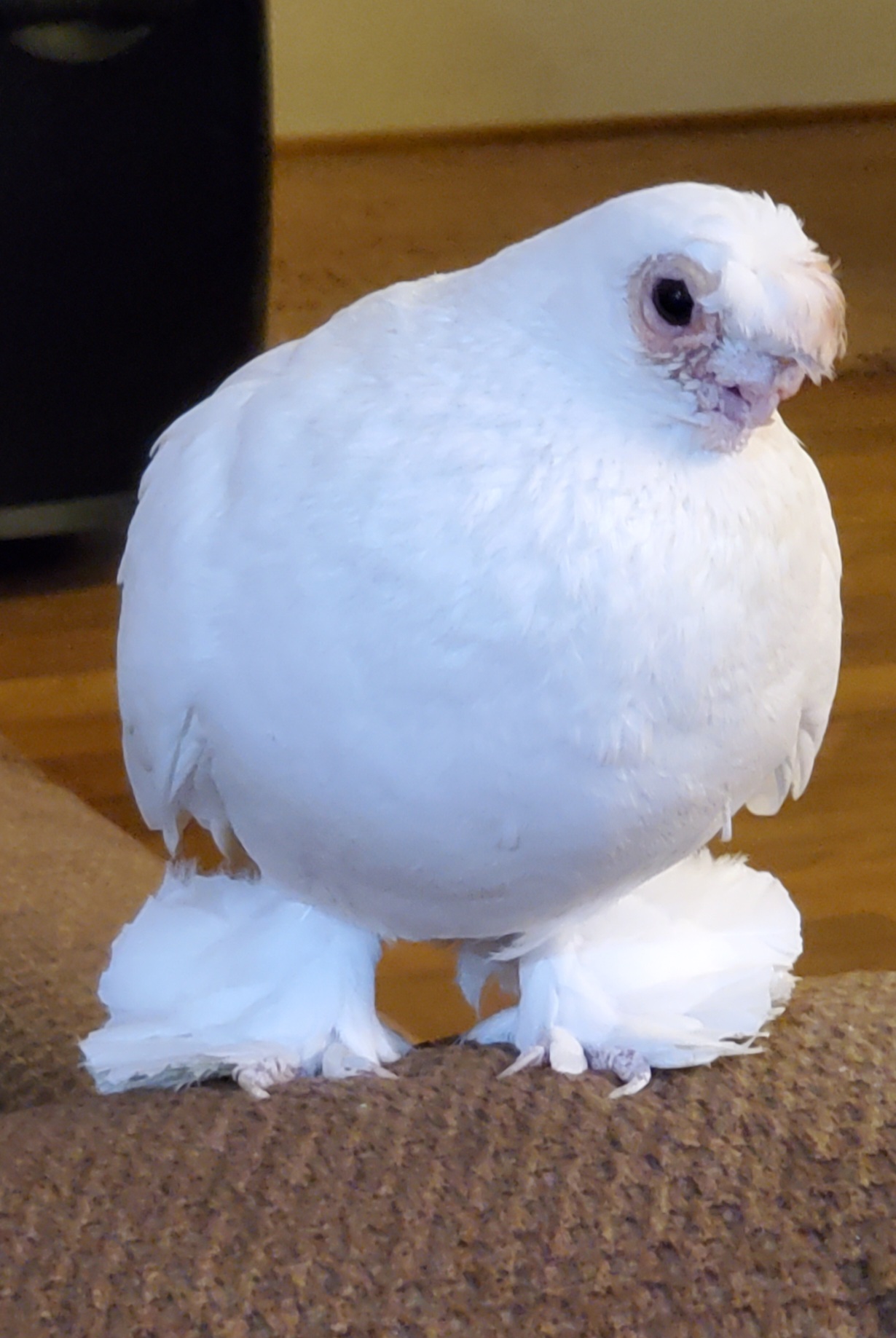
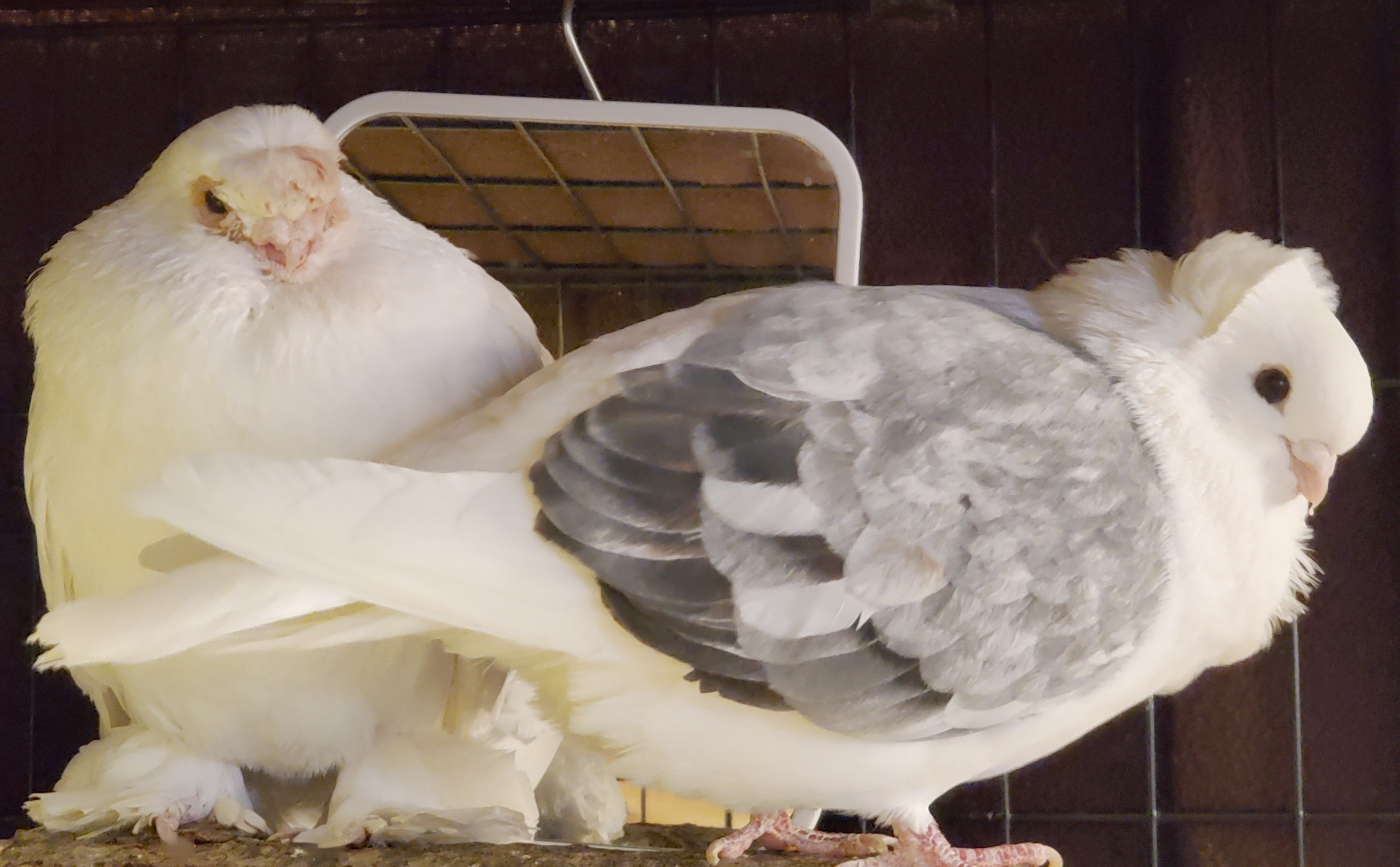
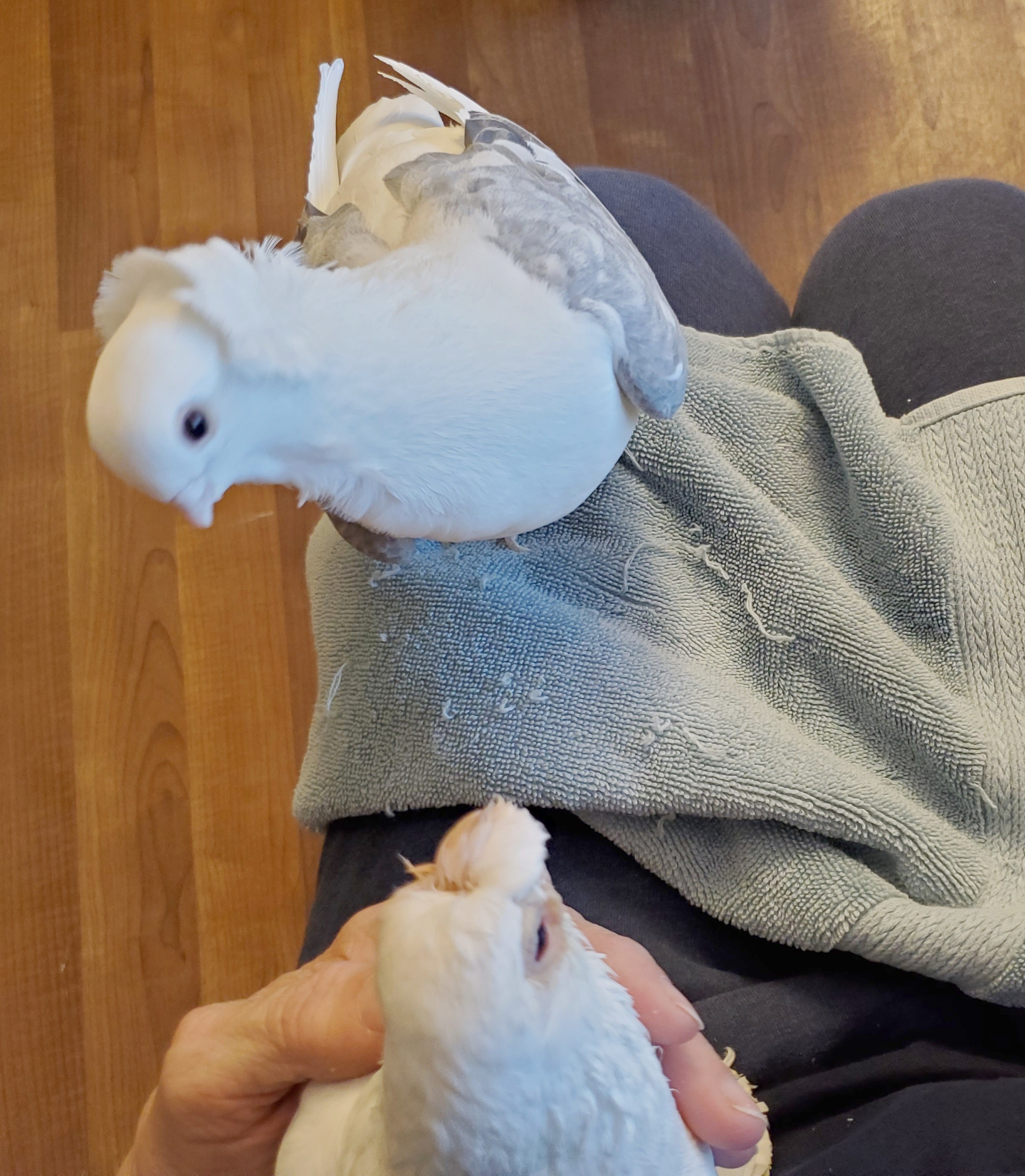
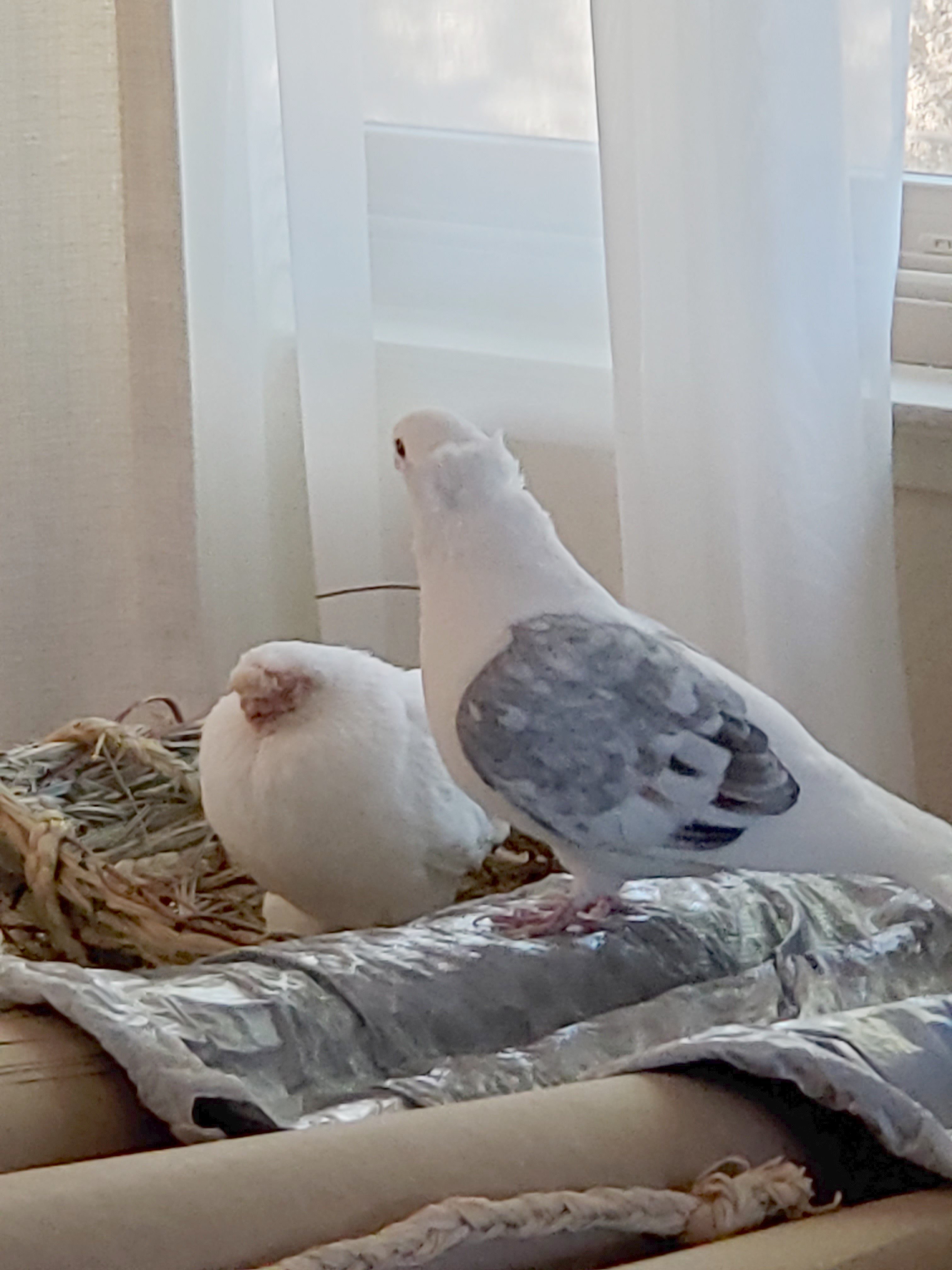
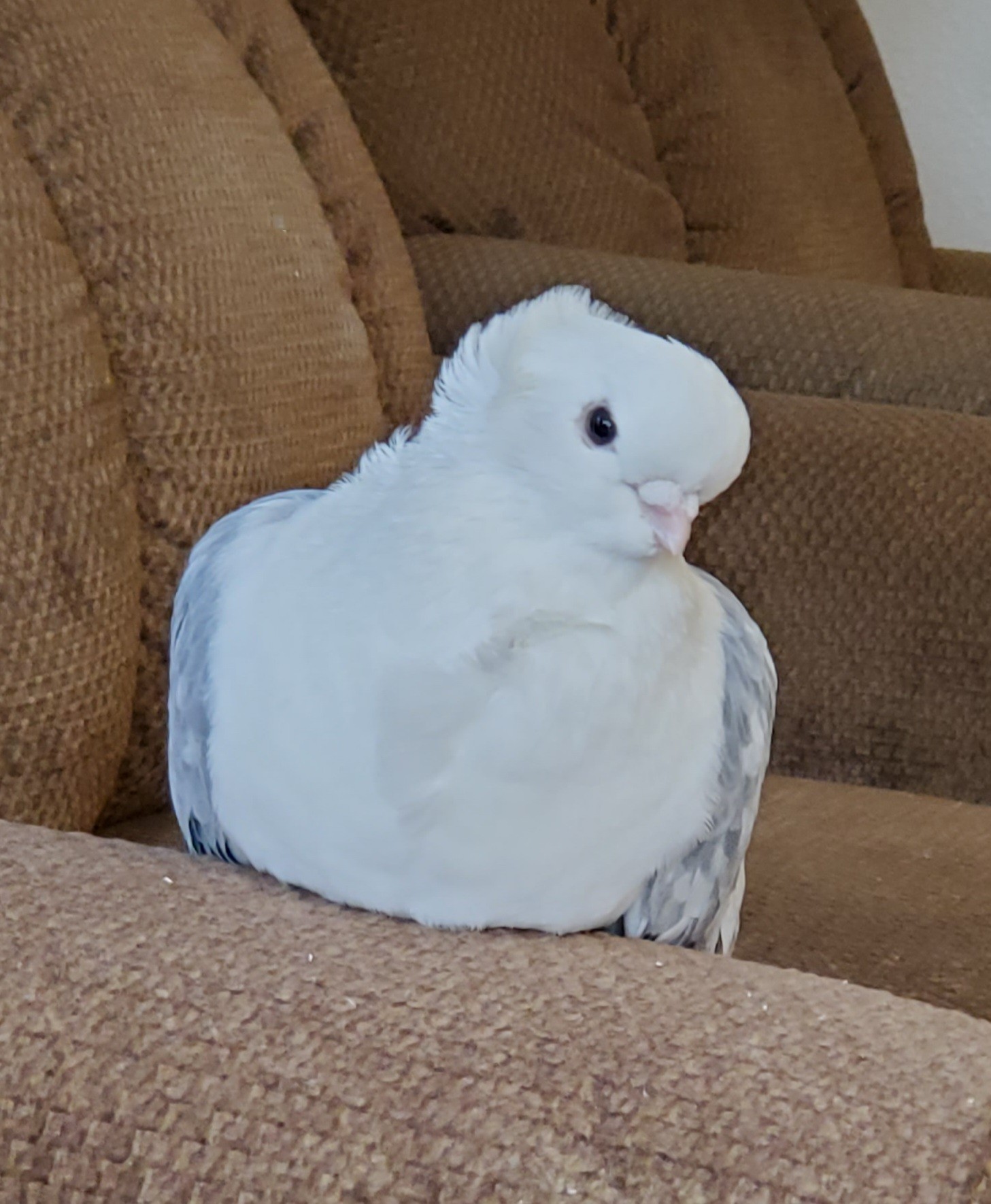
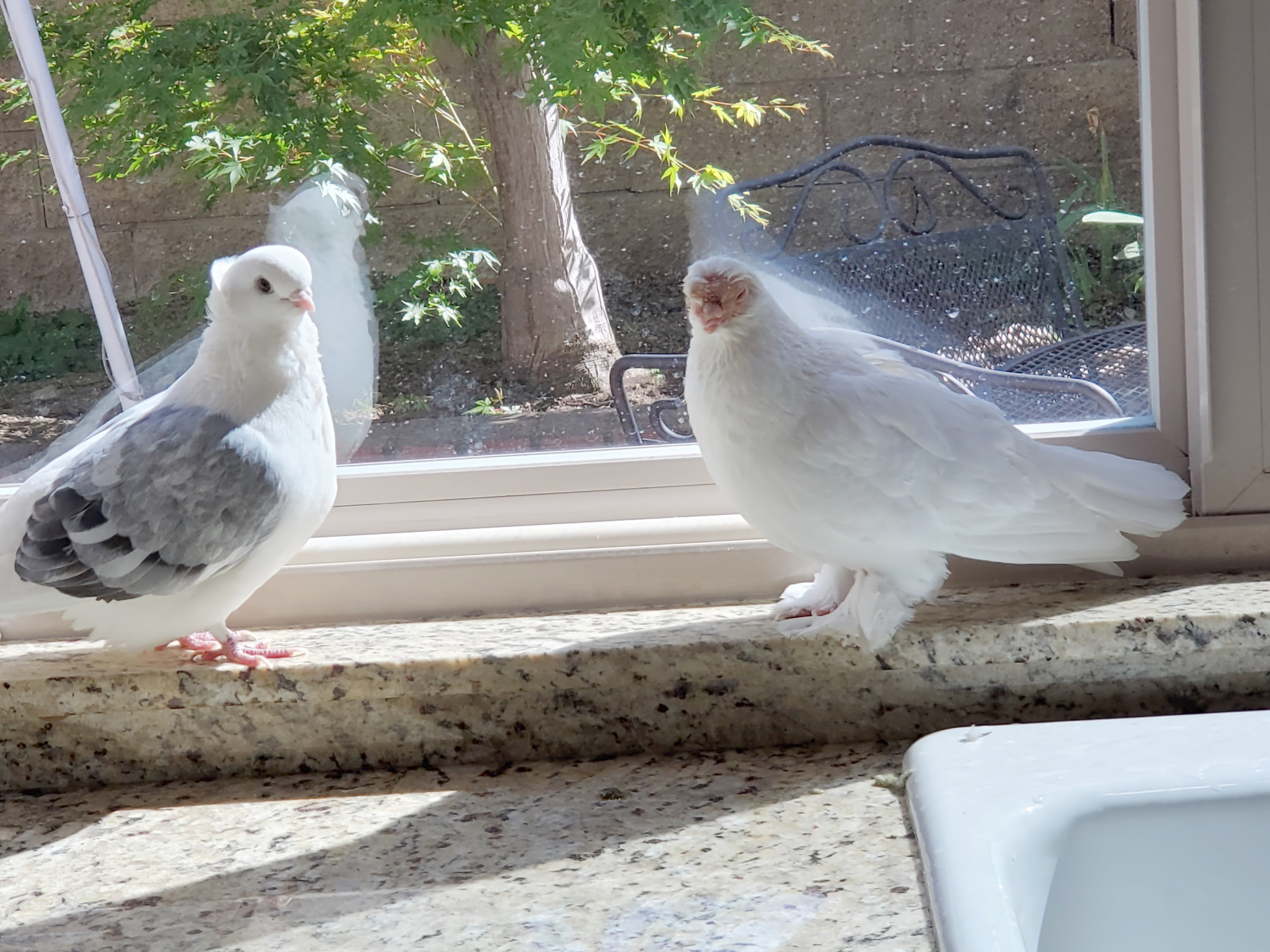
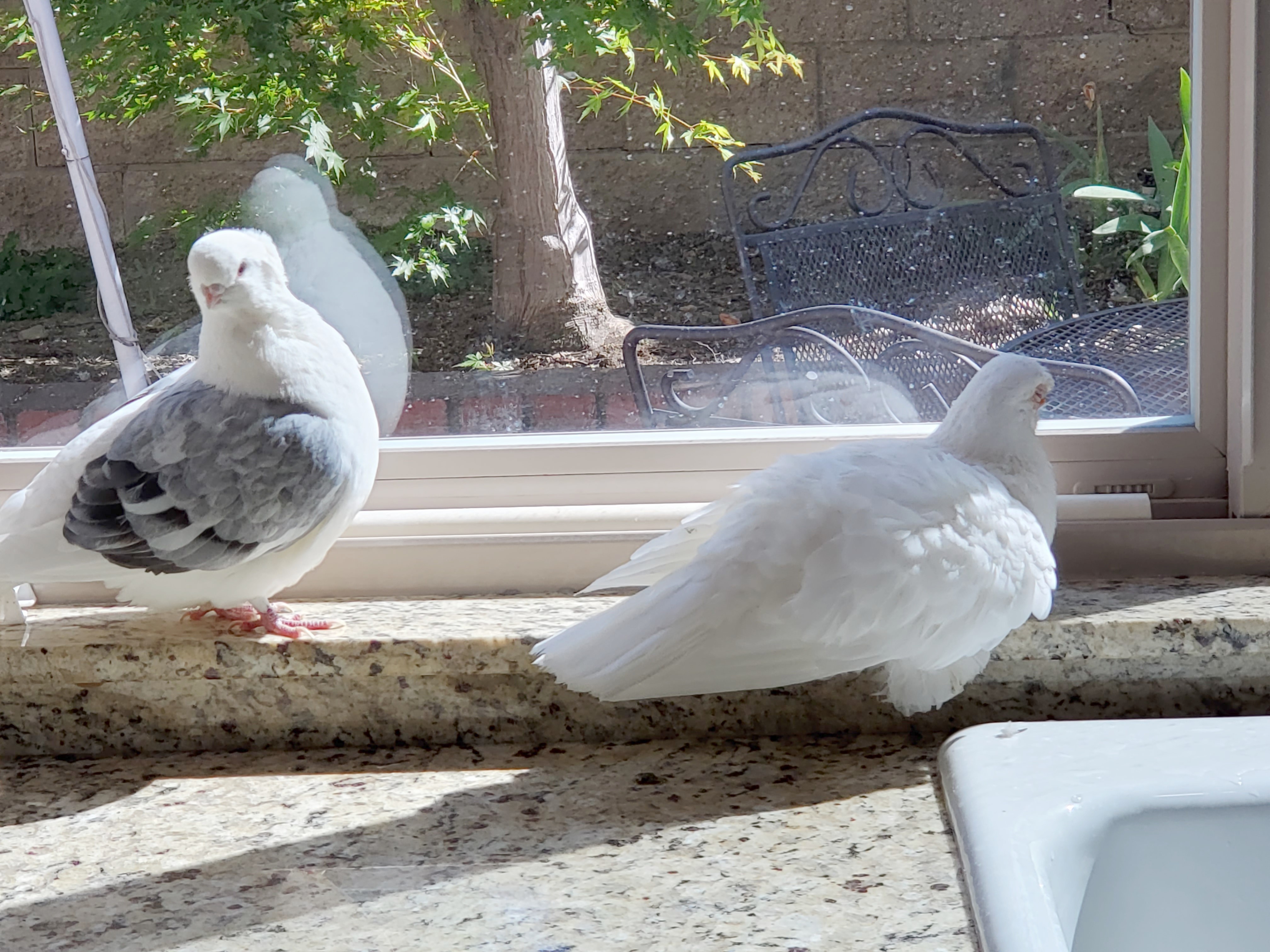
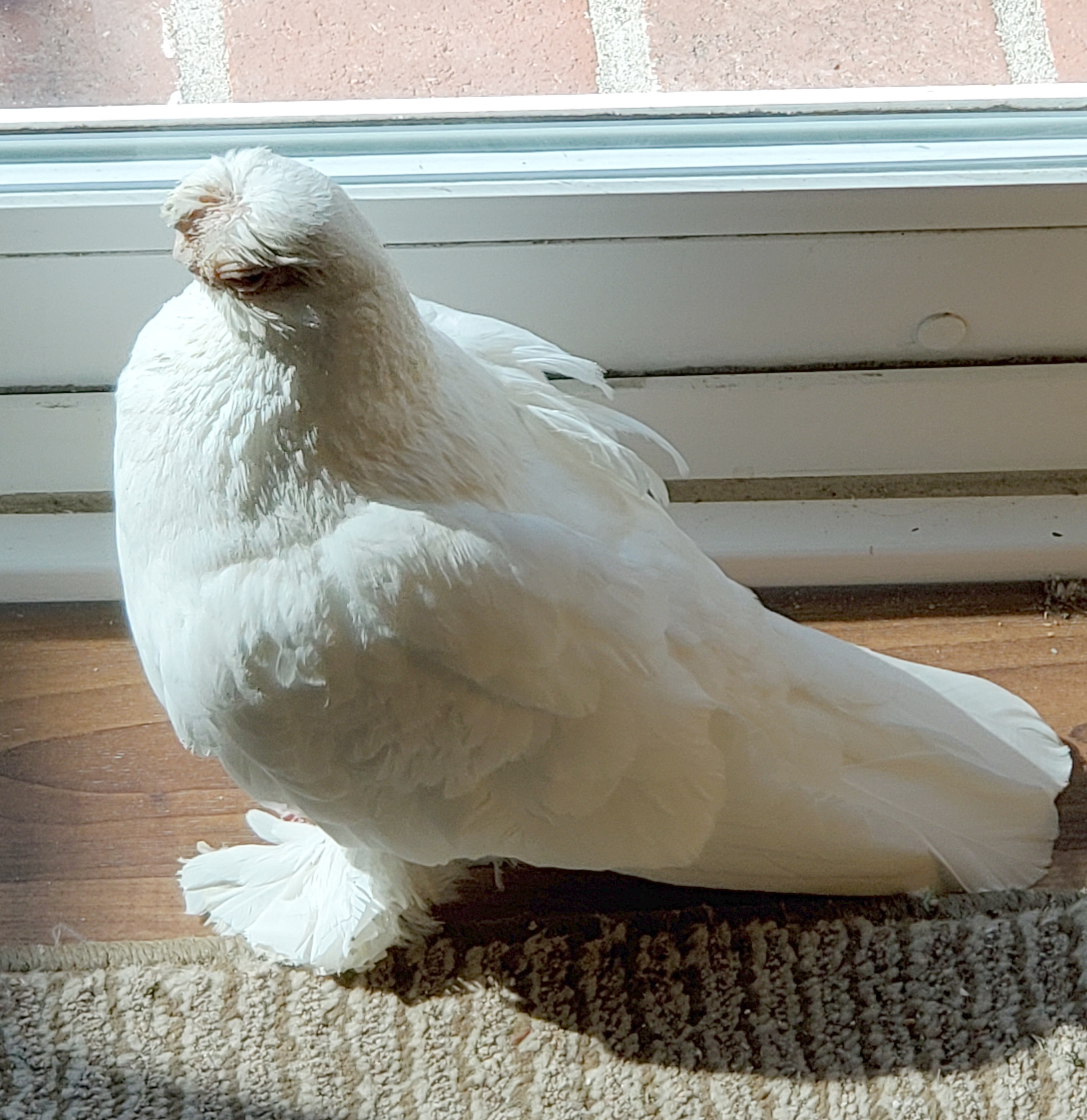
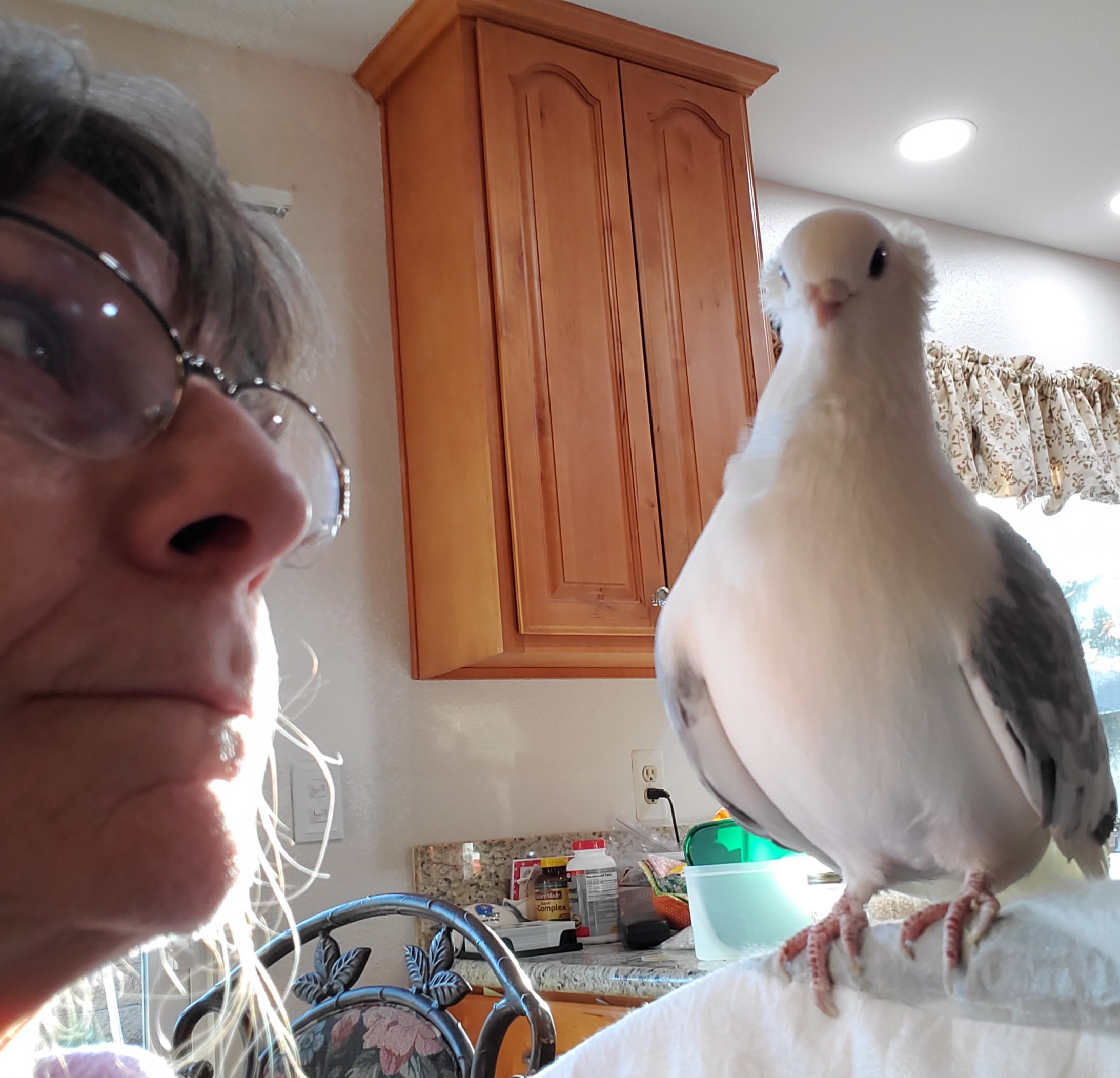
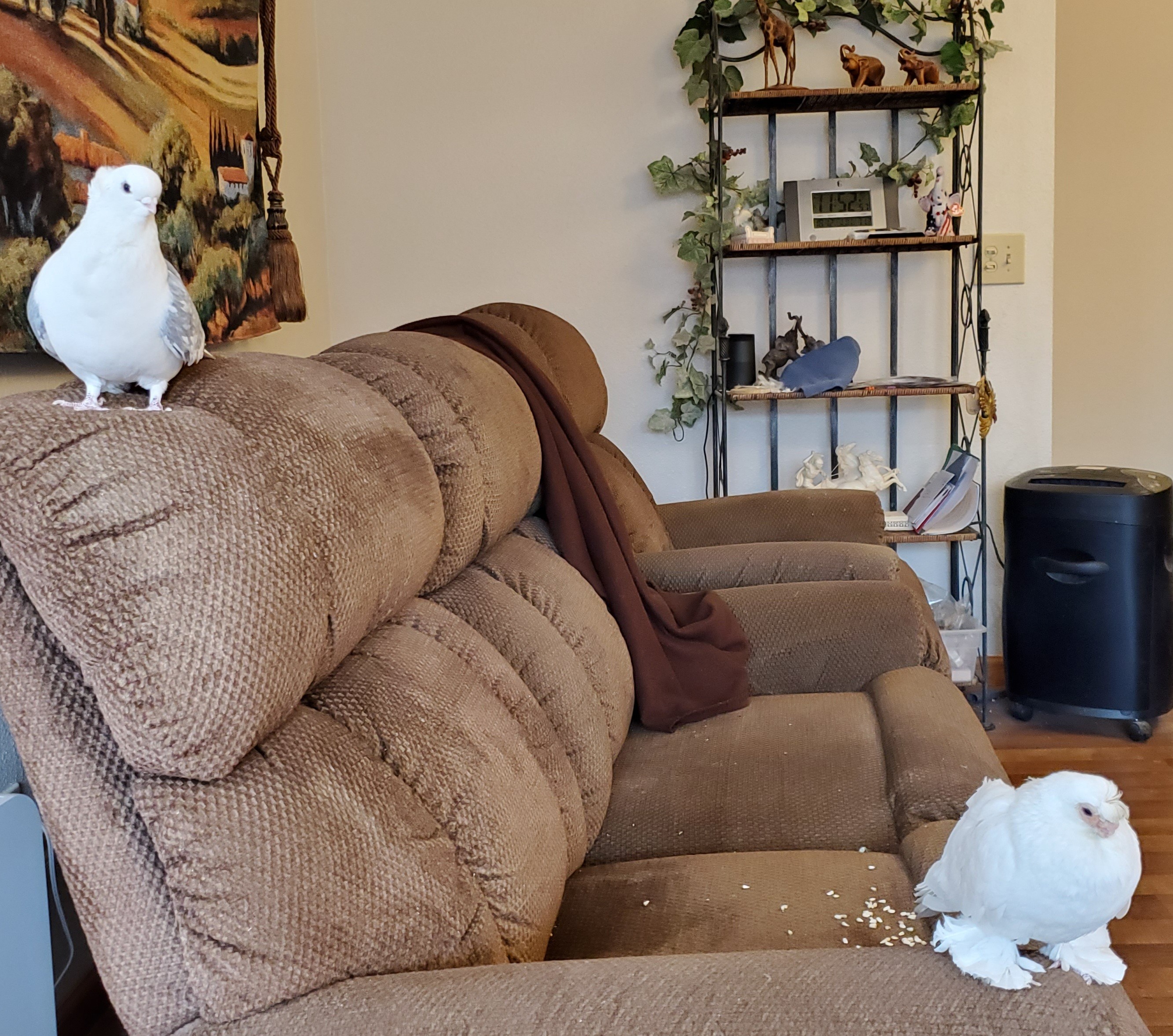
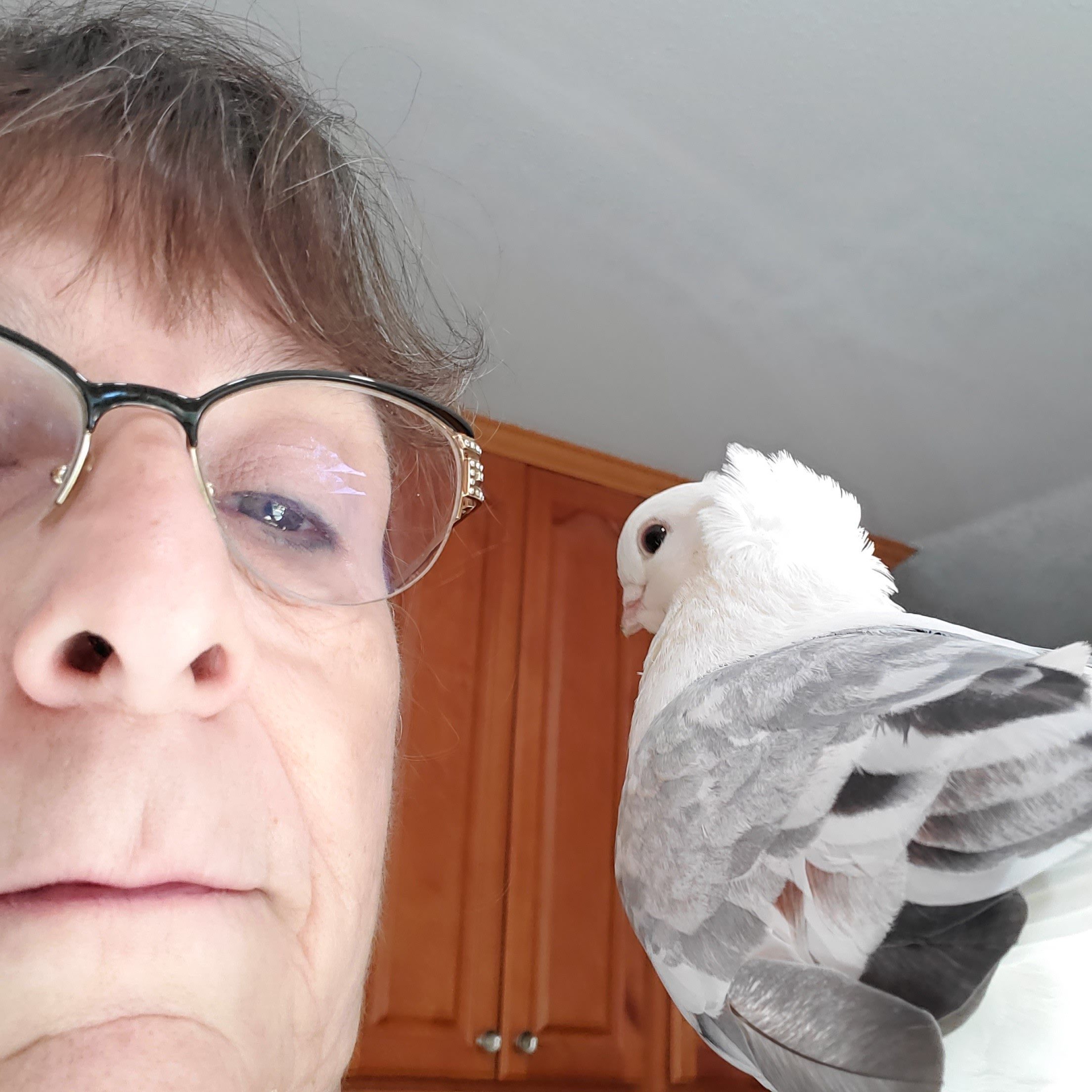
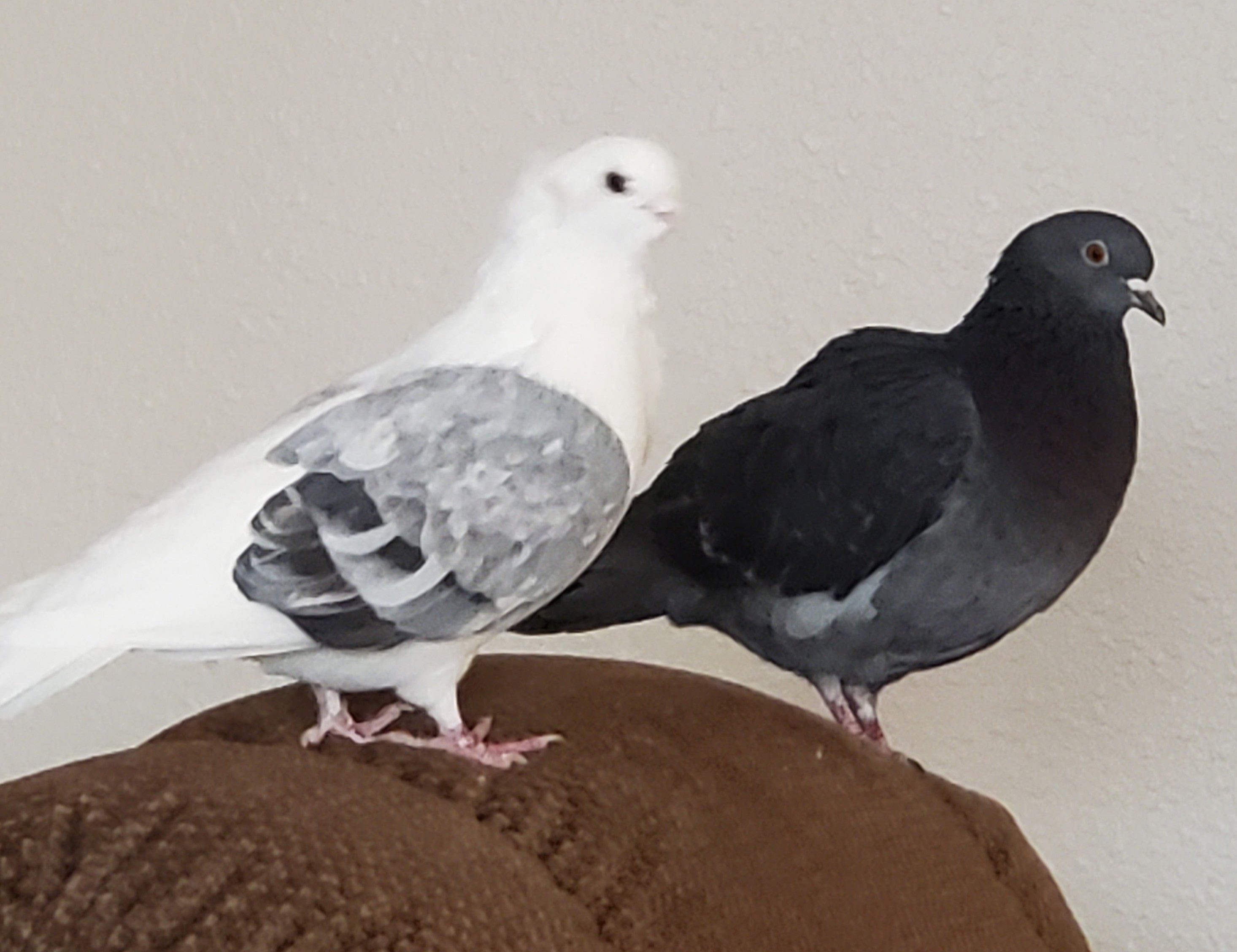
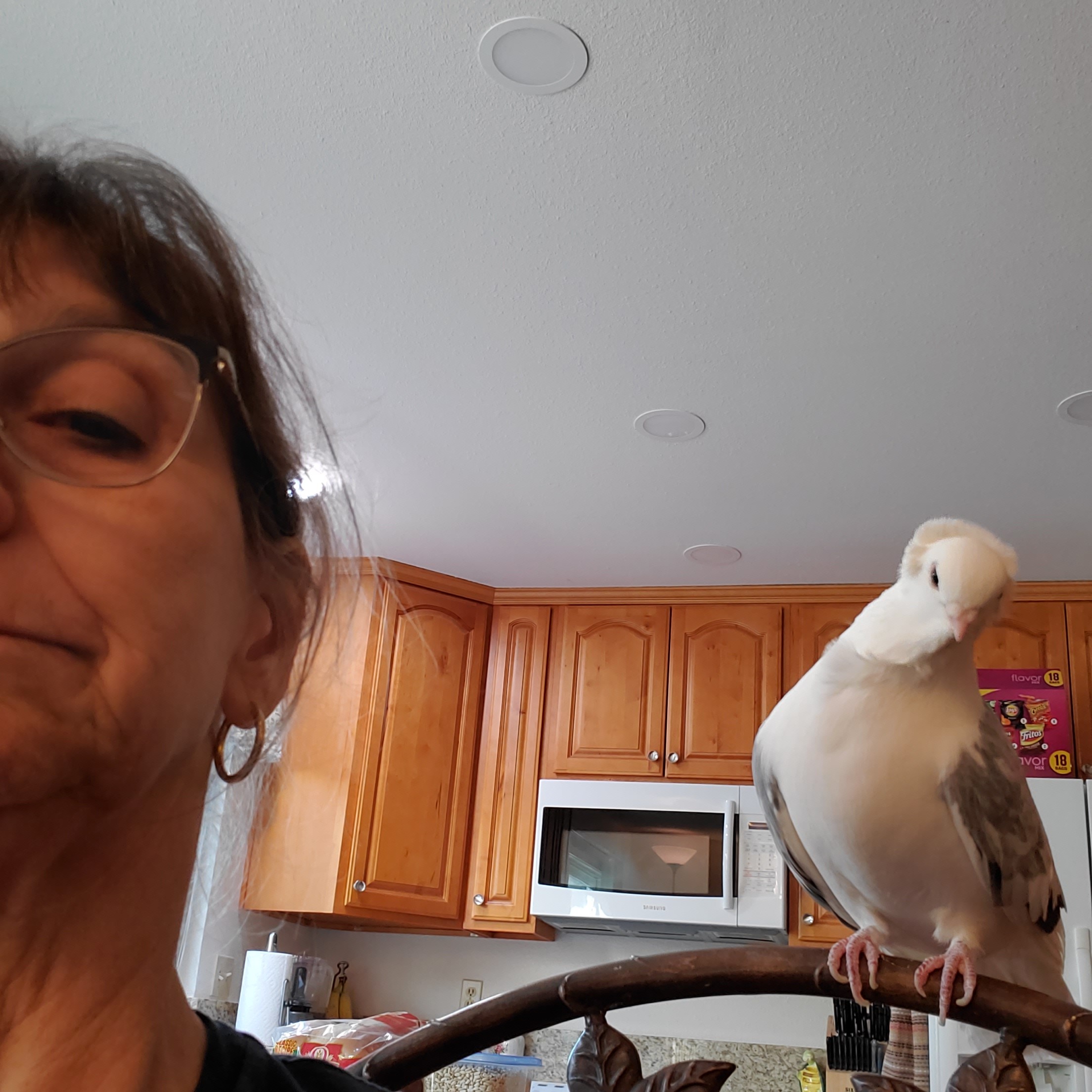
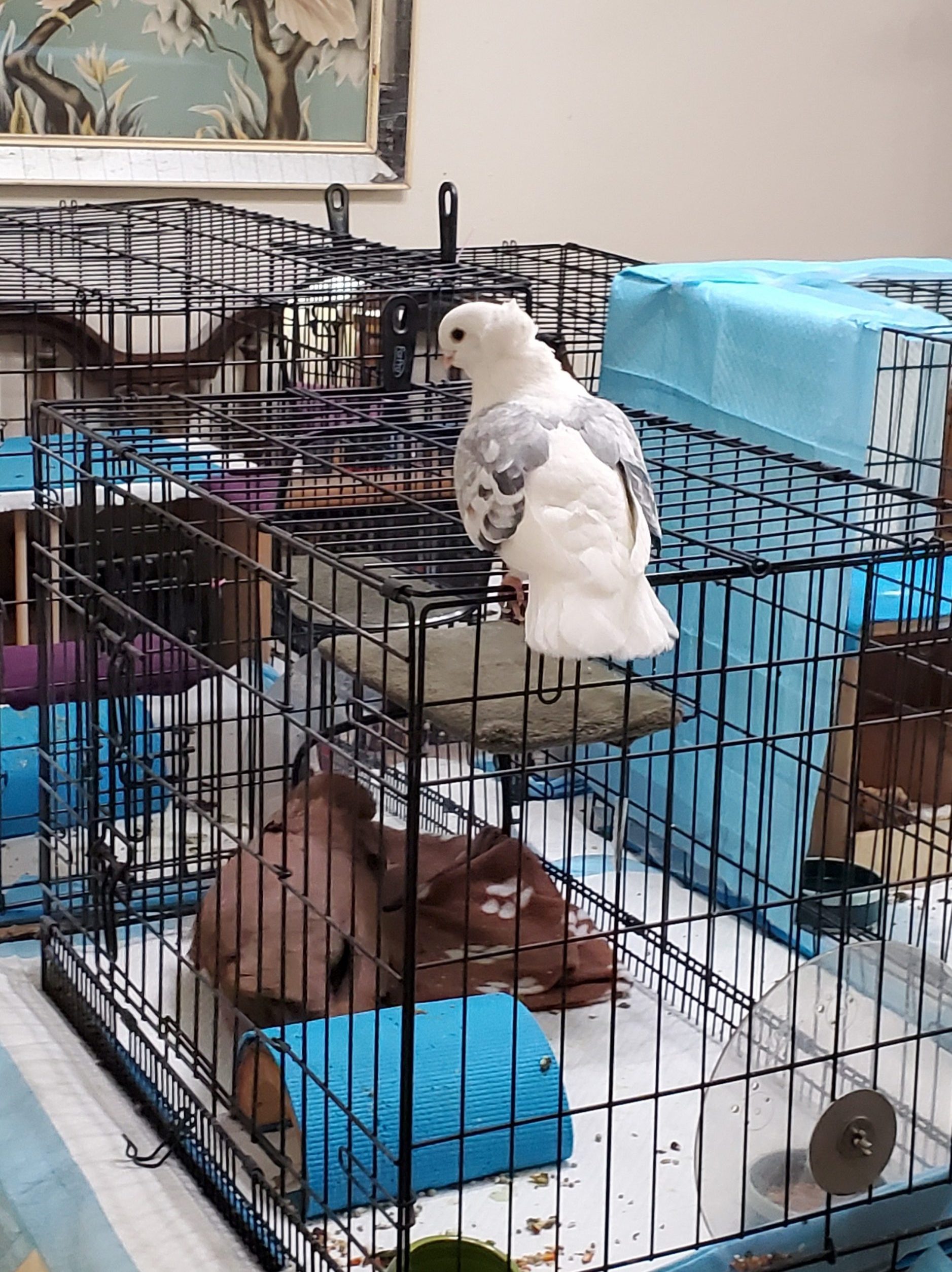
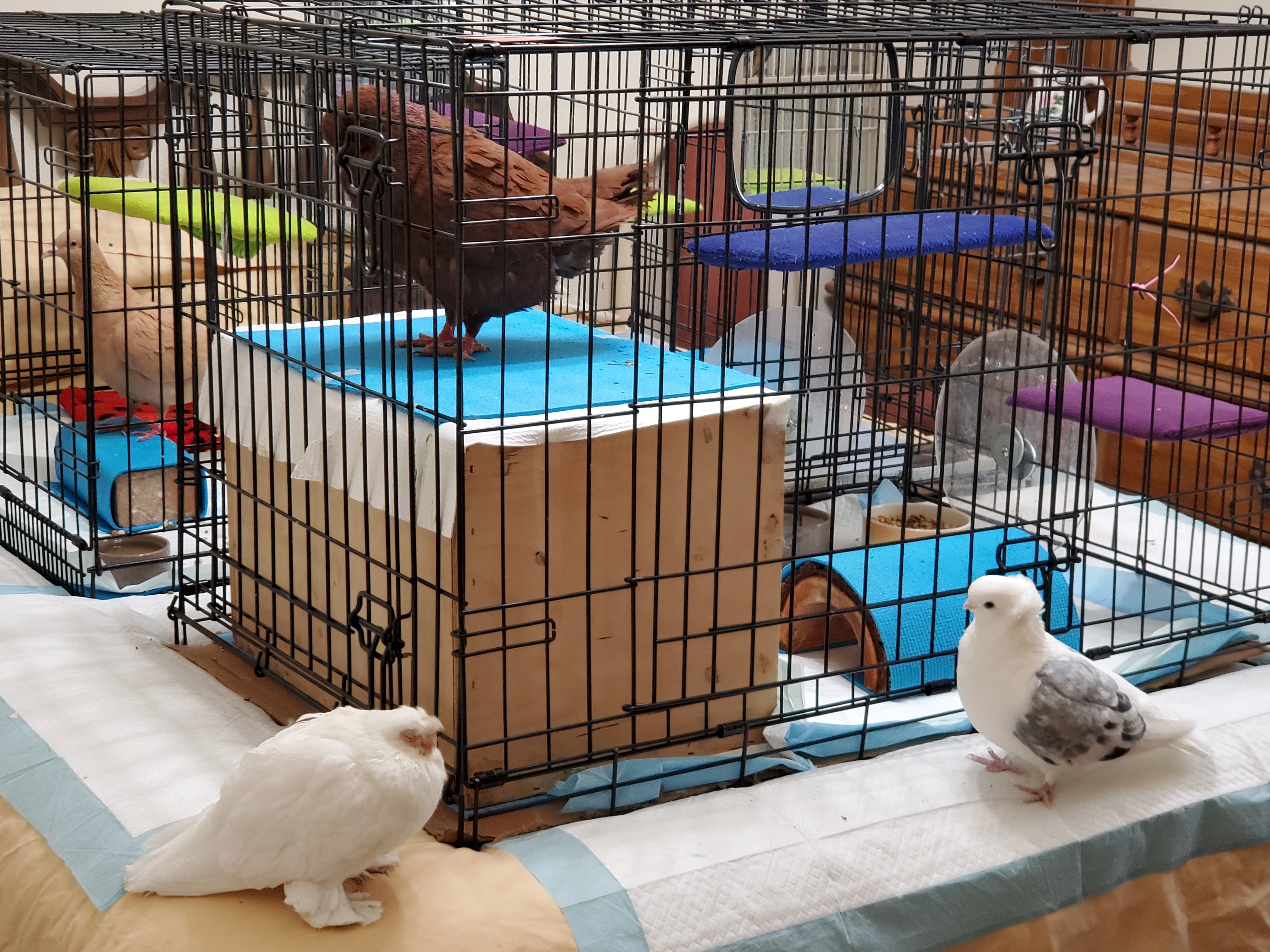
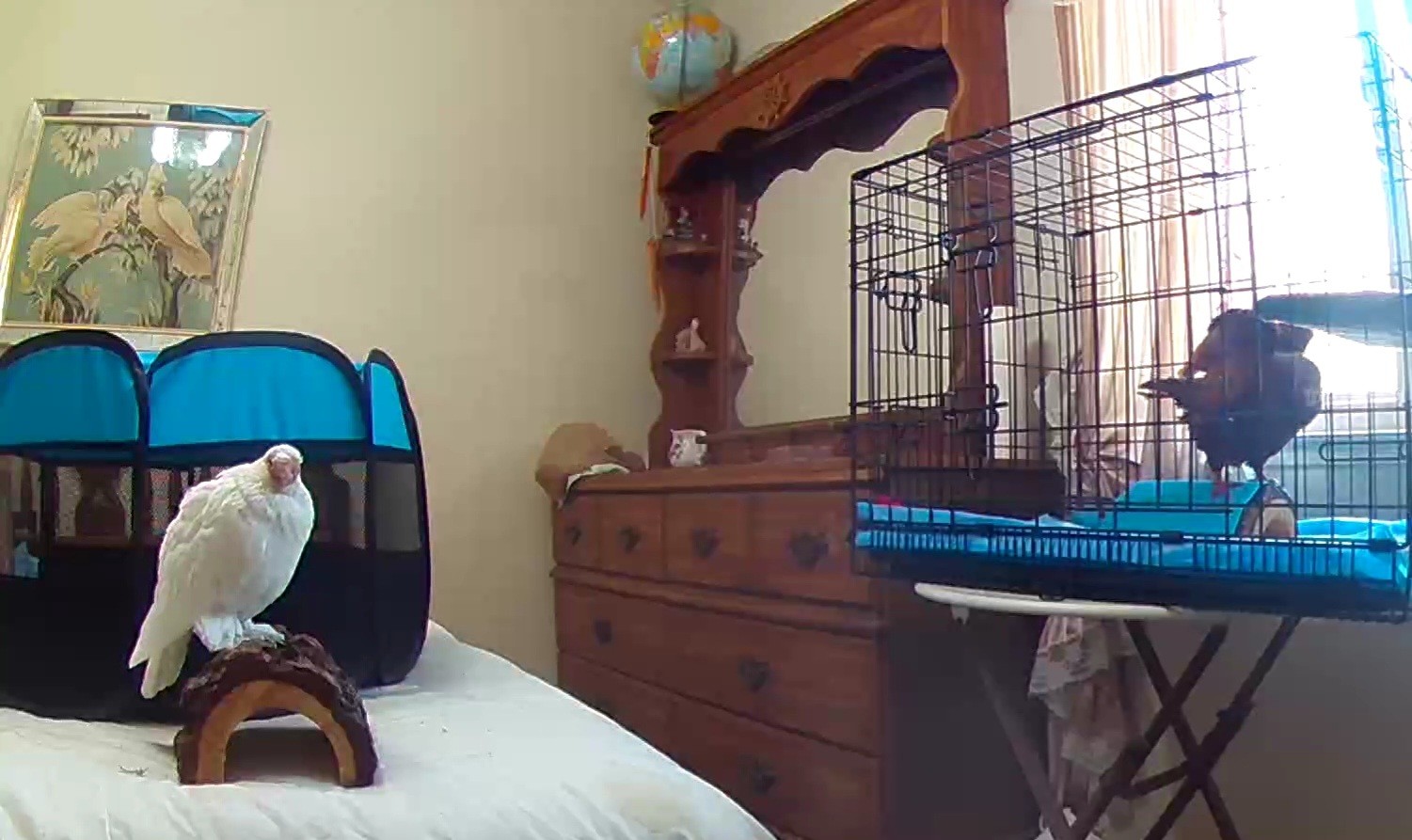
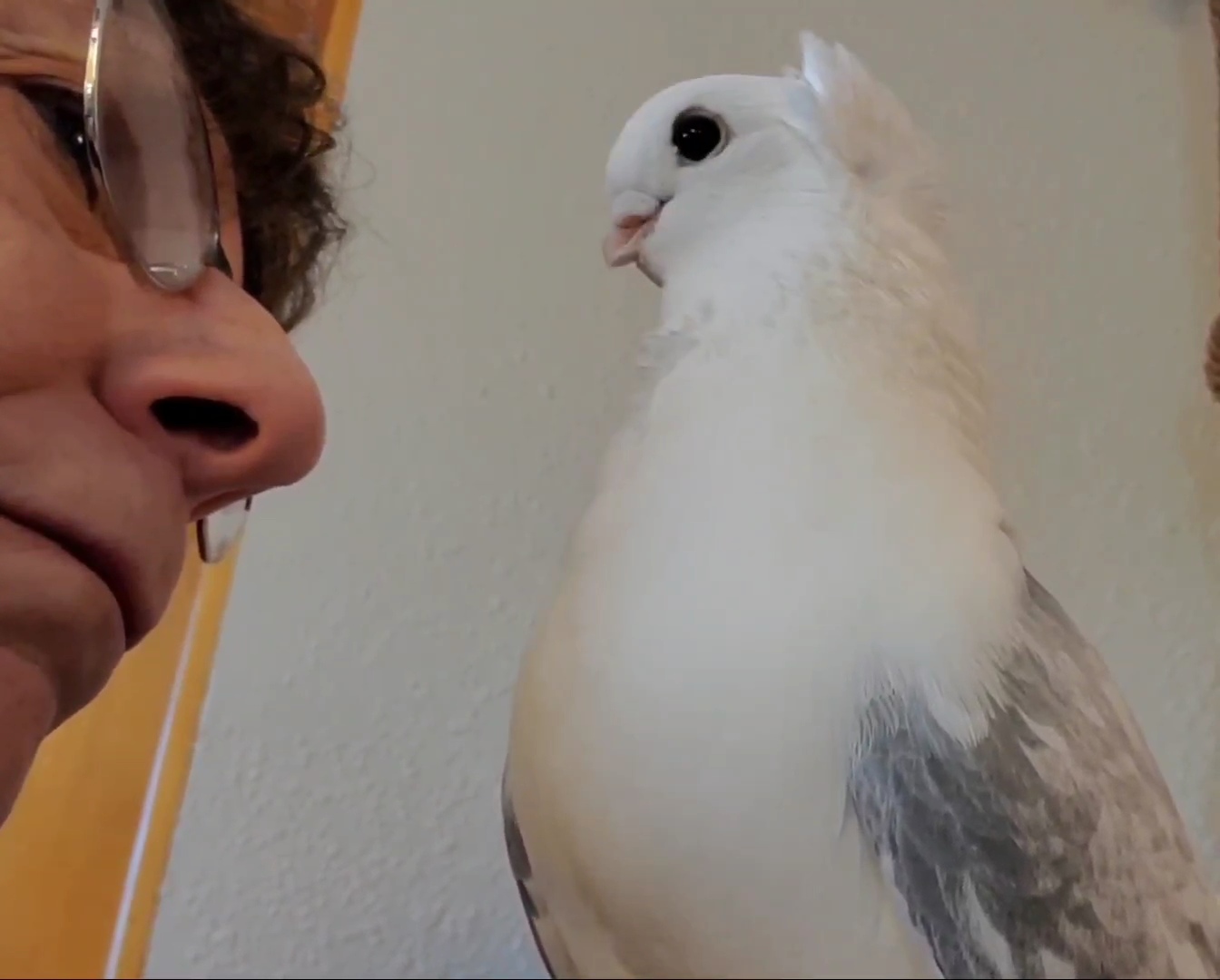
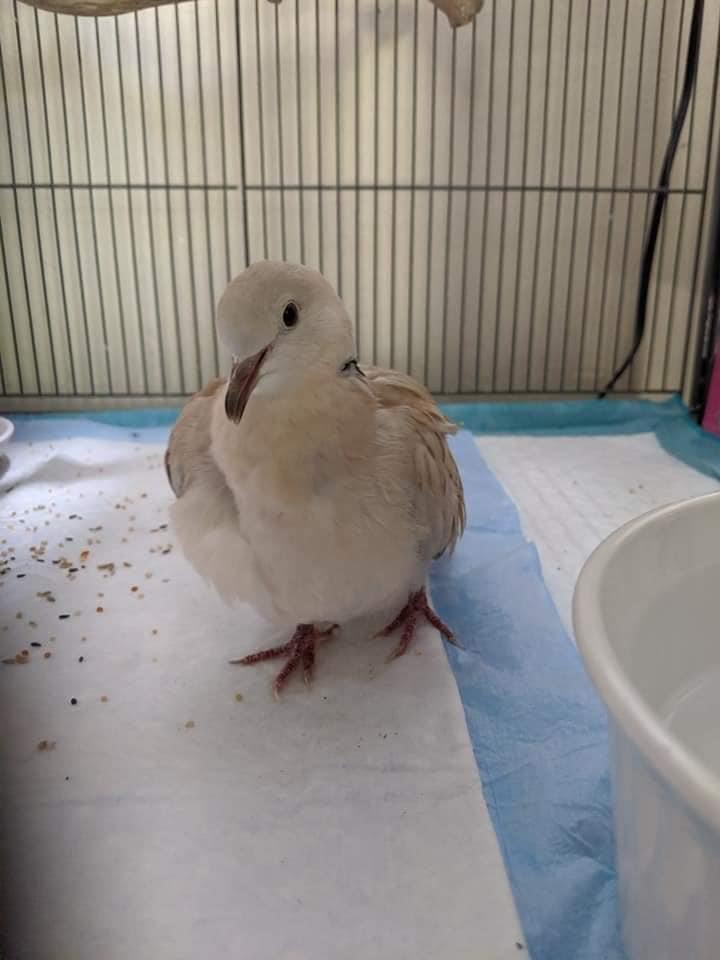
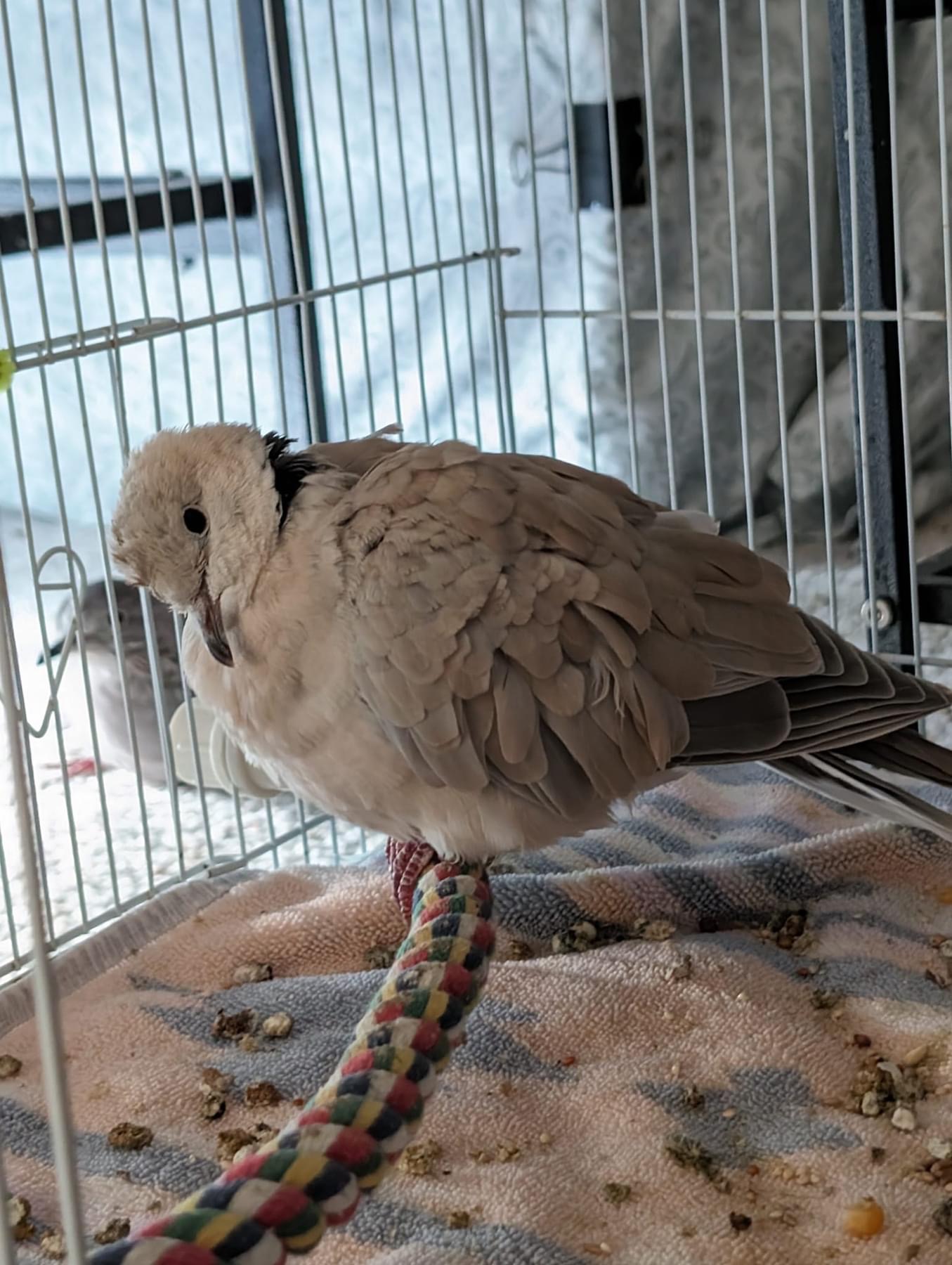
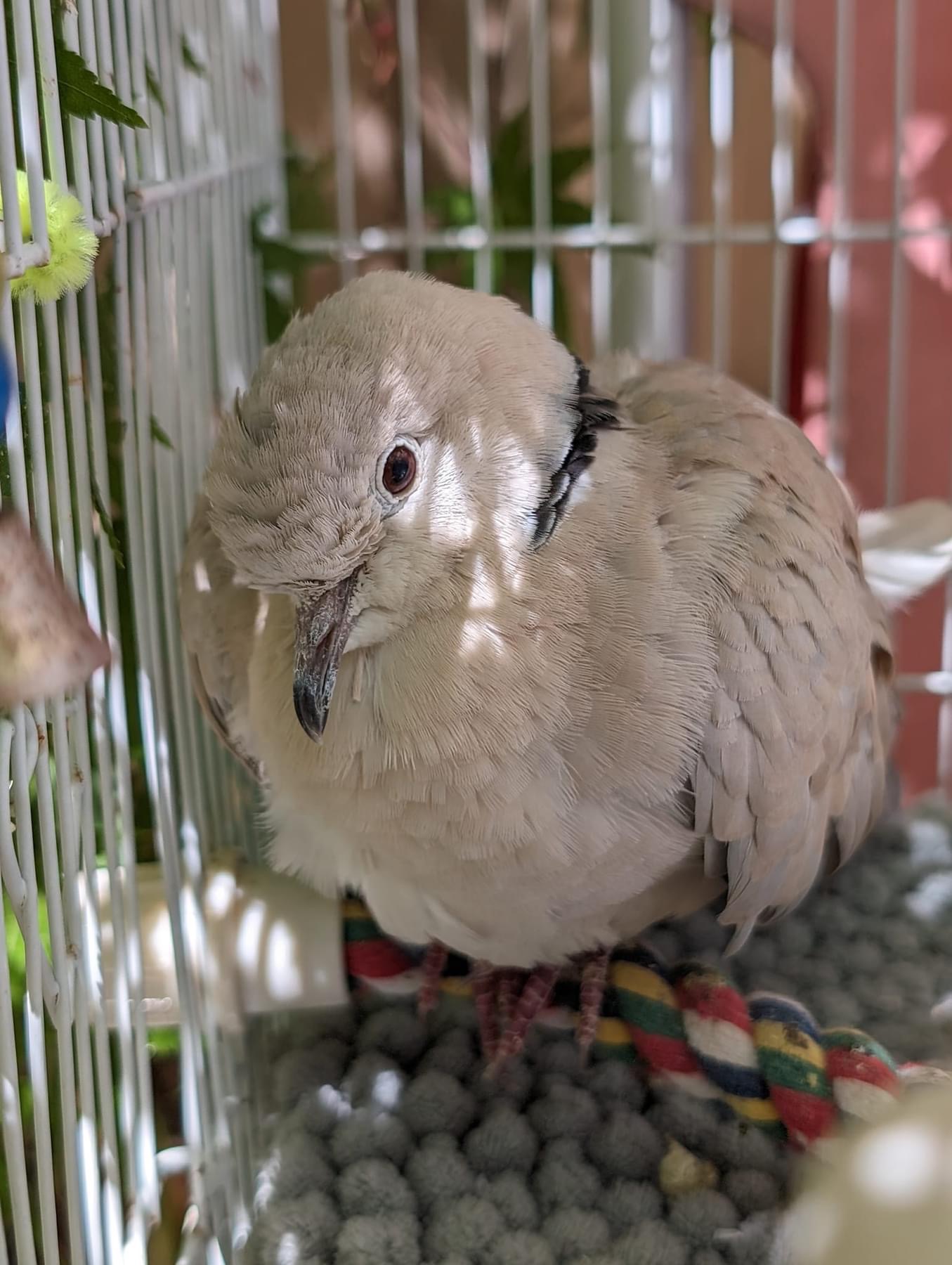
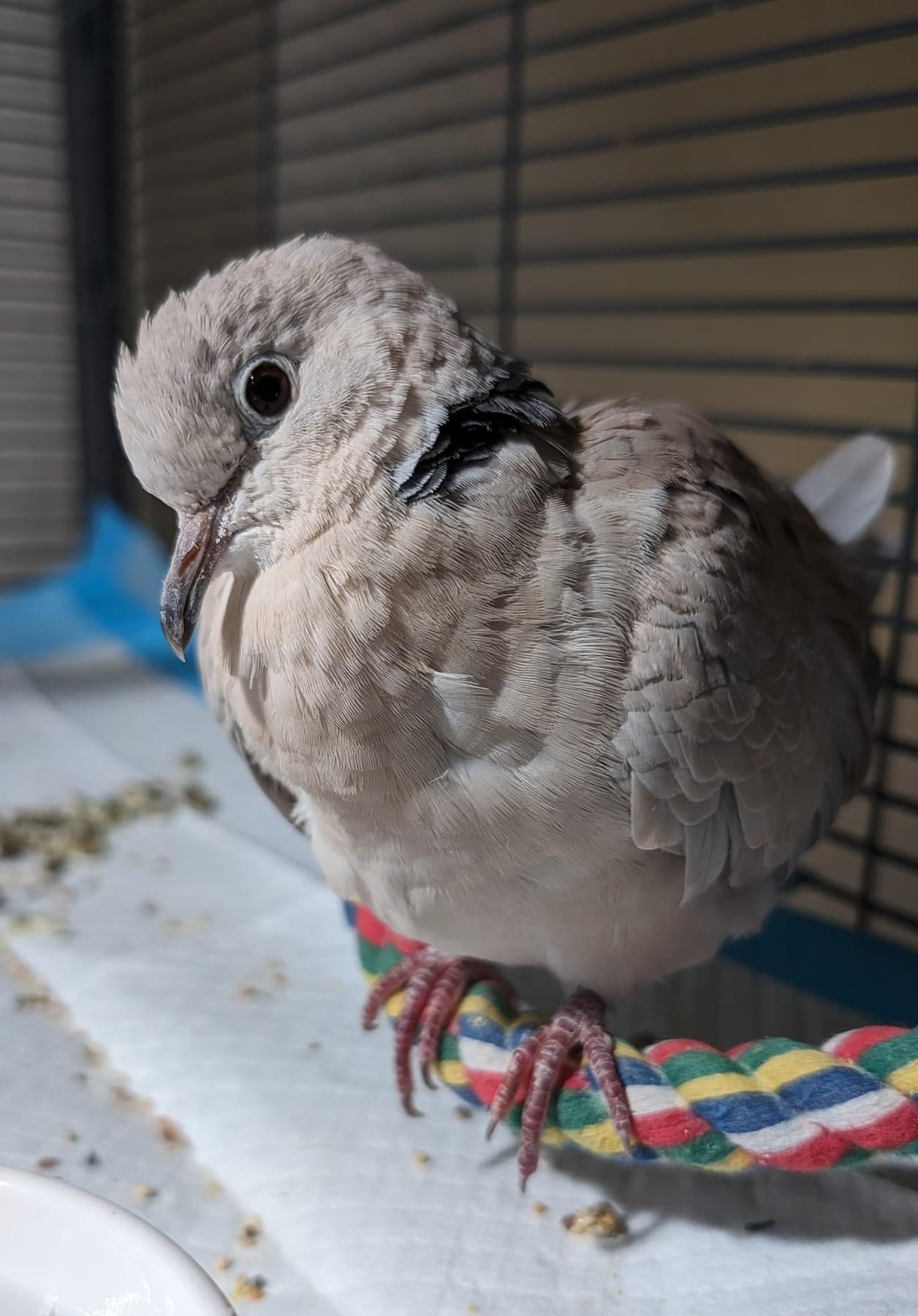
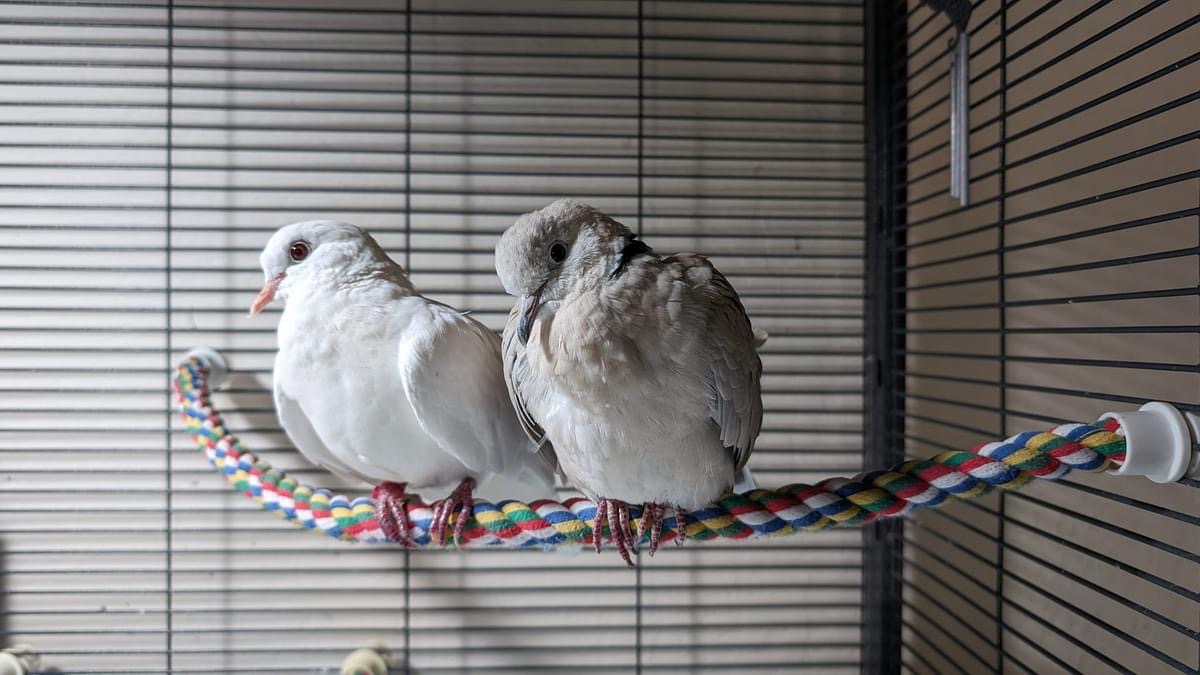
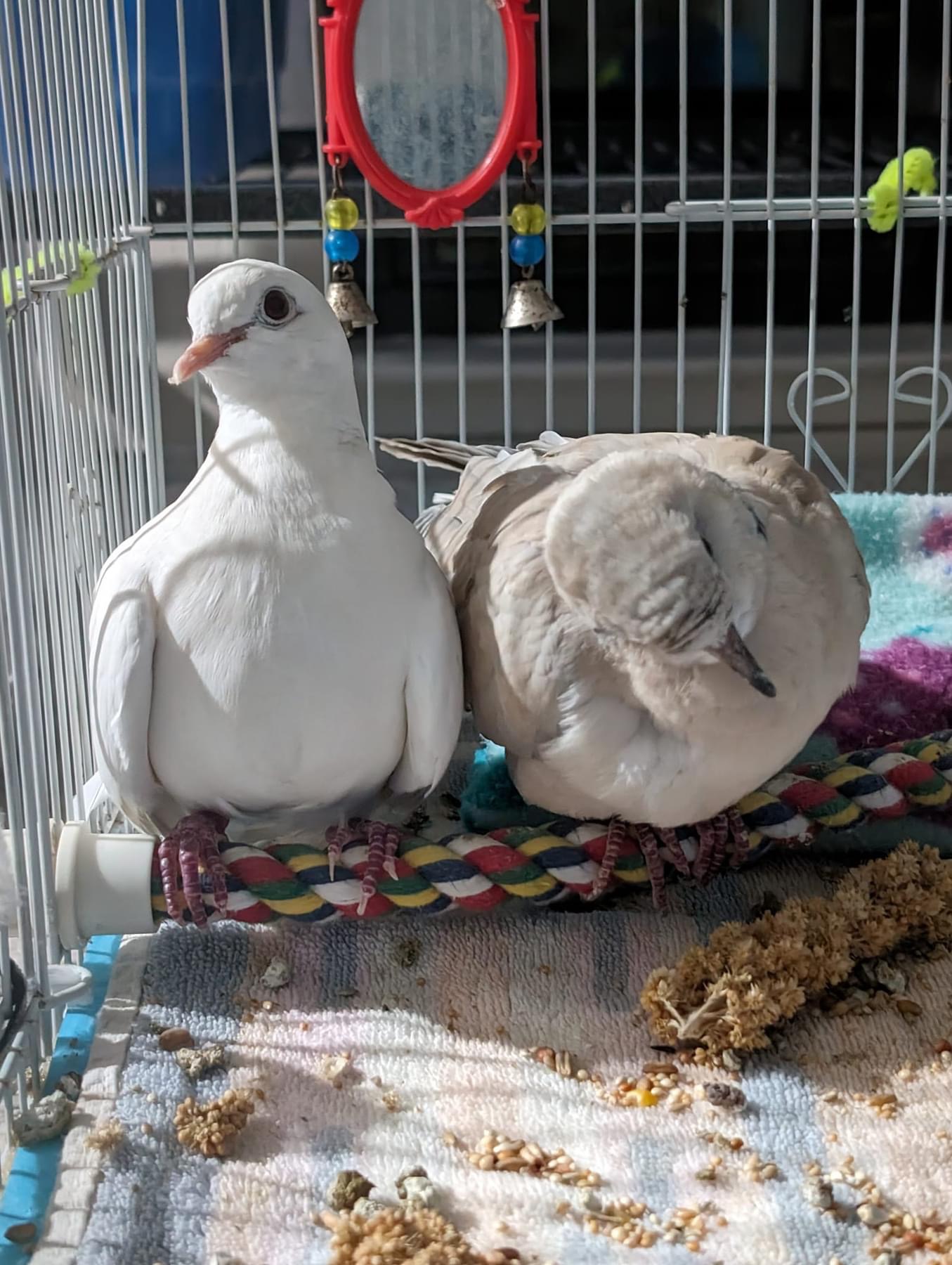
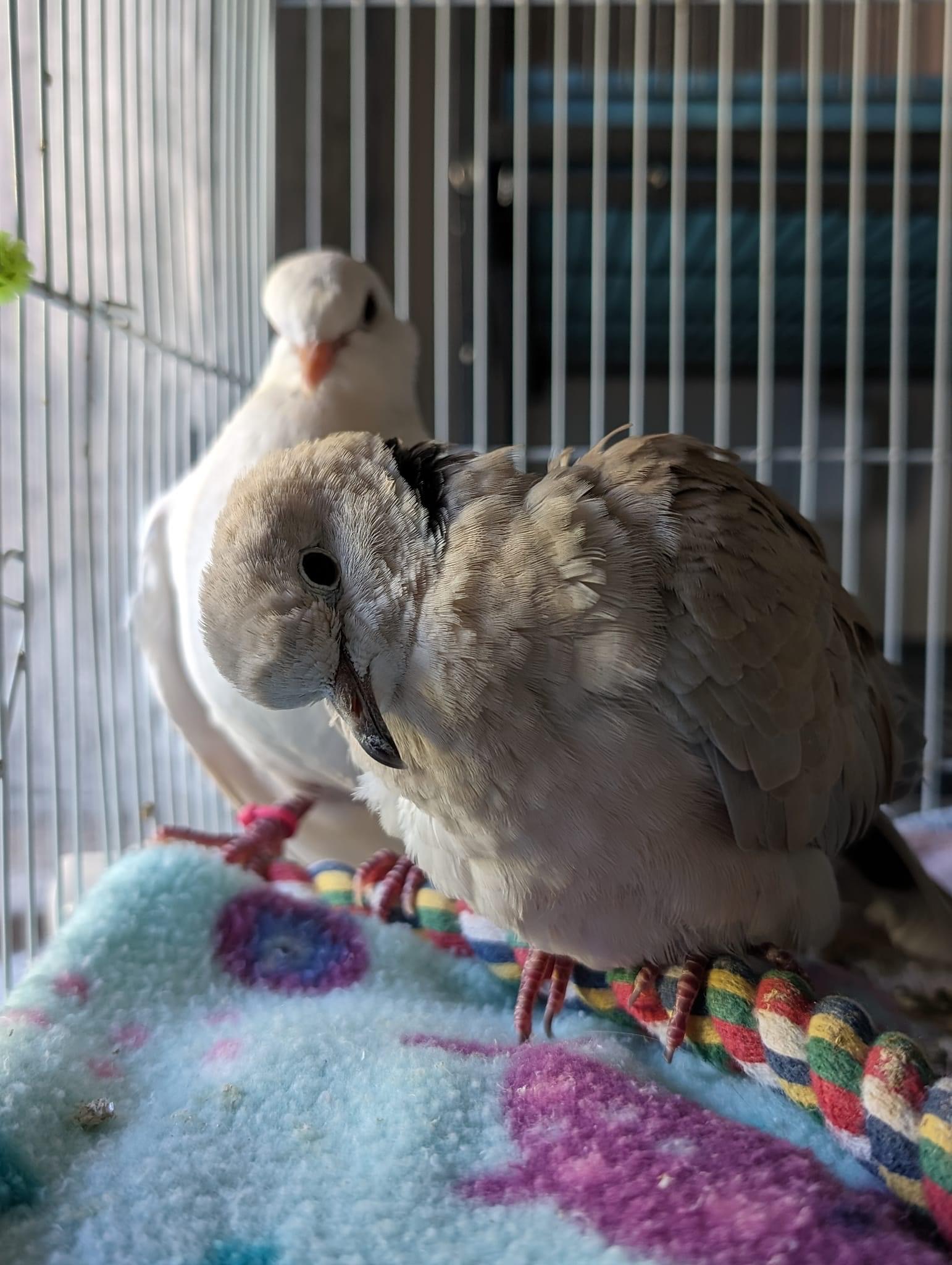
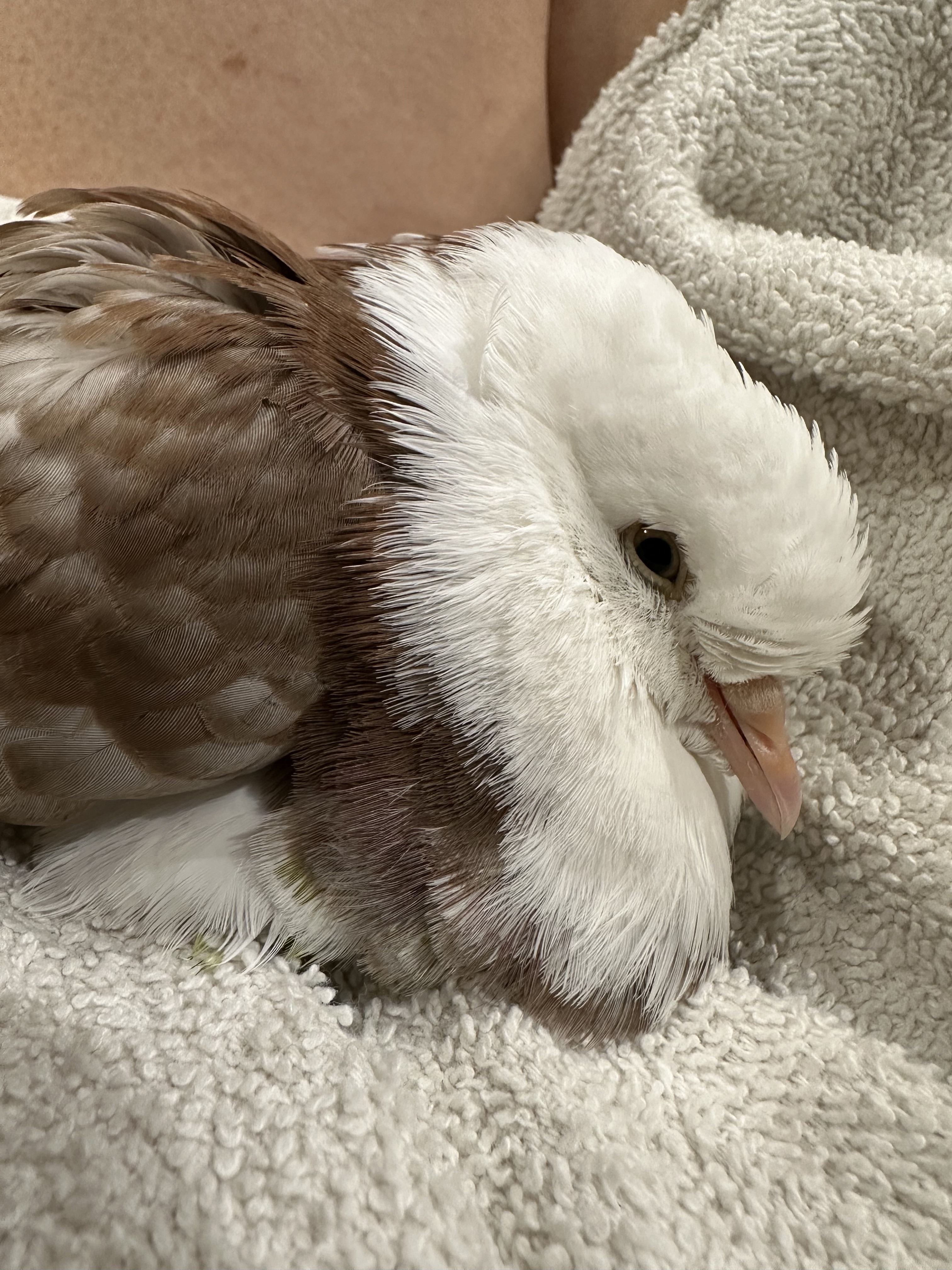
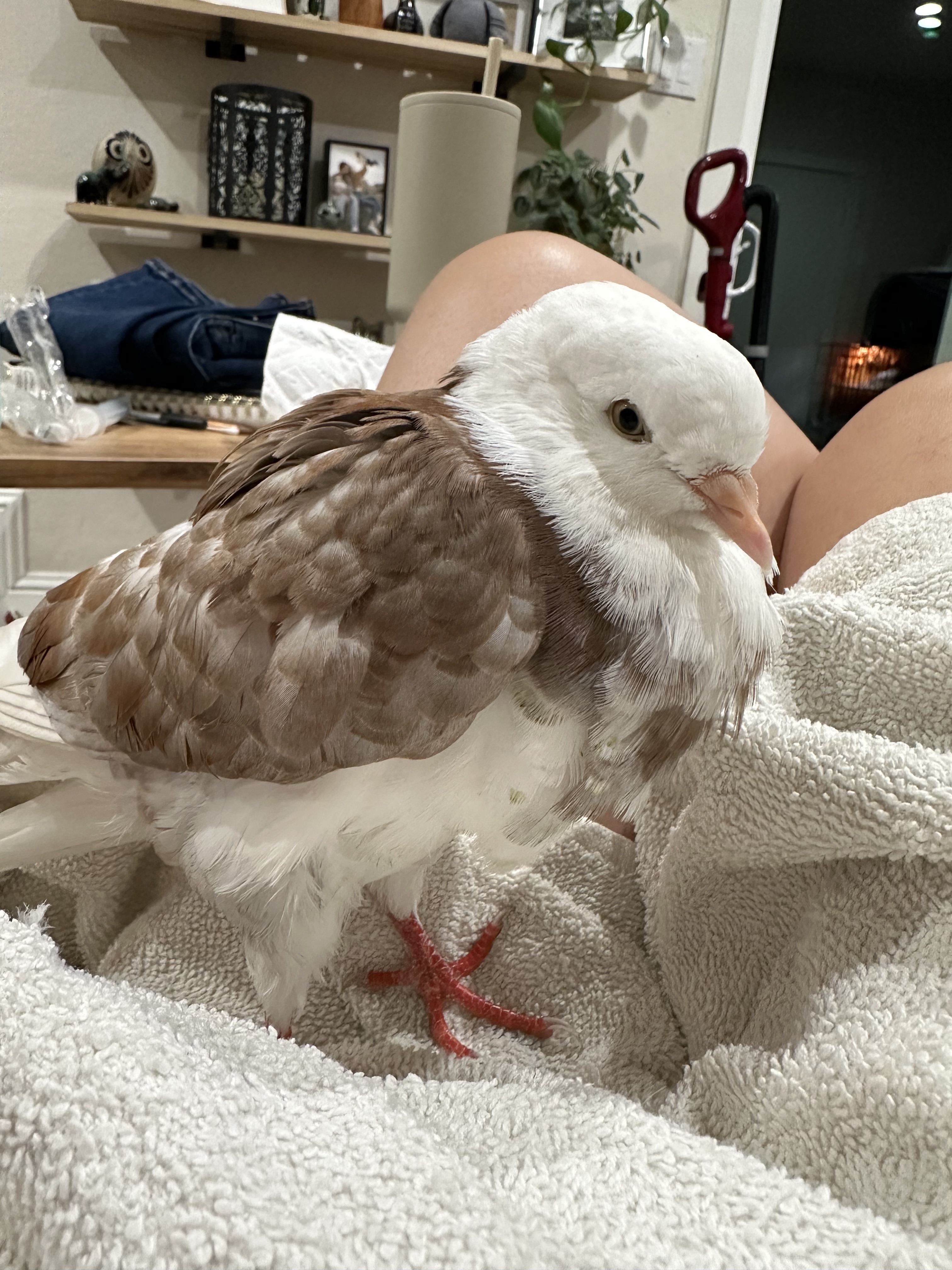
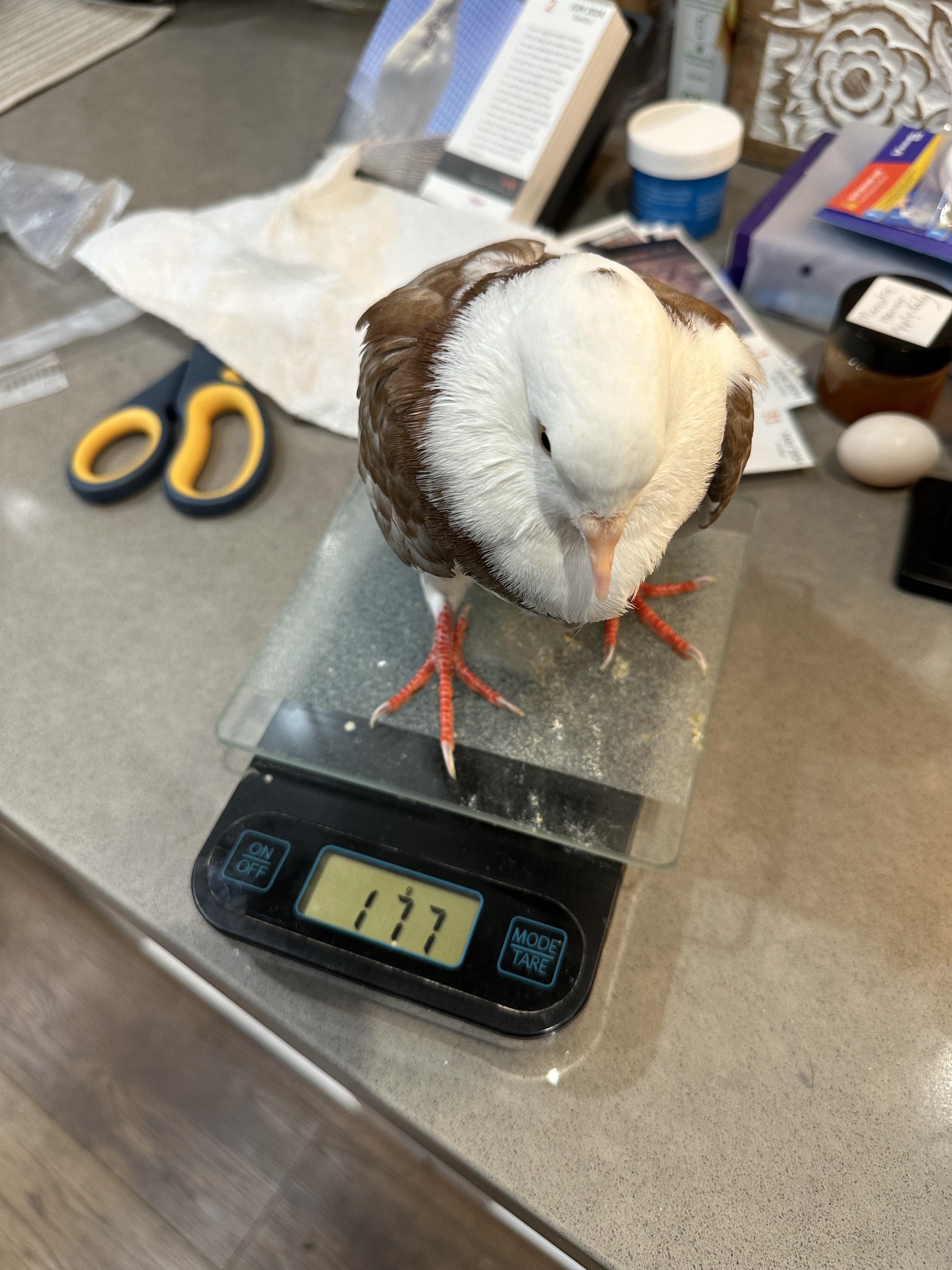
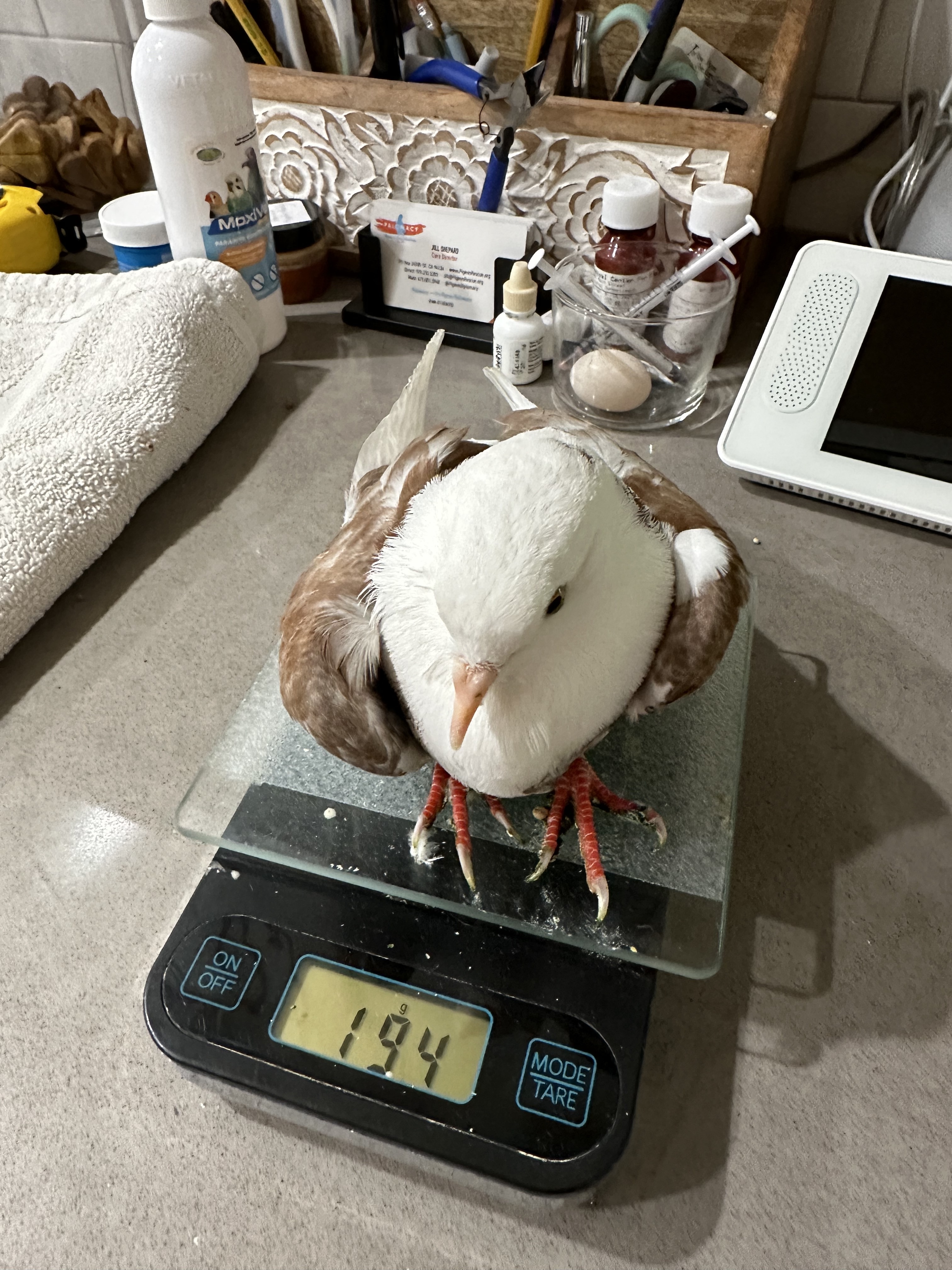
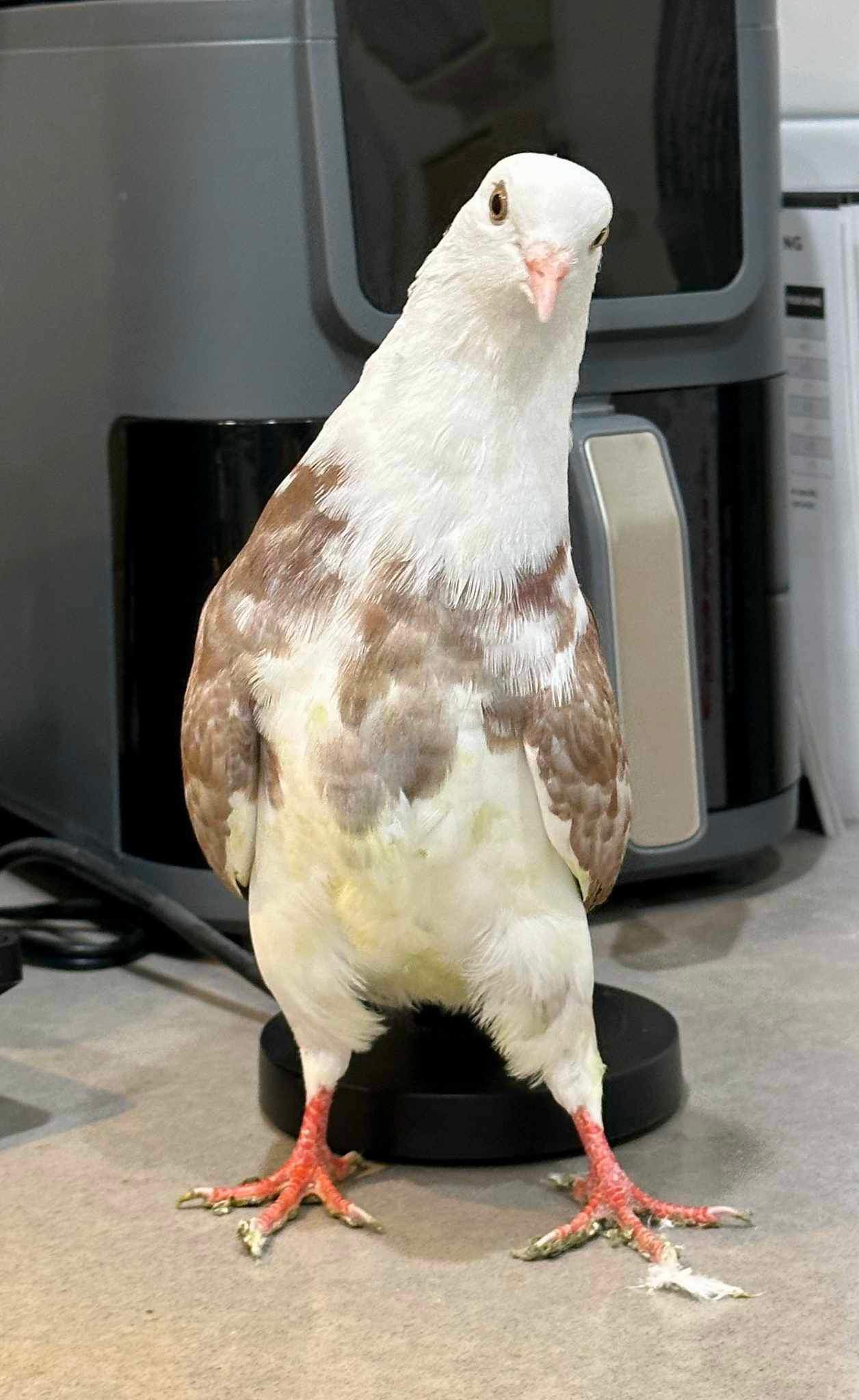
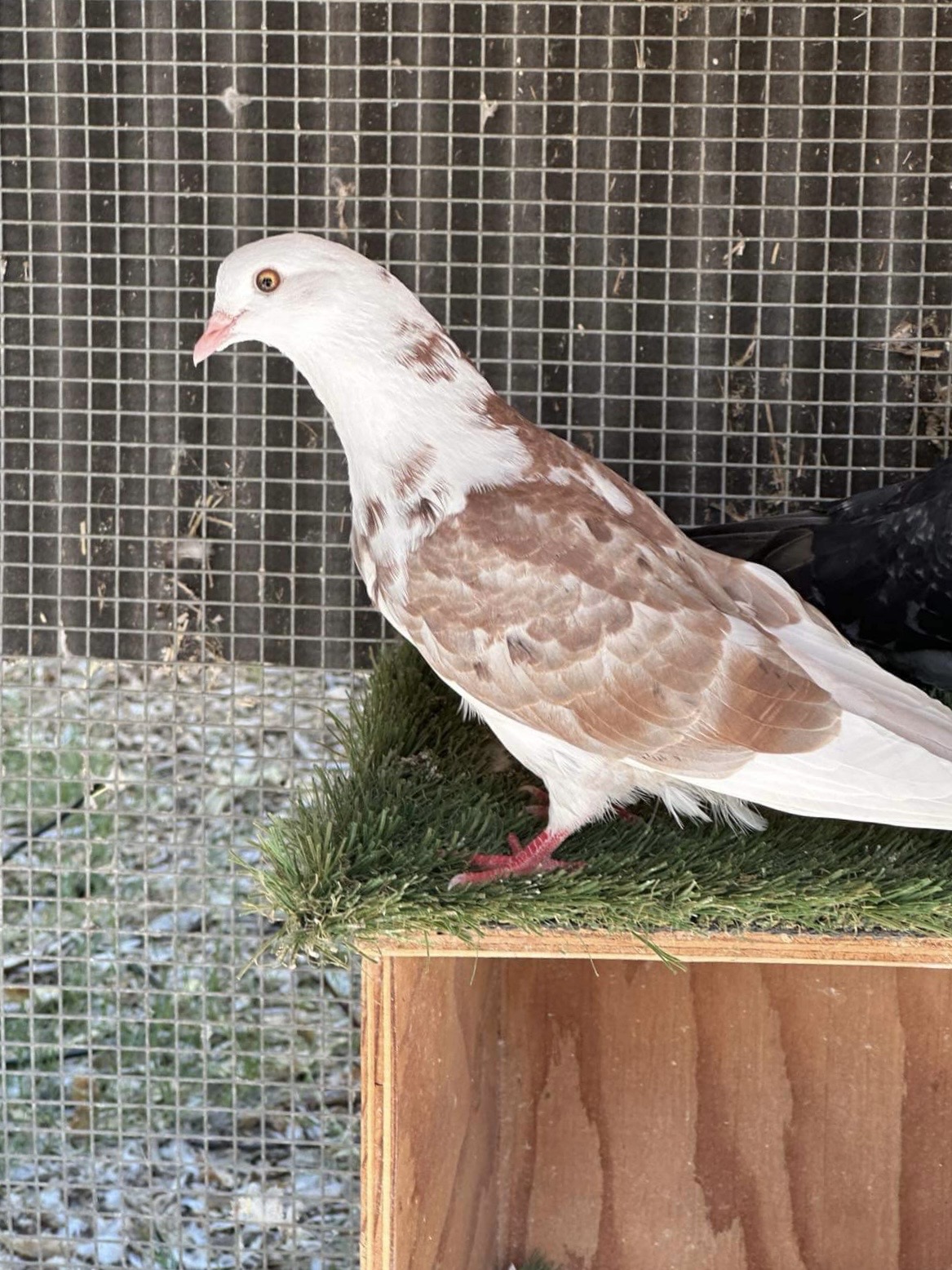
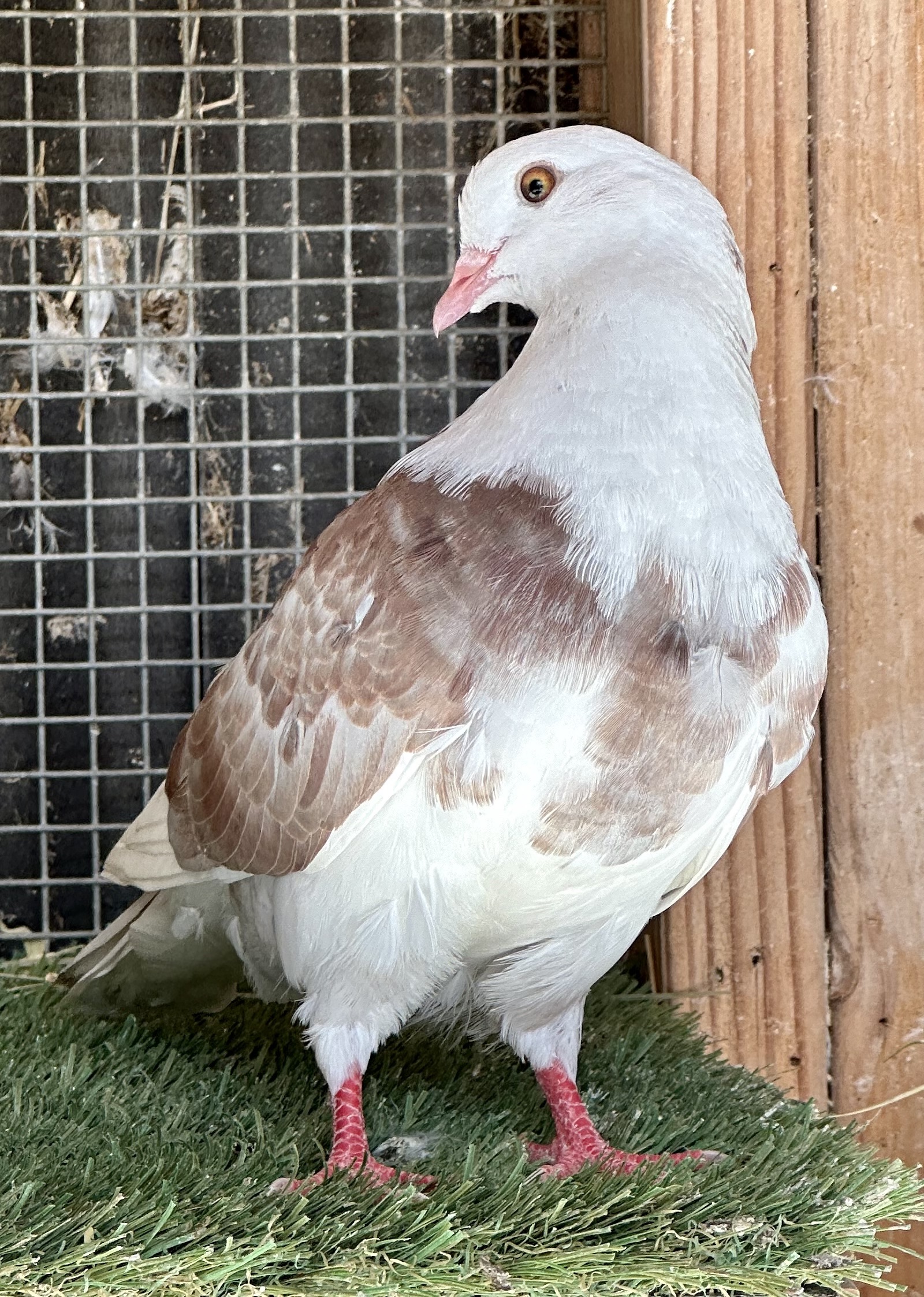
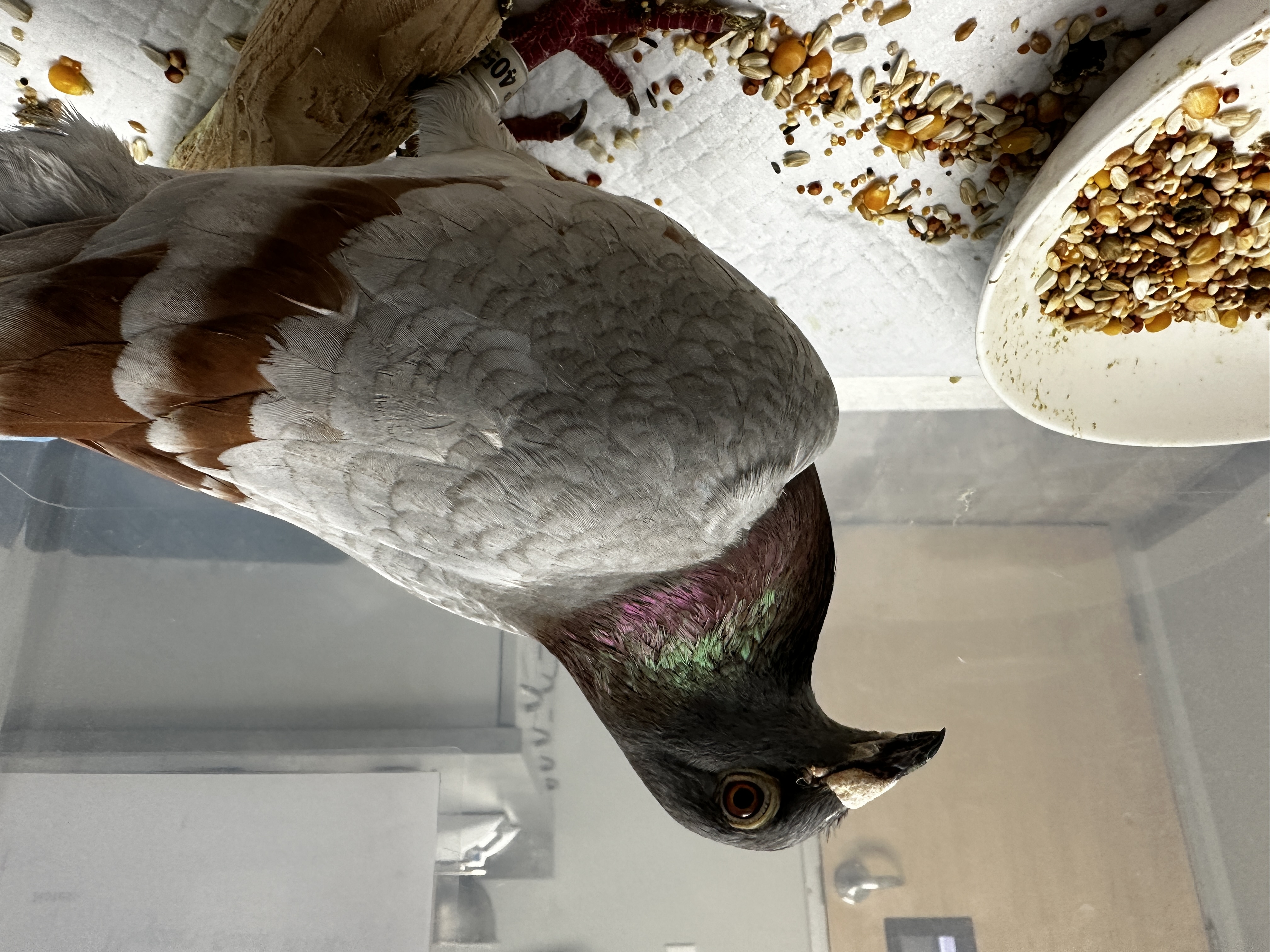
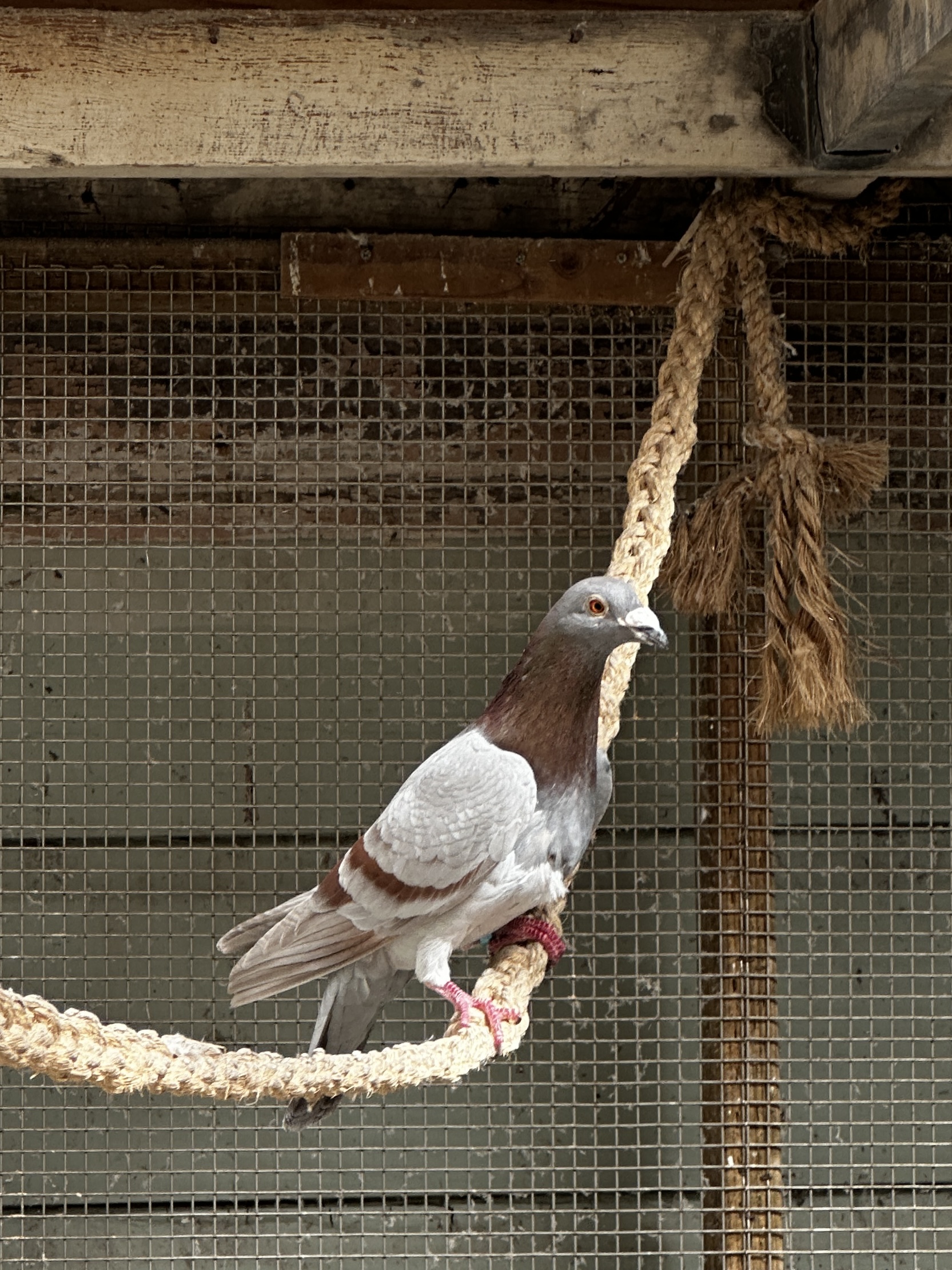
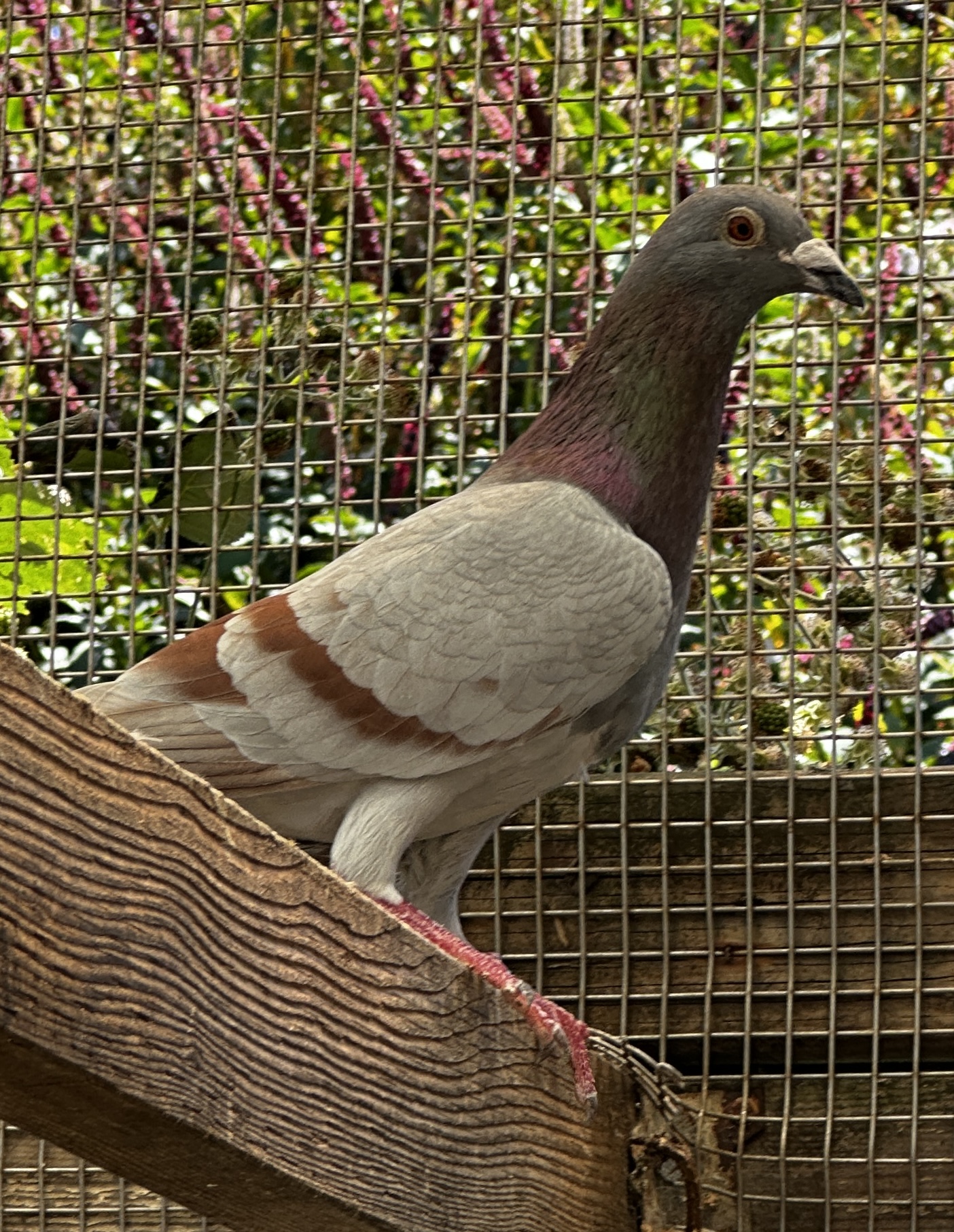
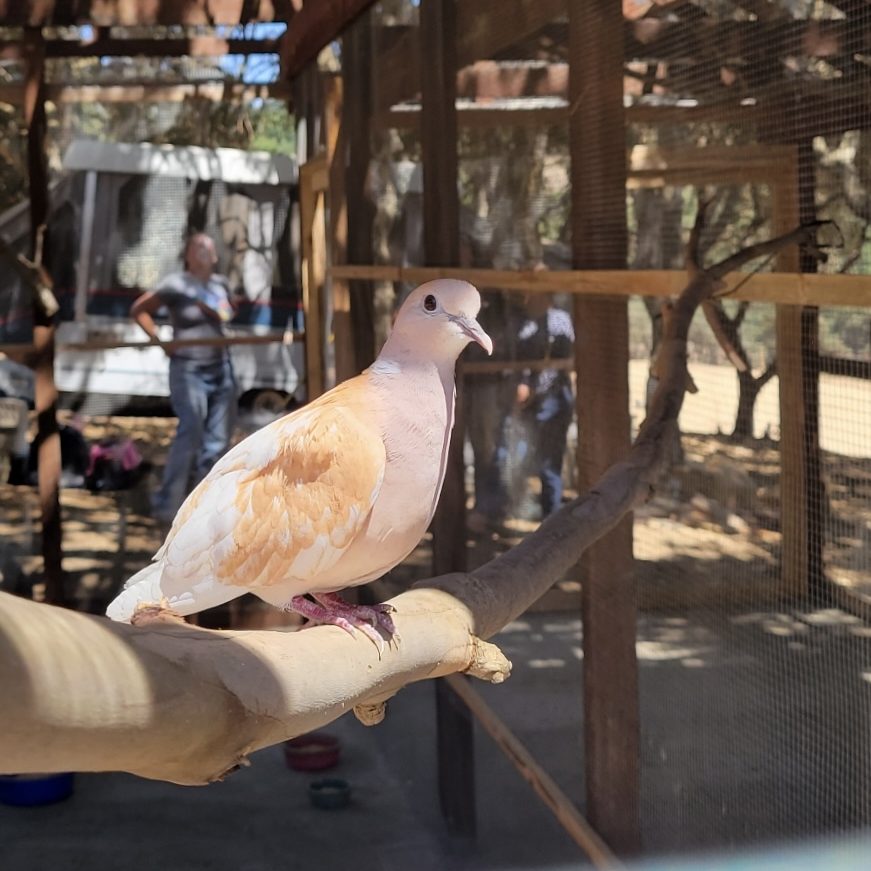
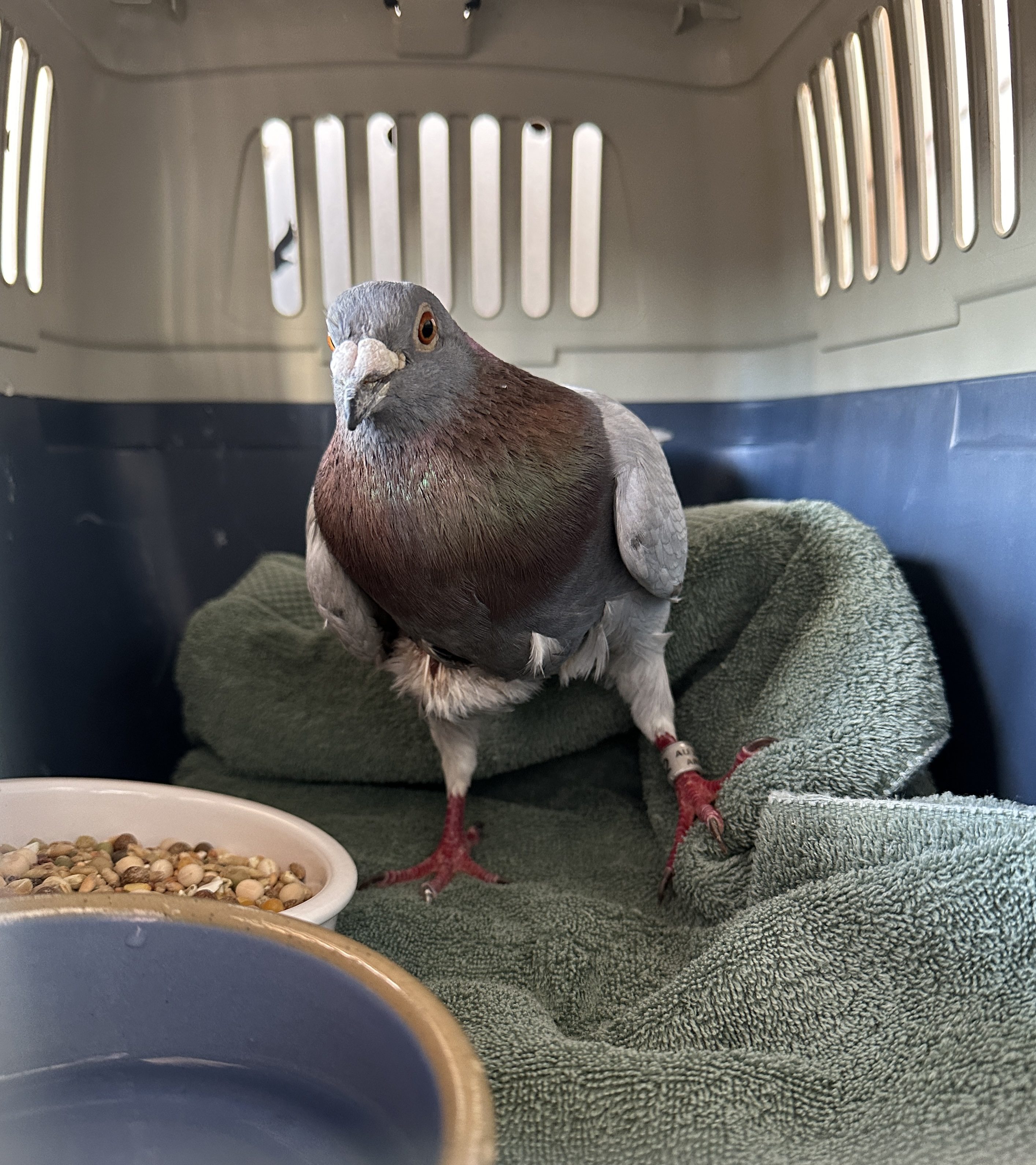
Opal rescued

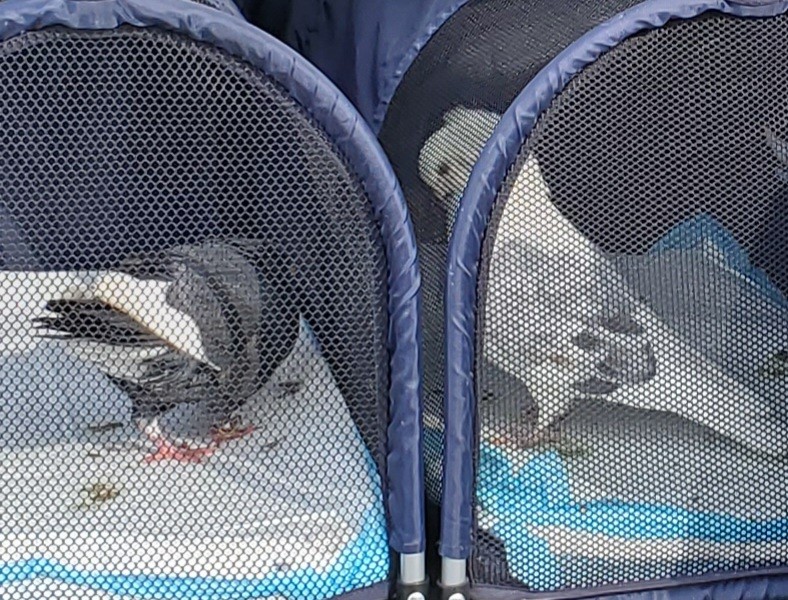
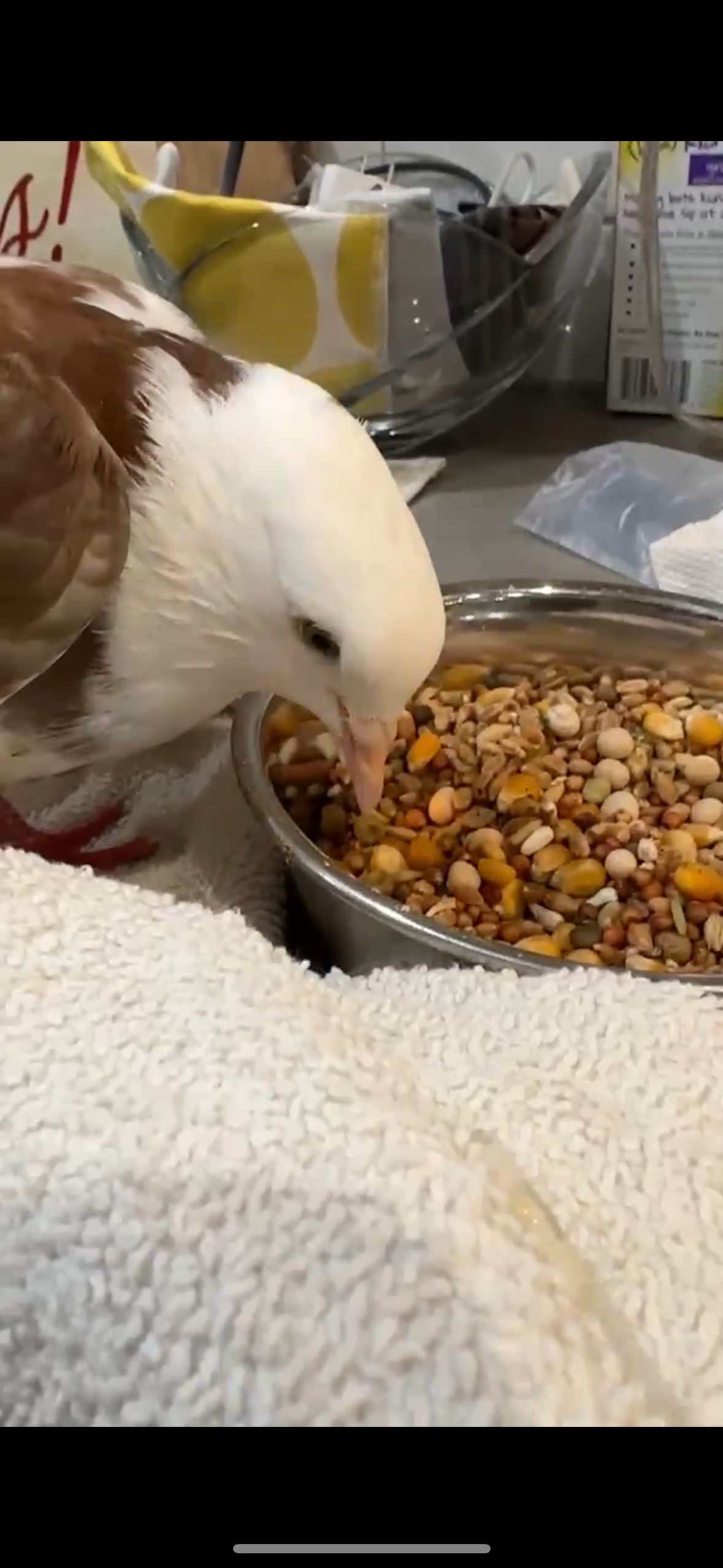
Opal came to Palomacy through a local parrot store. From time to time people bring them pigeons and they immediately call me. They told me she seemed healthy, was eating well and active.


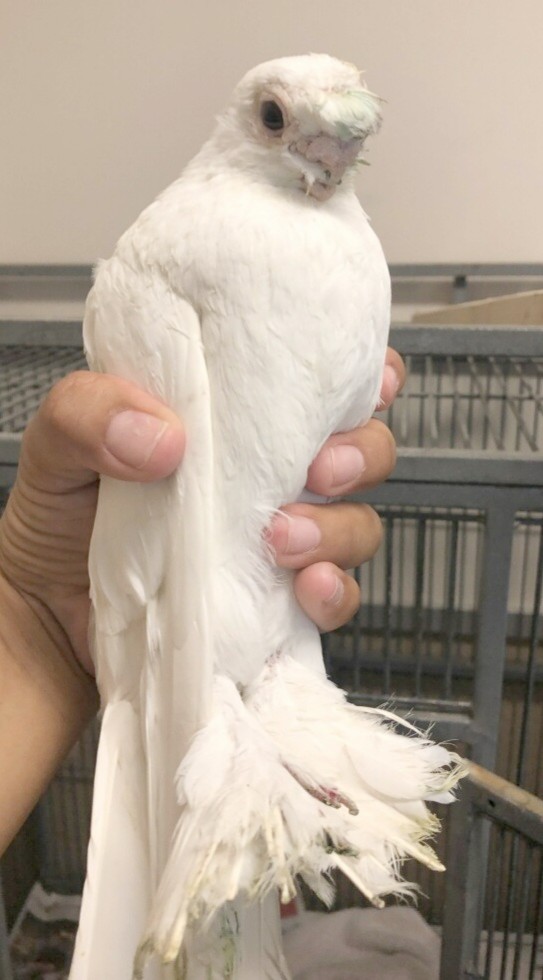
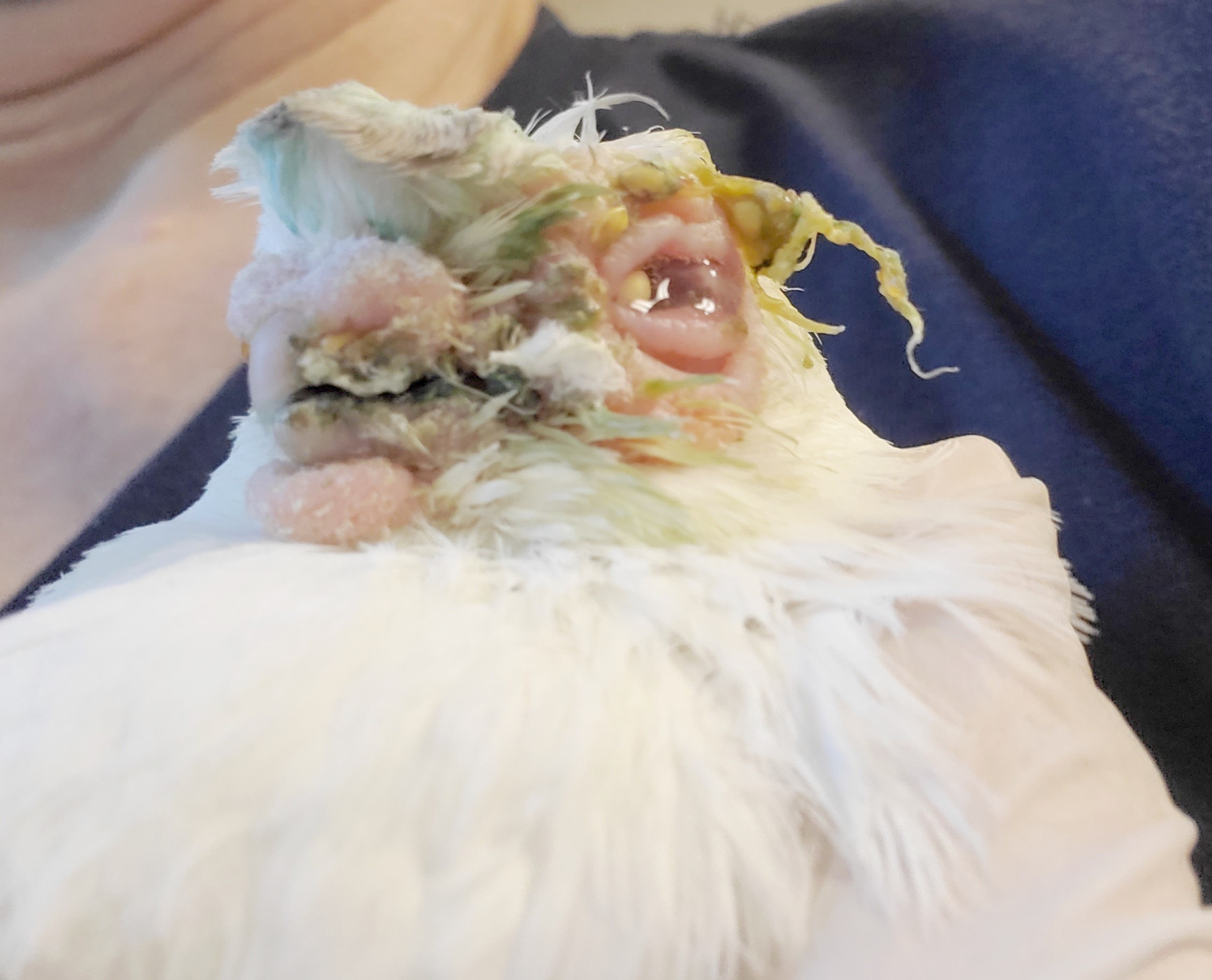
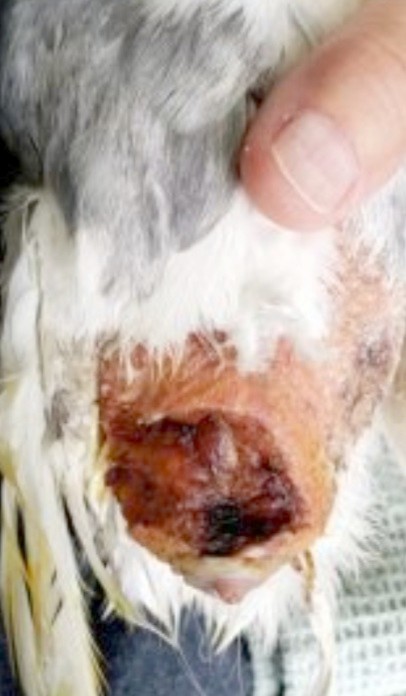
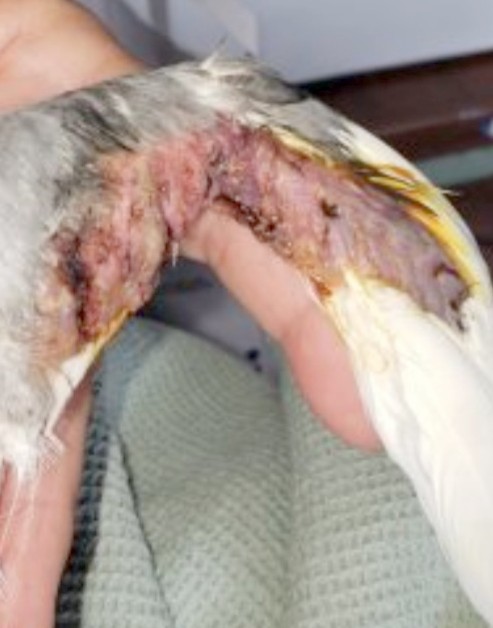
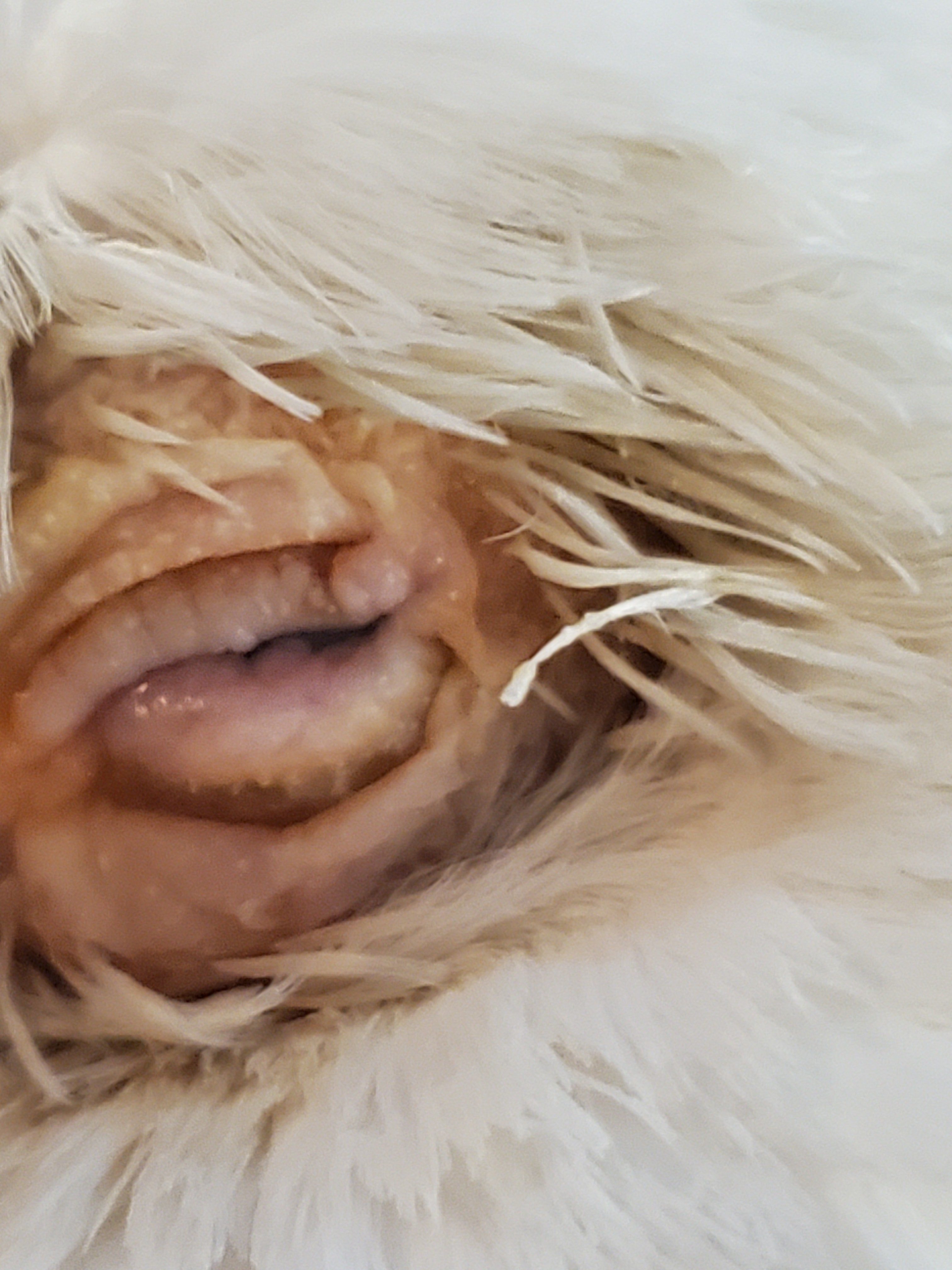
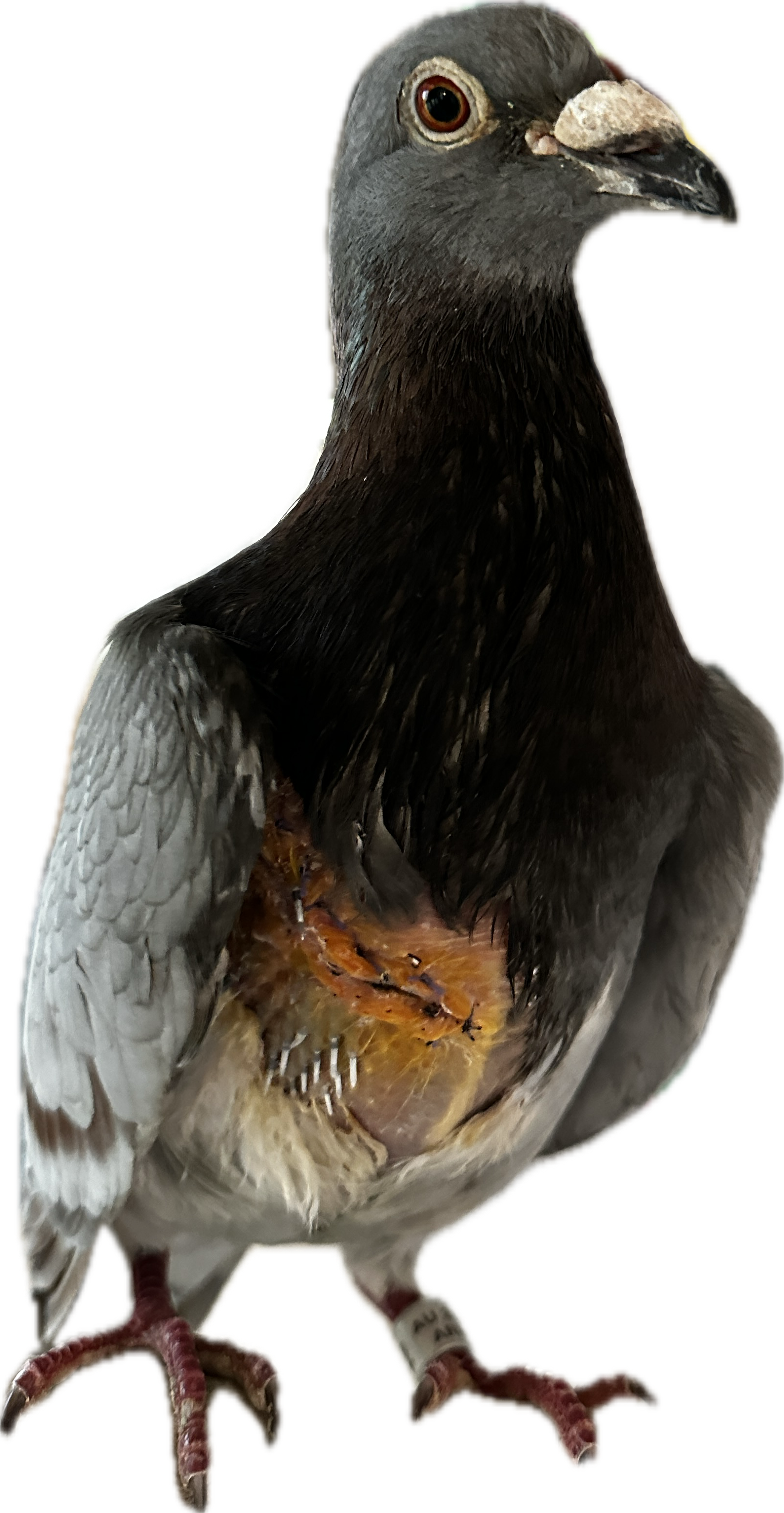
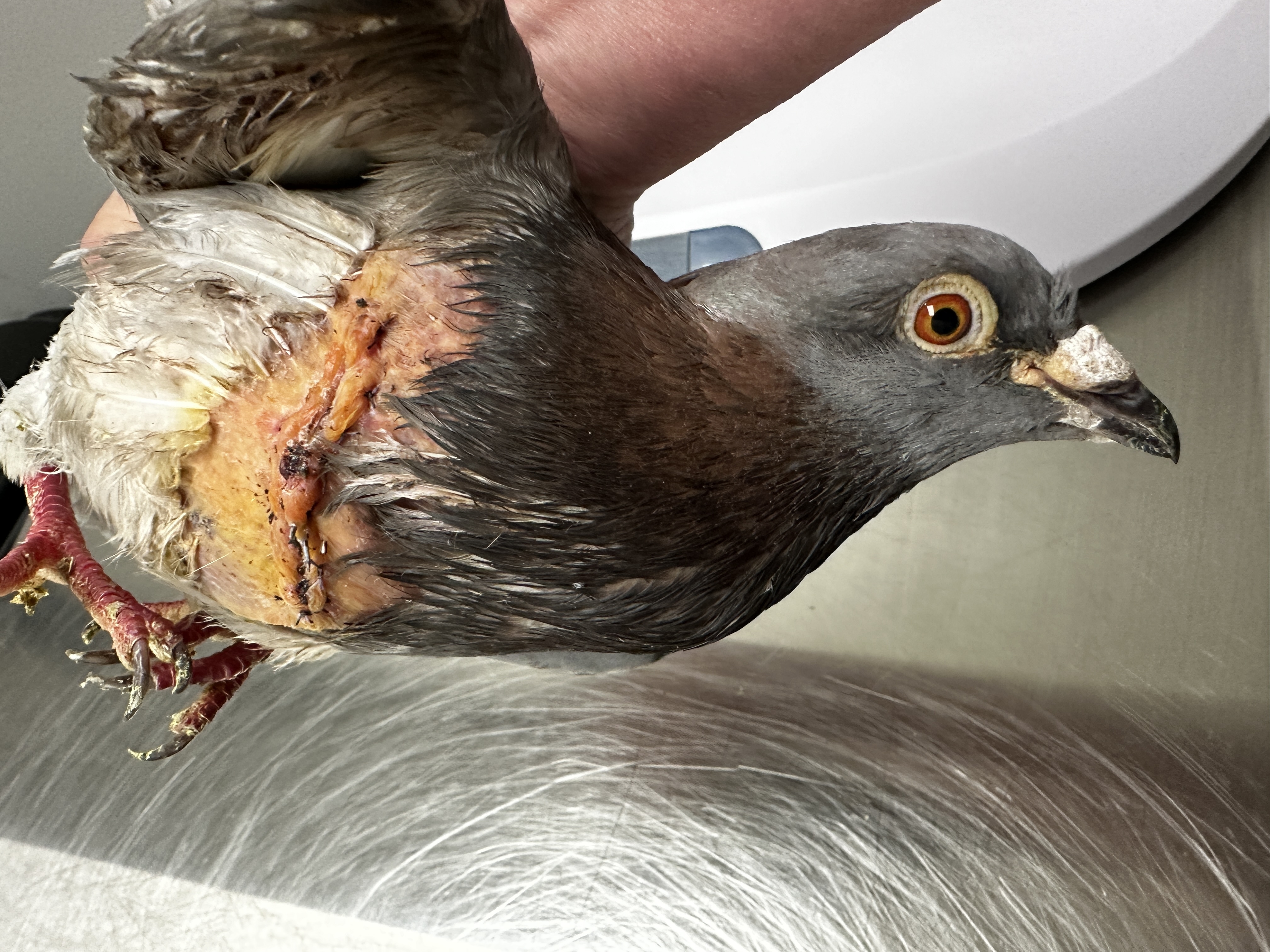
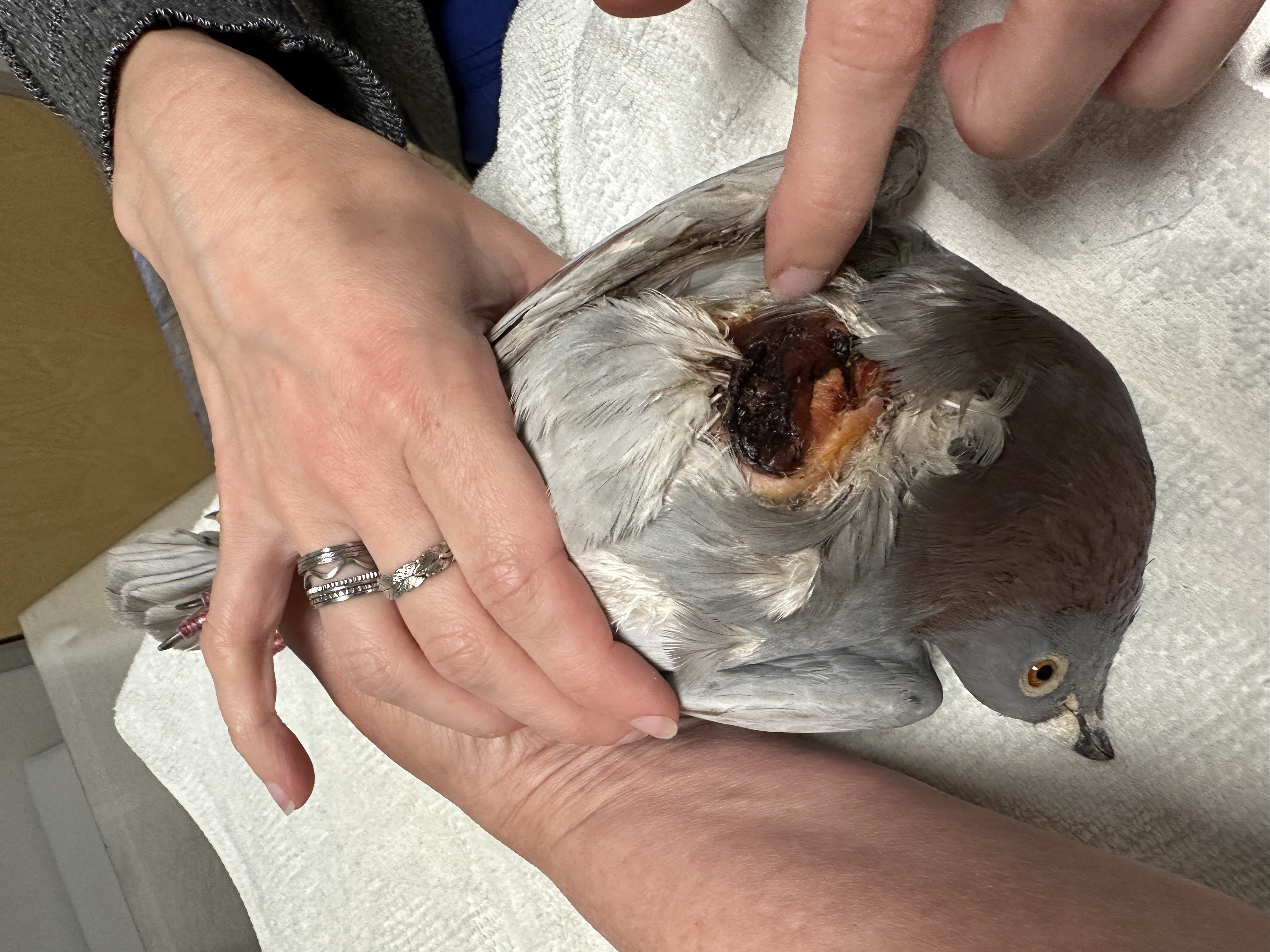
But upon examining her, I found four puncture wounds hidden underneath her feathers. Wounds and injuries are often hard to see because feathers can hide so much. If the injury didn’t bleed much, you would see no evidence. What seems like a small puncture could be deep and life threatening and even if the wound is small, depending on the bacteria that was introduced, a small wound can become fatal.
Opal and I headed to an avian vet and she was put on antibiotics and for the topical, we are using Manuka honey. Sticky and messy but it works wonders with shallow wounds. (She came in with the purple dye on her, likely a failed effort by the person who flew her to deter hawk attack.)


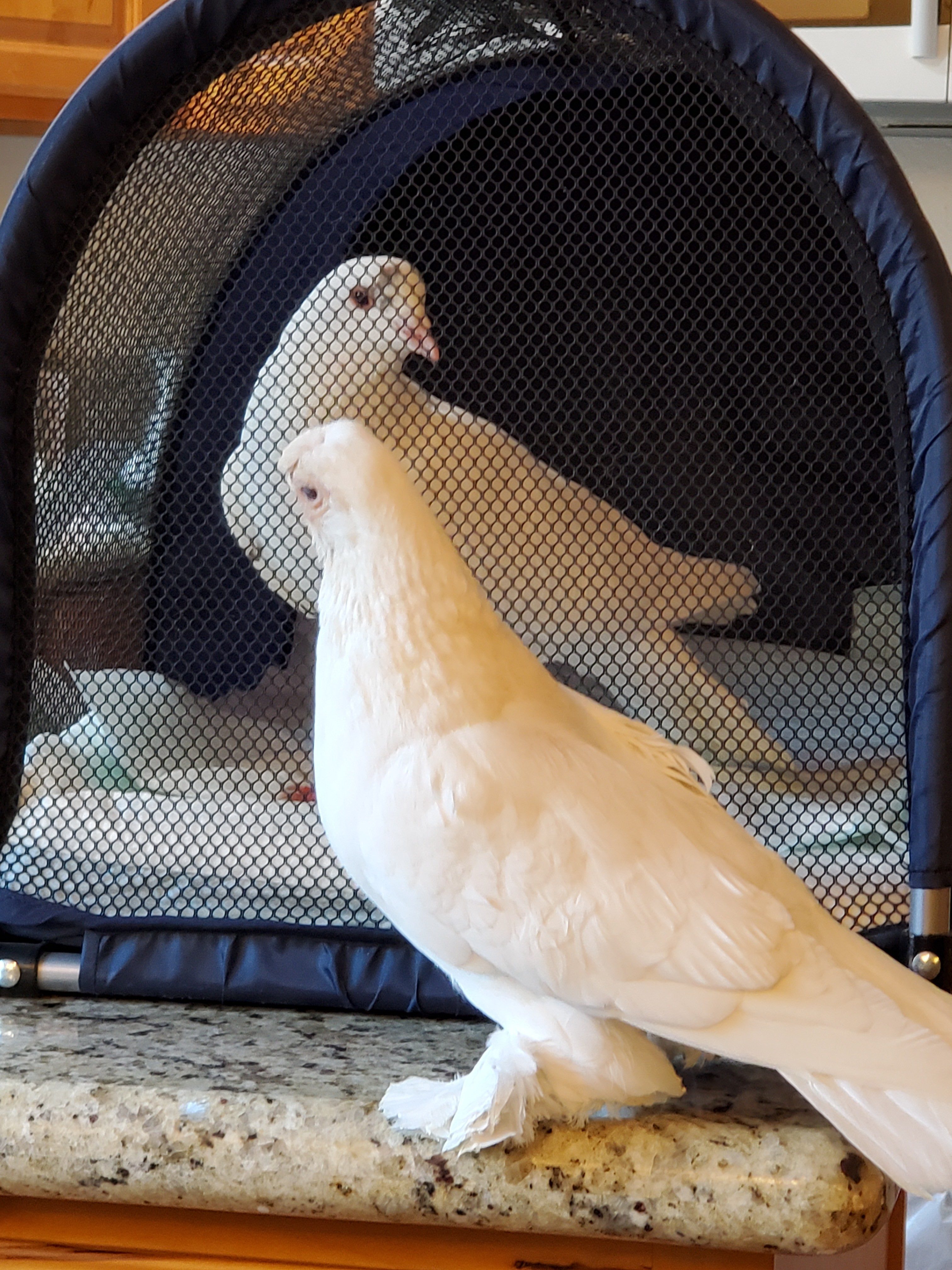
Lots of elegant balancing while preening to do

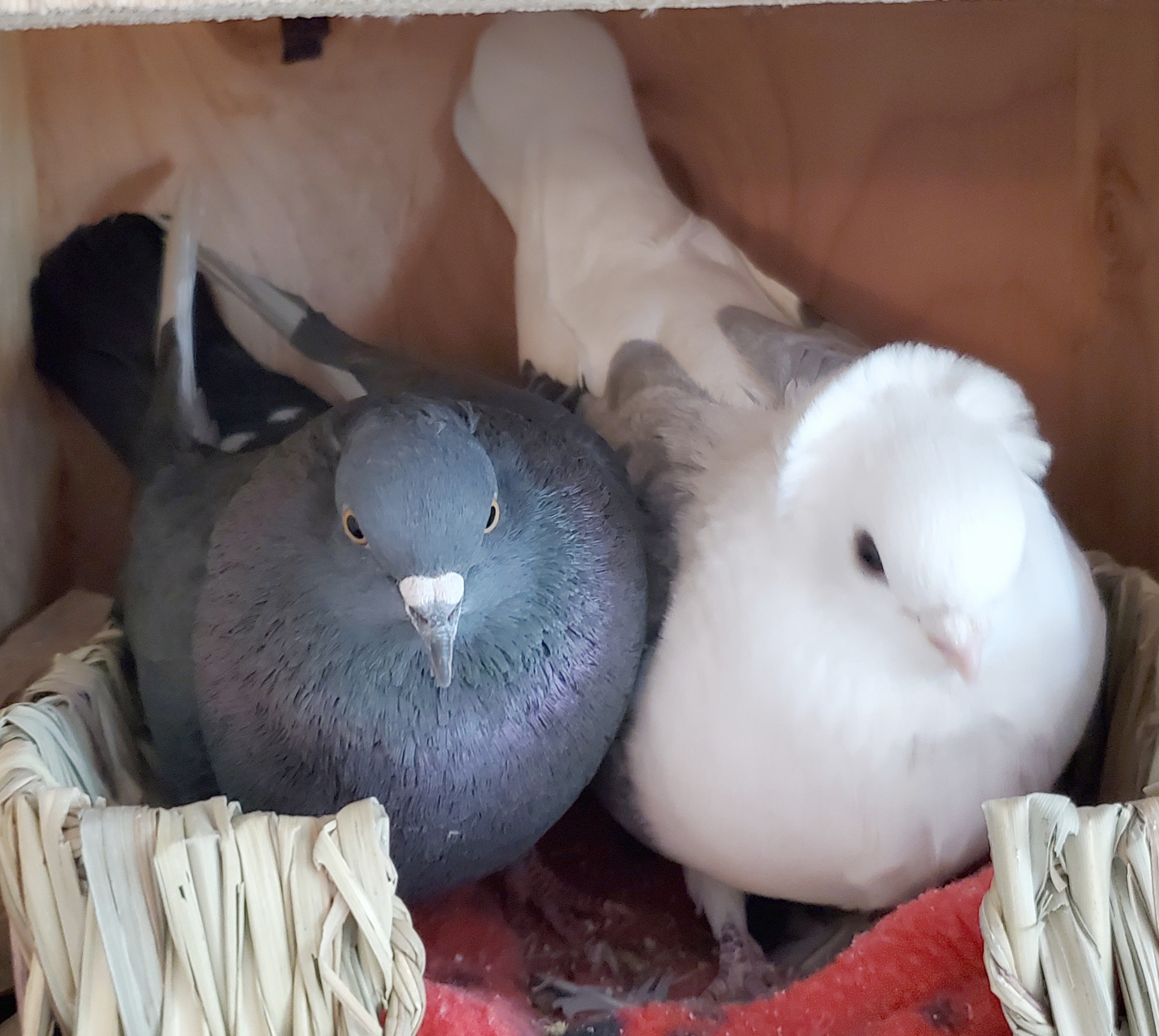
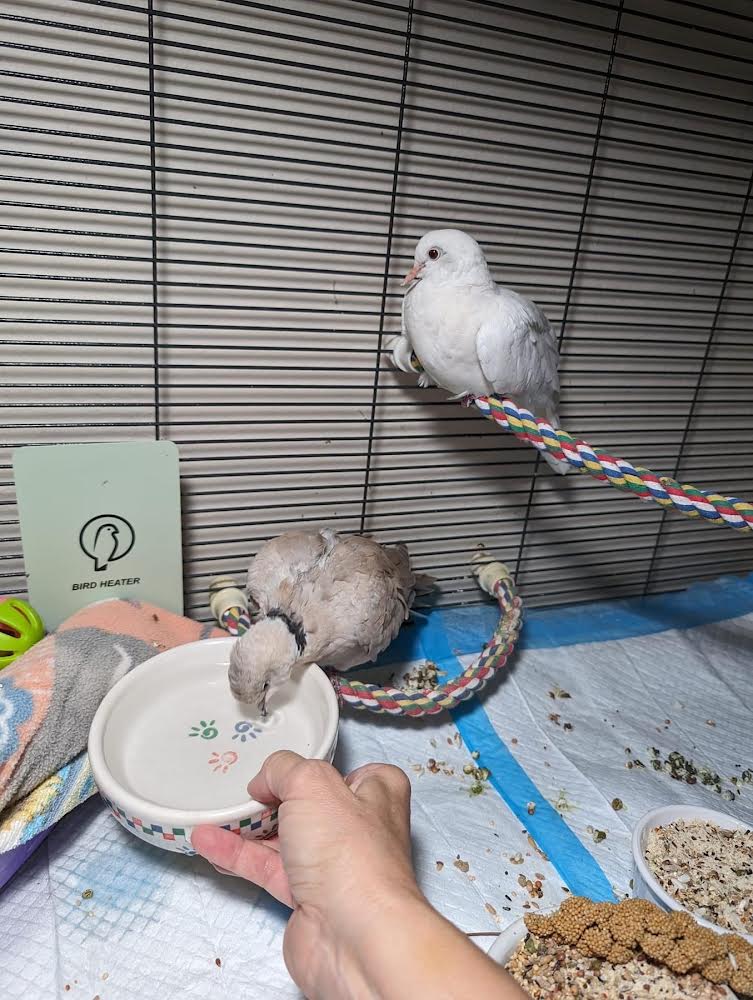
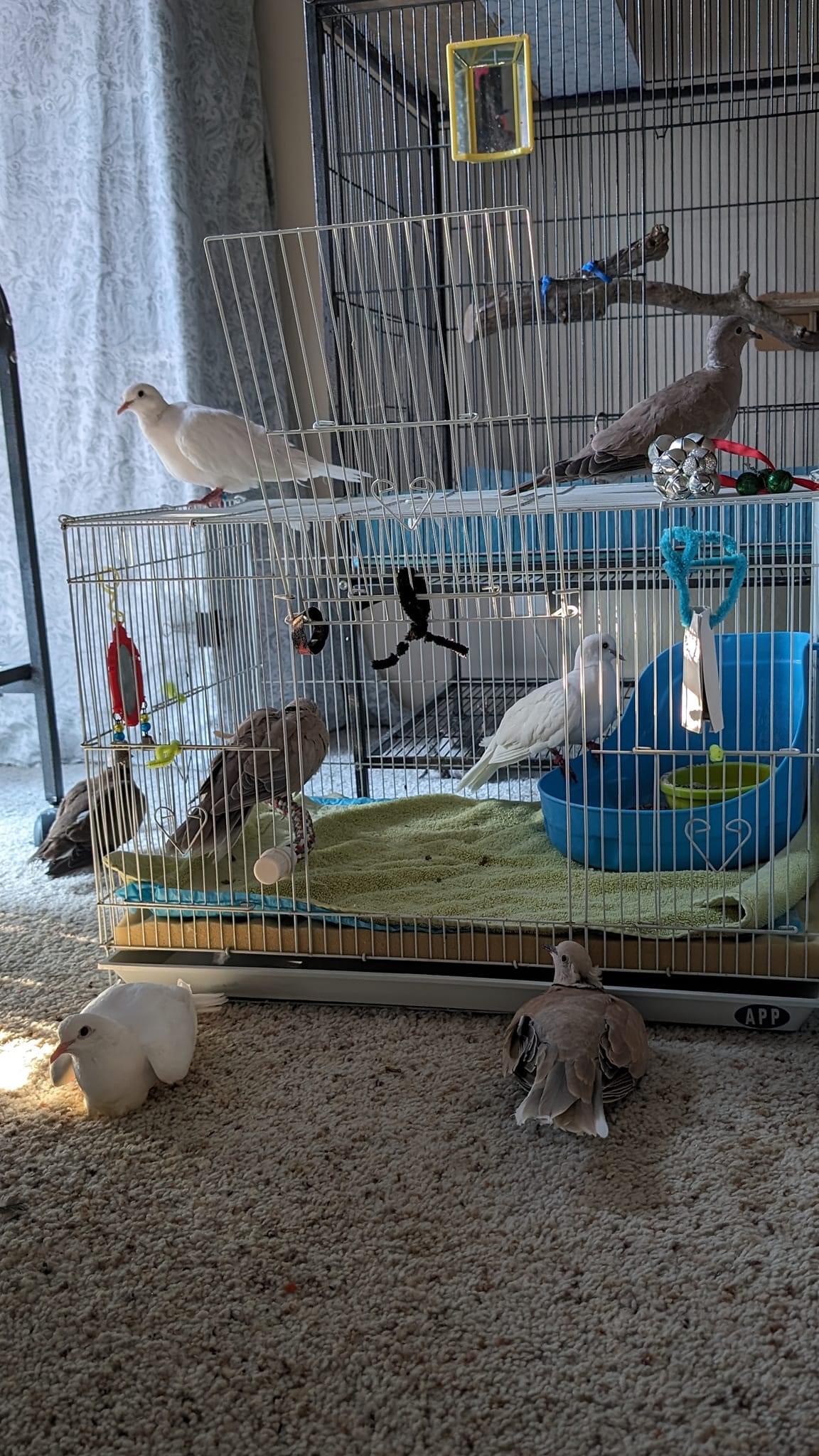
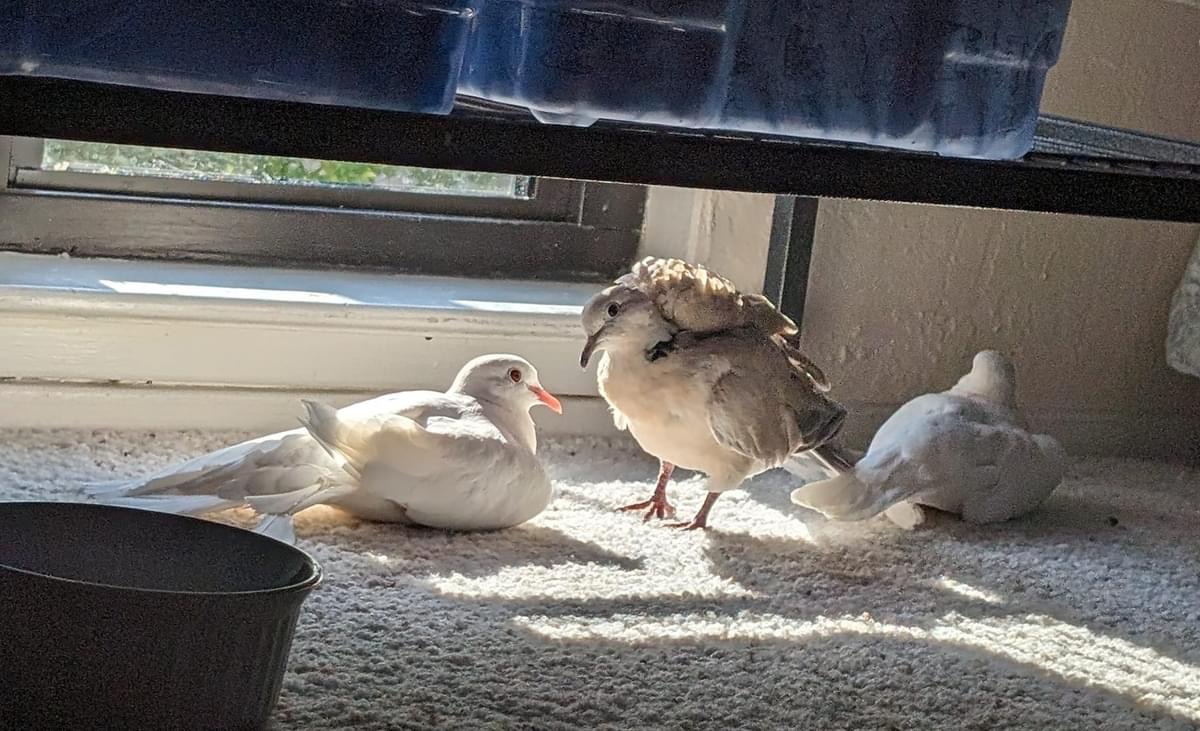
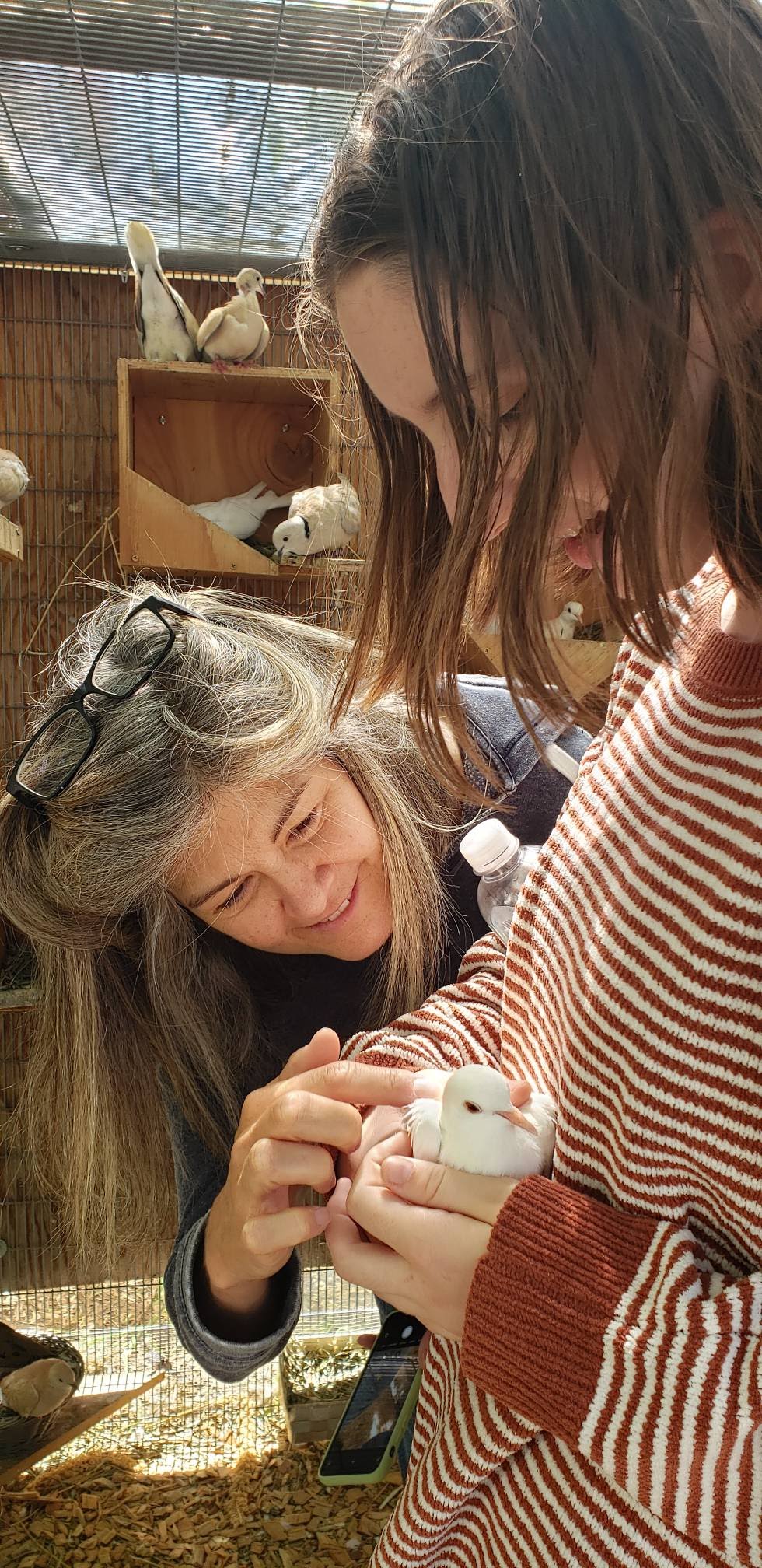
Best of all, I was able to take Opal because when I reached out on social media, I found a wonderful new foster volunteer, Jesse. Palomacy can’t continue to help pigeons without new volunteers fostering and new adopters giving them forever homes. Upon meeting Opal, Jesse’s mom was moved to write this post on Facebook (further raising awareness).
.
Share

October 14, 2023
by Shae
Comments Off on Art for the Birds: Ajax Made Me Do It!

Art for the Birds: Ajax Made Me Do It!

Guest Post by Shae Irving

If you asked a year ago whether I’d have a website for my artwork today, I would have said no. I would have said someday I might — when I have a meaningful subject, a body of work, and the energy it takes to make a website happen. Maybe in a few years. But then our Ajax died.

Ajax was a powerhouse pigeon who was born with the magic to make people do things. As a baby, she captured the heart of her rescuer, Debbie, who knew nothing about pigeons when she found Ajax hiding under a bush. A car had struck this tender young bird, and it wasn’t clear if she would live.

Young Ajax and her finder, Debbie, in 2015

Debbie fell in love with Ajax and developed such regard for pigeons that she spearheaded and primarily funded Palomacy’s life-saving foster aviary at Ploughshares Nursery in Alameda. Score one for Ajax.

Ajax was partnered with Theo, and both were eventually adopted from Ploughshares. (Two more points for Ajax!) The pair had a long stay in a happy home until  Theo passed away and Ajax’s special needs led to a decision to rehome her. She was an old girl when she came to me as a foster. The accumulated stresses of her early injuries weighed on her, and she could no longer handle the pressures of life in a busy aviary. I thought I’d have her for only a week or two, but something about her level gaze and stately ways made me fall in love with her, too.

Ajax inspired me to create a small aviary for hens who needed a VIP life in the slow lane. I put her into that aviary with two other girls, and wouldn’t you know it, they took one look at her and got stars in their eyes. Ajax had two doting wives for the last nine months of her life.

Little, bigger, biggest: Ajax with wives Wink and Gracie.

What does any of this have to do with artwork and my website? When Ajax died of a condition affecting her lungs, we were bereft. I wasn’t ready to say goodbye, so I started to paint her. It was my first pigeon painting, “The Angels Wanna Wear My Red Shoes.” She’s wearing a magic red boot on her right foot– the one that had been badly mangled by the car.

The Angels Wanna Wear My Red Shoes, 2022

I’ve done “better” paintings since, but my whole heart went into this one. It now hangs above my desk at home. After I finished it, I kept going, one pigeon at a time — painting and drawing, learning and loving each opportunity to connect with the bird and, often, with the bird’s person.

It’s what Ajax wanted me to do.

Three recent paintings: Lucito, Dandelion Puff, and Steve!

I created the website to make a home for this growing flock of artbirbs and raise funds for pigeon and dove rescue and adoption. A percentage (usually 50%) of all proceeds from the bird art on the website goes to Palomacy and, occasionally, other pigeon or wildlife rescues.

I also plan to regularly give away art prints and sometimes original work to friends of pigeons and doves. My current giveaway is this print of the series In Your Hands, honoring (L to R) feral rescues Glory, Baby Mo, Flicky, Crouton, Grown-up Mo, and Pijimoto. Each bird is drawn on a 3 x 3 inch distressed post-it note and reproduced here.
I hope you’ll visit shaeirving.com and enter the drawing by signing up for my not-very-frequent newsletter!

About Shae & Palomacy: A king pigeon named Luna rescued Shae in 1993. In the years before the birth of Palomacy (originally MickaCoo), two more lost king pigeons — no other animals, just white kings — found Shae. In those days, it was almost impossible to find information or assistance for domestic pigeons; it seemed like a miracle when she discovered, in 2011, that a new organization had formed to take care of pigeons and doves. She has been a Palomacy volunteer, adopter, fosterer, and donor since then. She’s worn many pigeon-related hats, would love to have an actual pigeon hat, and is now excited to bring more awareness to pigeons and support Palomacy with her artwork.
Today Shae with her 12-year-old King Yuzu

1990s Shae with OG King Luna

Share

October 5, 2023
by Elizabeth
Comments Off on Feathers & Fashion: Celebrating Cooture!

Feathers & Fashion: Celebrating Cooture!

Party Post Script

Wow!  Our Celebrating Cooture party was awesome! Very well attended with guests coming from San Jose to Sacramento and everywhere in between. Thank you so much to all our guests who were such good sports despite some chaos, lots of dear old friends and dear new ones. I think many who came pigeon-curious are now officially pigeon positive! There are for sure some featured fostered pigeons feeling new hopefulness for adoption. And, thanks to the incredibly generous donors who provided for all of our needs this party throughout, we were able to raise money ($3,475 from the party and $3,987 from our Auctria Auction, thanks to 25 donors and 73 beautiful items!) that will go straight towards the birds’ current vet bill of $13K (while still honoring our no-money-required-to-attend tradition).

Go straight to the photo albums here!

What an amazing experience to flock together in celebration of pigeon and dove rescue party style! It’s been extraordinary to have such incredibly generous support from so many contributors! San Damiano Retreat in “Where’s Danville?” Danville CA made our event possible in the kindest way. Thank you and extra special thanks to Emilio & Lisa.


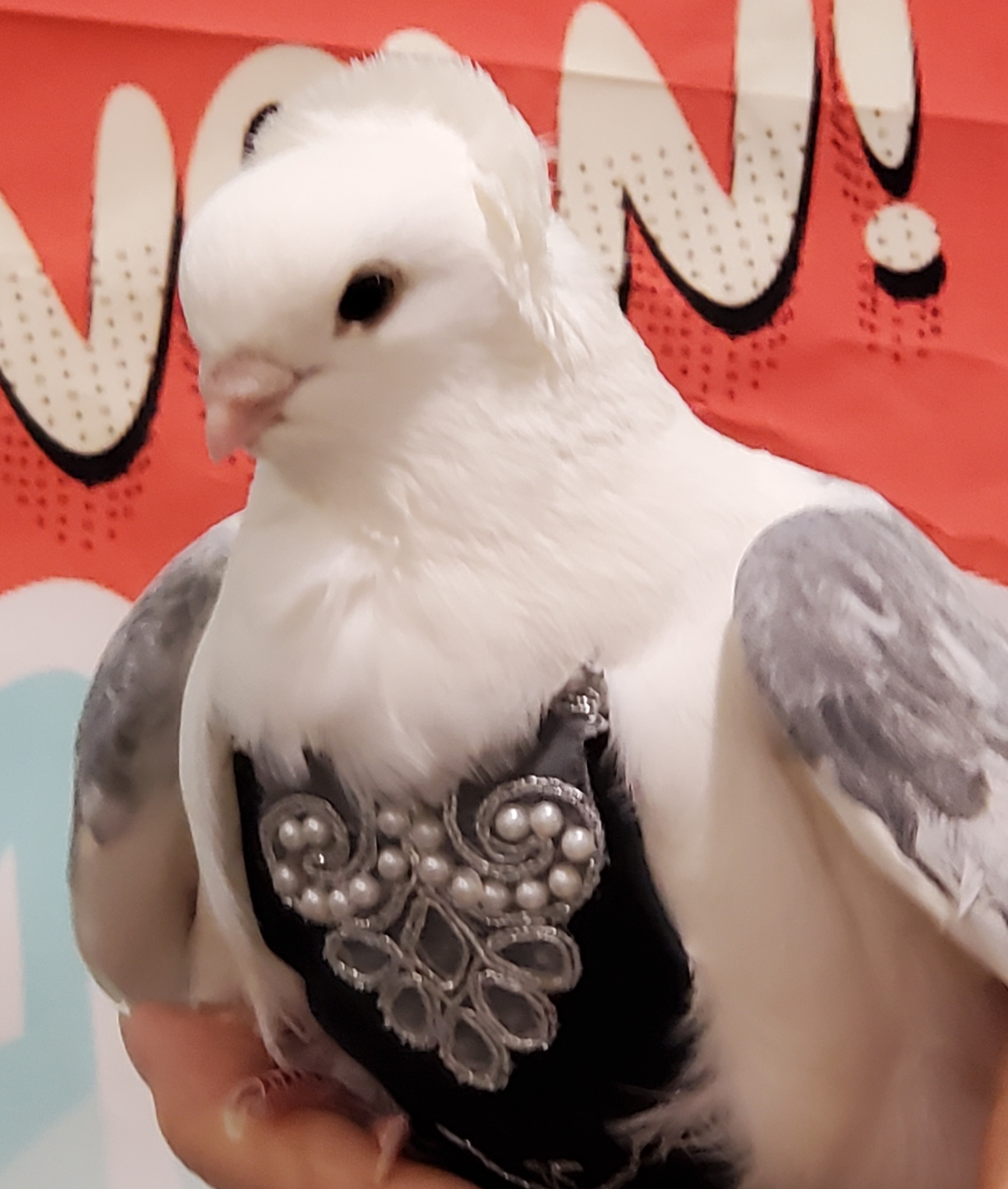
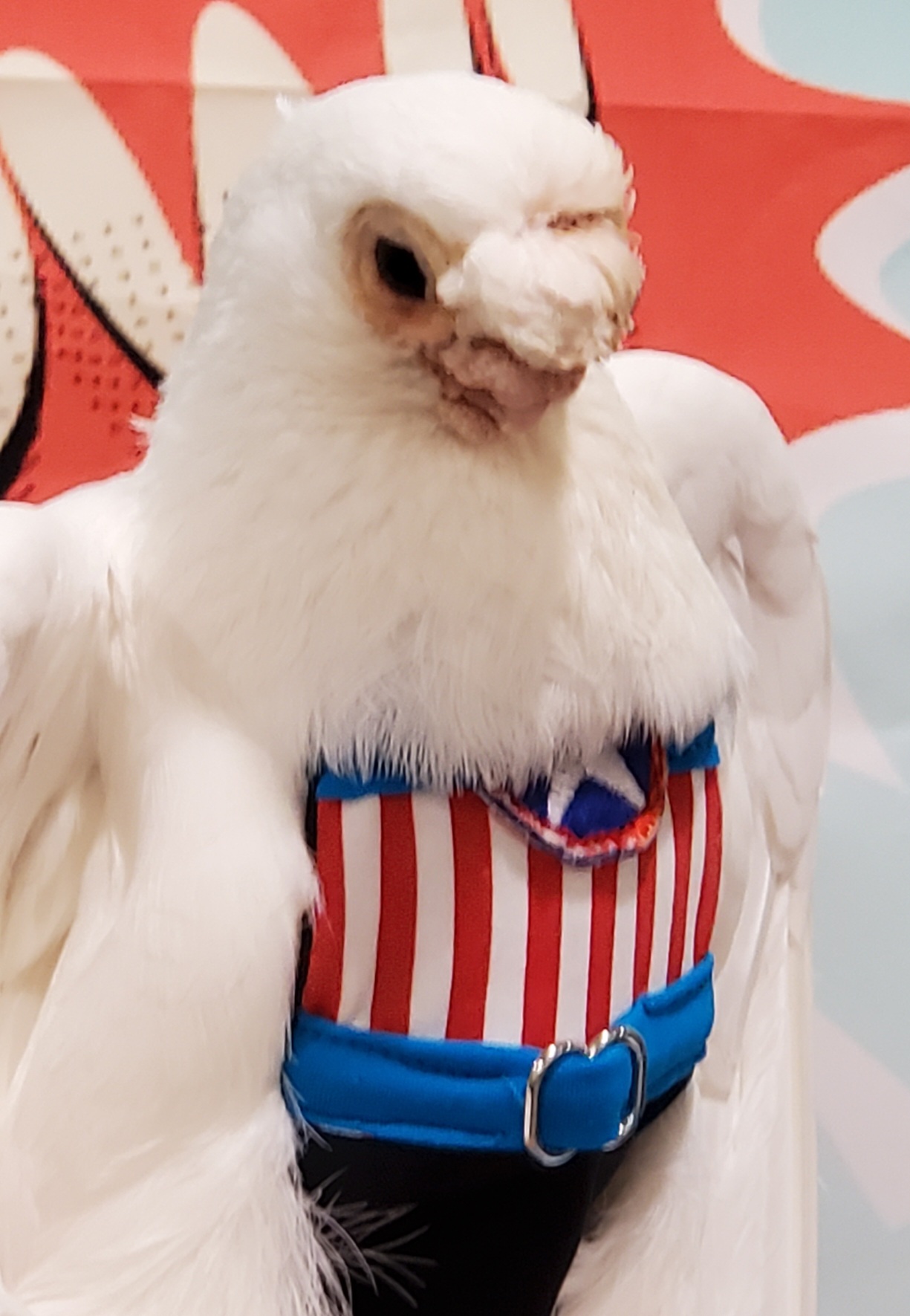
Our headliner, Mother Pigeon of Brooklyn, helped connect us even more closely to the amazing worldwide coo-mmunity (!) of compassionistas drawn together by the love of pigeons. Bev Letard of Bev’s Bird Boutique designed and donated a royal flock’s worth of haute cooture Flyper frocks.


Pro photographer, animal rights activist and friend of Palomacy Rachel Ziegler donated her day to shoot our photos. We feasted on a vegan char-cooterie crowned with a chocolate fondue all lovingly dished up for us by Mary, Heather Ha., Nath and Darren. Sindy of Sindy’s Pigeon Service wrangled our raffle offerings and Shae, Heather Ho. and Kyla worked our merch table all of which was greatly enhanced by the incredible generosity of Ash and FleaCircusDesigns.com (Poes!)

Christiana made our haute fashion dreams come true with exquisite bespoke Broadway stage-worthy sets and brought her own set up and tear crew of helpers- Halina and Bob!

And we had a whole army of volunteers who helped us before, during, modeling and through clean up: Aileen, Tim, Micael, Jerri, Liz, Julian, Michelle, Cheryl, Josette, Luis, Nicole, Chris, Helen, Jill, Adrienne, Sarah, Lauren, Ranjini, Ana, Josie, Tiffany, Dion, Atlas and Jenna.

So many contributed to help to create this event and no one more so than our volunteer party producer Heather Hamilton! Heather, THANK YOU! Palomacy’s 2023 party and auction would not have been possible without all of your contagious enthusiasm and dedicated heavy lifting throughout.

Here are a few words from Heather:

Palomacy’s celebration of cooture at Feathers & Fashion was unforgettable. The guests were dressed to impress! Both feathered and non-feathered partygoers looked their best. Everyone loved Mother Pigeon’s special guest appearance, where the Priestess of Pigeon Religion talked about her art, advocacy, love of pigeons, and answered questions from the audience. The fashion show had the paparazzi snapping photos left and right, as the models strutted down the runway and the audience learned more about some of Palomacy’s special birds seeking their forever homes. Everyone enjoyed good food, great conversation, and reveled in their love of pigeons. Palomacy’s work was furthered by the fundraising effort and we’re grateful for everyone who came to this very special event.


—————————————————————————————–

Palomacy’s 2023 Party!

Here’s your link to all the party details & to RSVP (free raffle/drink tickets)!


San Damiano Retreat is very generously hosting our event in Danville CA. Overnight stays are available and so is car pooling and BART shuttle transport assistance!

We are still filling fun and exciting volunteer roles of all kinds. Please email Heather.M.Hamilton19@gmail.com to help.

We can’t wait to have Mother Pigeon virtually join our flock at 3:30 PM PT!

All of our feathered friends’ stunning runway fashions have been designed & generously donated by Bev’s Bird Boutique!

Order all your Celebrating Cooture merch here– T-shirts, hoodies, phone cases, mugs, stickers & more!

Get to our auction– donate your treasures & bid for others’ all in support of pigeon & dove rescue! Auction ends 10/23.

We are super excited to have animal rights activist and pro photographer Rachel Ziegler helping us!

Are you a doer? Or party shy? Or love helping? Our party volunteers have the most fun! Volunteer to volunteer. Join us!


Questions or ideas? Please call/text us at 415 851-5948 or Email Elizabeth@PigeonRescue.org

Share

September 26, 2023
by Elizabeth
Comments Off on Tootsie the Splash

Tootsie the Splash

Safe except for that right foot…

Tootsie is what’s called in the “dove release”* business a ‘splash’ meaning that she has a splash of color mixed in with what were supposed to be her pure white feathers. She’s a little Homer pigeon youngster and her breeder “set her free” in a park (splash birds are typically culled one way or another). She was rescued from a park where she was trying but failing to keep up with the resident feral pigeon flock. When she was rescued, both her eyes were raw and crusty with infection and she was missing her tail feathers and her foot was crushed, evidence of a narrow escape. (*See Why “Dove Releases” Are Cruel)

Palomacy has rescued lots of these domestic pigeons, “set free” splash dove release business rejects. Even though the parents are pure white and the grandparents pure white and so on, these domesticated pigeons are the same species as the gray feral city pigeons and their DNA sometimes throws color despite all the white-white breeding. But dove releasers don’t want splash pigeons. Their business depends on the fantasy of the all white birds they falsely call “doves”.

They are always young- usually about two to three weeks old, and found sitting alone and helpless in parks they could never get to on their own (not yet walking or flying) or sometimes next to trash dumpsters. Most breeders kill the splash hatches and some give them away but there are those who tell themselves they’re being kind this way. They know the youngsters can’t survive and that they will be immediate magnets for predators so it’s a surprisingly cruel option. Only the luckiest are rescued alive. (See more rescued splashes.)

Tootsie recovered in supportive foster care with the help of Medical Center for Birds’ vets. Her eyes cleared up and then flared up again and we worried that the persistent corneal ulcer in her left eye might cost her vision.

Tootsie’s first vet visit

Corneal ulcer

Tootsie fostered

Vet tech Natalie appreciating Tootsie

Dr. Schollemann & Tootsie

Follow up eye stain showed great improvement

Her eyes slowly improved and her tail feathers grew back in while her crushed foot steadily withered. It was too damaged to recover and we opted to let it self-amputate rather than run the risk & expense of surgical removal. It was a long process and towards the end, Dr. Baden assisted by clipping off her stiff, awkward dead toes giving her a more comfortable interim stage.

Tootsie’s crushed necrotic foot

Dr. Baden’s dead toe trim


Trimmed to a more comfortable shape

As the weeks passed, Tootsie’s foot continued to resolve and in September the last of the dead bit fell off and she was fully recovered and in good shape with healthy eyes, a regrown tail and a cute little pink hoof of a foot stump.


Tootsie healed up & heading home!

On September 6th, I had the pleasure of delivering little Tootsie to her new avairy home with adopter Barna and his flock.

Barna welcomes Tootsie

Barna’s flock’s nest box town (Tootsie top left)

Tootsie is happy to be home

Thank you to everyone that helped save Tootsie from our Help Group Mods and Jill who helped coordinate her rescue and fostering and Art who caught her in the park and fostered to Dion who took her in and got her to me for long term fostering and her vet care team at Medical Center for Birds- Drs. Baden and Schoellmann and vet techs Natalie and Nick and adopter Barna and all the behind the scenes team members who update our database, website, and social media and process the medical records and invoices and YOU- our donors and supporters and cheerleaders who made Tootsie’s rescue and so very many others possible. THANK YOU EVERYBIRDY

Want to foster or adopt? Please complete our application here and you can always make a donation to help keep the Palomacy happening here.

Share

September 25, 2023
by Elizabeth
Comments Off on Madame Puff Ball

Madame Puff Ball

Guest Post by Jill McMurchy

Smart leaning

Madame Puff Ball was found as a helpless stray and turned into Oakland Animal Services (OAS) unable to walk. While OAS accepts pigeons, has a beautiful, life-saving aviary, and helps a great many (unlike most shelters), they don’t have the staff or resources to provide avian vet care so they contact Palomacy.

On August 11th, we had a volunteer drive her to Medical Center For Birds right away. Her x-rays showed nothing of concern, in fact, Dr. Baden said they were boring. It seemed there was no obvious physiological reason for her paralysis (other than likely bruising and swelling affecting her spinal column). I picked her up and brought her foster home so we could start her rehab together. I’ve have experience with pigeons who have had spinal trauma and through a combination of anti-inflammatory drugs, physical therapy, time and mostly the pigeons’ own determination and resilience, they can often recover from the paralysis.
In Madame‘s case, I believe her body and brain need time to reconnect and relearn how to walk again. As of now, she is almost there! We use a sling to help her remember how to distribute her weight and help her muscles to gain strength. We do hydrotherapy to get weight off her legs and allow them to paddle, simulating walking. I massage her legs and have her push on my hands while she lays on her back. Her progress has been slow so far but she’s in good spirits, eating and preening and strong.


She’s determined. I follow her lead. Soon she will stand tall once again!


Wearing her suspension sling to rebuild strength & balance


Powerful wing flaps generate lift-assisted standing

See Madame Puff Ball’s story continued here.

Additional stories about pigeons living with and/or recovering from spinal trauma:

Ava

River’s Flow

Saving Beatrice

Violet (Or What’s Wrong with Roller Pigeons?)

Part 2: Violet To Go

Earl Gray

Please support Palomacy with a donation. We need you. Thank you!

Share

September 7, 2023
by Elizabeth
Comments Off on Doves: Birds of Chaos, Pixies in Disguise

Doves: Birds of Chaos, Pixies in Disguise

Guest Post by Adrienne Ruork

Whoever decided that doves were an emblem of peace and love was the biggest con artist of all time. Unless doves have since evolved with humanity’s embrace of satirical humor, we’ve been victims of this fallacy our whole entire lives. From Sunday bible teachings, to Greek mythology taught in high school, to cartoons and other media depicting doves as heralding peace—it’s been ingrained in our brains that doves are peaceful, gentle birds.

Plover, a rescued Eurasian-Collared Dove, enjoying flying about in a predator and rodent-proof aviary. Photo by me.

Lies. It’s such flippant deceitfulness that I dare say it’s on par with the big ones like Santa Claus, Milli Vanilli singing their own songs; and pigeons being disease-riddled, stupid birds. Anyone who has spent any amount of time with a dove knows they are pixies in disguise. They prey upon and weaponize our naivete all with a blink of those sweet, beady eyes and an adorable beak smack or two. Isn’t it just the cutest thing when they puff up and start smacking their beak with contentment? And when they nuzzle their own face down into their feathery bosom, it makes me wanna—hey wait a minute! See? I’m falling for their trickery right now! 

While pigeons are Lords of the Leisure Arts, doves must be the Chancellors of Chaos—and this is coming from someone who has rehabbed raccoons and crows, two of the most notoriously devious wildlife here in California. Ringneck doves, for example, are often nicknamed laughing doves for a reason— because they cackle like little flying maniacs who laugh at the mischief they wrought upon their caretakers. Eurasian-Collared doves do nothing but scream; I would know, I have two. They’re so unhinged they feel the need to scream when landing upon your head as if to remind you of their unpredictability. What better way to assert dominance than to scream at everyone around you? I mean, it works for toddlers, and those are some of the most capricious beings on this planet.

Doves are constantly on the prowl for something to do. They’re busybodies, unlike their pigeon counterparts who love to loaf it up in the sun. Even when doves are perched, they’re still doing something, whether it be preening or plotting world domination. Those pebbly eyes are like spy cameras scanning their territory for potential threats. Threats, of course, being other doves encroaching on their favorite spot, or even their favorite human slave. If you’re lucky enough to be deemed worthy, a dove will consider you their property and defend you against anything that comes near. If a dove were a color, they’d be green because of how jealous they can become. That’s not to say they can’t coexist with other doves. Quite the contrary. 
Eurasian-Collared Dove, Maple, staring into my soul with the intent of who-knows-what. Photo by me

At their core, doves are flock animals. They seek accomplices their own kind for dominance protection against predators and competition. The more the better in the wild, but in captivity they do best in a flock of at least four. It’s possible to have one to two doves in an indoor setting, but only when the humans become their flock. They can easily thrive with humans who are homebodies and can spend a lot of time worshiping the very perch they stand on. If you work out-of-home, or spend a lot of time elsewhere, a single dove would not bode well; they can easily become depressed, stressed, and insecure all alone.


For indoor doves, Palomacy recommends a cage with a minimum dimension of 32”Wx32”Hx21”D. This is suitable for one to two doves. However, as with all animals in captivity—the bigger the better. For specific information on cages, check out our article on proper cages and housing here. Photo by Elizabeth Y.
The two most common species of dove that Palomacy gets through its doors is the domestic ringneck dove; and the non-native, technically invasive Eurasian-Collared Dove (EUCD). They are very similar in size, but ringnecks have a wider variety of color than their EUCD counterparts. They can come in many colors such as white, peach, fawn, cream, and even pied.

Lindy, a pied dove, showcasing the beautiful patterns some doves can have. Photo by Liese H.

EUCDs on the other hand are a more modest tan or gray with a gorgeous hint of lavender winking through in some light. Rarely, a EUCD can be more on the creamy fawn side, completely throwing off even the keenest of experts into thinking it’s a domestic ringneck at first glance. What better way to overthrow society by blending in with the crowd?

The majority of both species wear the trademark “ring” on the nape of their neck. It’s a crescent moon-shaped band of usually black feathers, but in some colorations, it can be a lighter ring of brown or even peach.

White ringneck doves, again probably just to screw with us, have a white ring.

Idyll (left) and Garfie (right) with their nearly invisible white on white rings . Photo by Liese H.

Despite being two different species of dove, they can co-exist in a mixed flock since they are both of similar size and temperament. As for what kind of temperament each has, well, truthfully that’s as unique as our own fingerprints. Eurasian-Collared Doves are known to be territorial and rowdy, but they can also be loving and cuddly towards their mate or their chosen human(s). Despite being a domestic species, not all ringnecks necessarily want to be handled and would much prefer to be admired with the eyes. Each will have their own likes and dislikes, their own level of tolerance of proximity to one another, their own picky preference for a place to perch. Some are shrewd, some are demure, some will be shy one minute and then bold the next. And then there’s some who will be so clingy they become akin to a fashion accessory.


JillBonnet was named after the fact that she loves to sit atop heads like a fancy little bonnet. Picture by Liese H.

There is truly no disadvantage to any dove, regardless of their personality. Ignoring the fact that I began this article claiming that doves are the Chancellors of Chaos, it’s said with the utmost love and adoration. Indoor doves, when given the opportunity to free fly throughout the house, will surely find a spot to coo for you for hours. They’ll perch on top of the refrigerator to watch as you make your morning coffee, they’ll join you on the back of the couch as you catch up on your favorite show. And in their predictably unpredictableness, they’ll land on your head during the most important zoom call of your life and laugh or scream their lungs out.

In a flock dynamic, doves can really begin to shine with their dispositions and idiosyncrasies. Unlike pigeons, who are relatively monogamous, doves are known to be quite the little swingers. They’re a little less concerned with conventional (and human) definitions of relationships, and spend a lot of their time being busybodies with, well, anybody. While it probably doesn’t hold a candle to college kids during spring break, doves tend to jump around with whom they can by day and retire to their nest with their main mate at night.

Snuggly mates Eggbert and Avery in their nest. Photo by Liese H.

There are squabbles over seed, battles for the best sunbeams, dive bombing each other for hogging a good preening spot. There’s always a cacophony of hysterical laughing from the ringnecks and maniacal screaming from the EUCDs. Needless to say, doves are pure entertainment. There’s never a dull moment with a dove, whether you have one or an entire flock of them.

Sometimes there isn’t a clean moment either. If you’re lucky enough to befriend a dove, you’ll soon learn they have an uncanny similarity to a dog in that they’ll not only beg for food, but they’ll take matters into their own beak to taste whatever it is you’re eating. Plover, my EUCD, somehow beguiled me into giving her a tiny taste of Pringles. Since that fateful day, I can no longer buy Pringles lest she land upon my hand as soon as it dives in to grab a chip. Once that chip emerges from the depths of that iconic cardboard tube, she crunches down before I can even begin to raise it to my own lips. The delicate treat then crumbles through my very fingertips, landing upon my lap (and the floor) like shattered dreams. Needless to say, it’s good motivation to no longer buy junk food.

Dinner time has been messy chaos. On one particular occasion, my mom and I had just sat down to a simple dinner of spaghetti. With a lot of sauce. The red kind. The kind that stains. For reasons only known to the twisted depths of Plover’s mind, she decided to divebomb and crash land in my mom’s spaghetti. She stomped around on the plate with pride, mashing the pasta between her toes as though grape-stomping an artisanal wine to go with our meal. Her breast and legs were tainted red much like my fingers after eating an entire bag of Flaming Hot Cheetos. Dinner was certainly ruined, but the memory of this silly little dove making spaghetti wine was entirely worth the struggle of bathing her afterwards.

Left: Plover post-spagetti winemaking. Middle: Plover post bath. Right: Plover getting a blow dry atop my head, possibly (?) regretting her life choices.

Despite the ruckus these birds may kick up on a daily basis, doves have an undeniable charm. There’s the draw of innocence from their vibrant eyes. The way they tilt their head to view their world is the very essence of pure curiosity (something, as humans, we lose as we age). This is why I liken them to pixies—they’re blithe and spirited creatures of whimsy and mischief. There’s comfort in their presence, even if they’re on the other side of the room merely observing you as you go about your day, or you’re watching your flock simply exist in the moment. They’re very much soothing to the soul to have as companions in any capacity. Through spending time with my doves, and through my time volunteering with Palomaccy, I’ve come to an epiphany that the peace doves are known to represent is more of an inner peace they bring to the lives of their caretakers. And to me, that is a peace that is far worth the occasional chaos.

Plover inspecting a plant. Doves absolutely love to root through plants and munch on their leaves. Protect your dove by choosing non-toxic, bird safe plants. Protecting your plant from the dove is another story. Photo by me.


Adrienne has been a volunteer with Palomacy for only a short while, but she hit the ground running. Aside from caring for twenty-two rescue pigeons and two rescue doves, she is also the Bird Database Coordinator for Palomacy, as well as a member of the Phone and Social Media teams. Her hobbies include snuggling pigeons, cleaning pigeon poop, taking pictures of pigeons, thinking about pigeons, huffing pigeons, getting wing-slapped by pigeons, and basically forfeiting any and all free will to her pigeon and dove overlords.


Share

June 3, 2023
by Elizabeth
Comments Off on Nilla & Graham

Nilla & Graham

Guest Post by Jana Paradiso

Our experience as a first-time pigeon foster family

My daughter Shree got into pigeons in the Fall of 2022. She just developed an affinity for them, and that’s how we started to appreciate the gentle, unique nature of this bird. We had only ever had dogs as pets; I grew up with cats but developed allergies to them so can’t have them in our home. We are animal-lovers but were always just a dog-family.

A friend of mine told me about Palomacy. After learning about the organization and Elizabeth’s work, I knew that my family and I wanted to help out as volunteers. Shree and I spent a lot of time on the Palomacy website, reading up on pigeons. We filled out the application to volunteer and shortly after, Elizabeth invited us to help out at a Pigeon Palooza event at Oakland Animal Services. It was Shree’s and my first time being up close and personal with rescued pigeons. We learned so much during that one afternoon! Elizabeth and the other volunteers were super helpful and generous with their knowledge.
Shree & Jana

In early April, Elizabeth contacted me to see if we were able to foster two recently rescued pigeons, Nilla and Graham. I was nervous since we’ve never had birds in our home but the Palomacy website has a ton of information to help answer questions and provide links to resources. Elizabeth had the supplies to get us started and spent a couple of hours at our home to set-up the cage and get Nilla and Graham settled. She showed us how to put on pigeon pants too. Our family was so excited to have them in our home, to help them heal and be safe, and also to get to learn in real-time how to care for them. We have a small dog (Licorice, 9 yr old min-pin chihuahua mix) and it was good to have Elizabeth, who also has a dog, help Licorice and us acclimate to having birds in the house.
Nilla and Graham are very, very sweet pigeons. They were rescued separately, a few days apart, but in nearby locations in San Jose in the end of March 2023. Both had leg injuries and Nilla had a back wound. Nilla’s wound healed and his feathers grew back, though he still has a bit of a limp with his right leg. Graham shows no lingering injuries and is a very strong bird. They have hearty appetites, eager and excited for breakfast every morning, and enjoy treats of diced carrots and lettuce.
Over the 2 months that they’ve been with us, they’ve become good buddies. Elizabeth is pretty sure they are both males. While these two pigeons haven’t paired up, they are good roommates to each other. Nilla likes to preen Graham, especially by their food bowl, and Graham returns the favor occasionally. They often sleep next to each other, though sometimes they sleep in their own spots.
Nilla, our handsome white potato, has a warm presence and is curious, gazing deeply into your eyes. He is comfortable being held and loves head scratchies. He coos often, sometimes Graham joins in with his higher pitched coo. Nilla can sit by the mirrors for an extended time, cooing with his “buddies.”
Graham, with his soft tan feathers, is more independent. He’ll tolerate being held for a little bit but he likes to launch off your hand and fly to spot of his own. Initially, we weren’t sure whether he was a female or male, though Elizabeth thinks he most likely is a boy. He often makes a soft bark when we walk by the cage, in a show of his sassy attitude.
As with any pet, you have to be the one to figure out how to make time for them and care for them properly. We made sure we had a good spot for the cage and the supplies nearby. We change out the paper liner every morning, wipe down the sides of the cage and shelf, and bring a clean bowl of breakfast and water to start the day fresh. I’m home here and there during the day, and my husband works from home, so we’re able to do quick “housekeeping” (clean the poop, takes less than a minute), have some chats with them, and make sure their water and food is all set. We keep a vacuum cleaner nearby, and my daughter or I do a quick vacuum once or twice daily. I do a thorough cleaning of their cage about once a week (or sooner if needed), while the birds are having time around the house with the other humans. We had planned on trying to build a small aviary or purchase one, but don’t have a good outdoor space for it at the moment, as we have some construction on our home in the near future.

It did take some time for our dog, Licorice, to adapt. We would tell her, “Leave it,” and gently guide her away from the cage door, while also letting her see the birds out of the cage, at a safe distance for both of them. It was a matter of being patient to allow everyone to get used to being around each other, helping the birds feel safe, and desensitizing Licorice so that she didn’t want to chase them all the time.

We love hearing the pigeons throughout the day, since they are near our main living area: Nilla’s deep coos, Graham’s surprised-sounding coos, and their impressive wing flaps. It has been great getting to know them and help them adapt to life with humans. Unfortunately, one of my daughters started getting allergies every time she is near them for more than a few minutes or holds them, so we are going to see if they can be placed with another foster home for now. We have really loved having Nilla and Graham in our home. It is a joy to feed them, to put their pigeons pants on and have them out with us. We are not sure if we will be able to be fosters for pigeons for long-term but may try to help with short-term, so that the allergies can abate.

While we are going to take a break from fostering, we will be on hand as volunteers at events since we love Palomacy. Bringing Nilla and Graham as pigeon ambassadors was so special. Introducing other folks to rescued homing, racing or feral pigeons is great – you get to see people’s genuine reactions to how wonderful pigeons are and help them open their hearts and homes to fostering and adopting. Viva la Pigeon!
Jana is a San Francisco resident with a soft spot for animal & plant friends and a fierce streak for reproductive equity & justice.


Share

May 22, 2023
by Elizabeth
Comments Off on Piji Moto

Piji Moto

Piji Moto at Medical Center for Birds

Guest Post by Nicole Smith

Piji Moto is a very special bird. After surviving a hawk attack and recovering from his injuries, he is thriving in his new life.

I first met Piji Moto at Medical Center for Birds. I went to pick him up once he was ready for discharge, with the intention that he might provide companionship to my foster Sprout. I didn’t know what to expect with Moto, and my first meeting with him didn’t do much to guide my expectations. The vet placed him on the floor where he stood still as she told me that she wasn’t sure how aware he was. I remember picking him up and giving him a scritch on the head. I think I remarked that he was cute, and I think the vet told me it almost looked like he was enjoying the pets.

Nicole & Piji Moto the first night

Moto meets Chris

Poor Moto had survived a hawk attack, which cost him his right eye and a bone in his left wing. He had a nasty hole in his crop infected with aspergillus. By the time he was coming home with me, his puncture wound was almost completely healed, and his continuing care included only some medications to knock out any remaining infection and some gavage feeding as needed.

Deep puncture wound healing

Survivor

I spent a good chunk of time in the beginning worrying about whether Moto was happy. He was mostly still and quiet, but occasionally crept forward without doing the pigeon head movements I am so accustomed to. I couldn’t tell if he was comfortable, if he was afraid, if he was feeling poorly.

Although Moto was initially dependent on gavage feeding, I slowly realized that Moto loves safflower seeds. I started giving him a little scoop of safflower seeds with every meal to encourage his self-feeding. Once he started eating “Moto Mix,” I was able to stop gavage feeding him entirely.

Moto in his dish

I tried introducing him to other pigeons, perhaps a little earlier than I should have, thinking it might make him feel safer and more like himself. Upon meeting Moto, Sprout tried to give him a little preen, which Moto found to be deeply offensive. I shortly had to rescue Moto from the fight that he had started. I tried him with my gentle, flightless foster Paprika and once again had to quickly rescue Moto from his own decision making. Keeping him alone was the only safe option, since Moto can easily be flipped over and is unable to right himself, but his isolation was another source of worry for me. I couldn’t tell if being frequently handled was scary for him, but it seemed like I was going to have to be his primary companion, so he started joining me for most of my daily activities.

Moto & Paprika moment

He now loves riding around on my shoulder, surveying his lands, playing cards on my “team,” and attending Zoom calls, sometimes taking a little nap. When he gets sick of me, he just hops off my shoulder and walks over to his pen. He generally seems to enjoy traveling, as long as I let him sit on my shoulder. He peers out of the window of the car with curiosity and generally looks tough and threatening. He shows a clear preference for being with me and will not sit on anyone else’s shoulder. Noticing this helped me realize that he is telling me when he is afraid and when he is comfortable.

Guard Moto

Zoom call Moto

Moto learning SkipBo

Good hand!

Moto immediately comfy with Nicole’s dad

Moto & Nicole prepping slides

He feels very safe in our home, as we found out when we brought him to a friend’s house. In their aviary, he ran over to me and stood on my foot. In their house, he seemed nervous, so I let him sit on my shoulder, which instantly calmed him.

Moto loves to boss other birds around. Sometimes when the birds are having out of cage time and I’m at my desk, I’ll hear a bunch of commotion. I’ll look down to see a stampede of pigeons running past me. A couple seconds later, Moto will surely dart by, chasing them all from wherever they dared go against his will. In general, the birds clear out when Moto barrels through. I think they see him running full speed with his head totally still and they assume they don’t want to mess with him. (They are right; he is very tough.) I always supervise, but Moto seems to have convinced the other birds to abide by his rules for the most part. I trust him to maintain order around here.

Moto at his desk job

He spends his days enthusiastically lording over the floors with occasional happy flappies, big stretches and preenies, and visits to his mirror to admire his handsome reflection. He is vocal, honking when offended or alarmed and cooing when telling the other birds how tough he is.

I love Piji Moto, and I now know that Piji Moto loves living with us. Big thanks to Palomacy for giving this miracle bird a second life. He’s comfy, safe, and happy, and he’s the big boss of this household. We wouldn’t want it any other way.

Nicole Smith discovered the magic of pigeons in 2020 when she and her partner, Christopher Hudson, scooped up a sickly young feral pigeon. Since then, the two of them have become Palomacy volunteers and fosterers. They have a flock of family-member birds, composed primarily of “self-rescued” pigeons that found their way to them all on their own. Nicole is employed as a caregiver and recently went back to college at UC Berkeley to finish her degree.


 Please support Palomacy with a click

Piji Moto’s vet bill was $3808!


Share

April 6, 2023
by Elizabeth
Comments Off on Alba & Tramonto

Alba & Tramonto

Bathing Alba & Tramonto

Guest Post by Nicole Smith

These two racing homer kids are (adoptable!) Palomacy pigeons Alba and Tramonto. I have been wanting to share their story for a while now, but I felt too angry about the way they were cruely mistreated. I wanted to make their story about them. So I’ll start with their personalities and my time with them and follow with their rescue story.

When I met Alba and Tramonto, Alba was a snuggly little potato and Tramonto was standing tall and protective. As soon as they got home, I offered them a bath. Tramonto loved the bath. Alba wanted to explore! And soon they were both crawling up my arms with darling peeps. Alba (gray) is more talkative than Tramonto (brown) but they both talk. Alba is explorative and Tramonto is easy going. They both will land on me, fly around, etc, but Alba is more of a leader. Tramonto liked the bath. Apparently Tramonto was harder to catch; Alba just let them pick herm up and Tramonto was speedy.

Safe & loved

They did some flying and exploring, always Alba in the lead with Tramonto close behind. When I offered them a bowl of seeds, they ate every single one! I gave them a new bowl, which they devoured with sweet beeps. They lived in our bathroom (which we always keep birdsafe) while they stayed with us, with a snuggly crate for the nights. In the day, they cheerily explored together. On day two, they found the small gap under our cabinet and the floor, where I keep my slippers. I heard then shuffling around and occasionally would see one of the two peek out and look around. After they fell silent, I peered under to find Alba centered on my slipper with Tramonto hovering behind, one toe on the slipper. The two little snug nuggets were heartmeltingly curious, innocent, bright, inquisitive, and friendly. I soon got to transfer them to a Palomacy foster that will care for them as they grow and flourish.

Alba & Tramonto -pigeons LOVE soft places & a slipper is ideal

These two were rescued after a family was seen throwing them in a dumpster. A passerby intervened, but didn’t get much information from the family. The kids said they weren’t their birds, and the parents seemed to want the kids not to talk. Luckily, that person had a friend in dog rescue, and the pigeons were captured and transfered to dog rescuers that contacted Palomacy. I then picked them up. It has been a tough pill to swallow, knowing that two innocent babies, so full of life and willing to love and be loved, were discarded like trash. And the dissonance of a family with children throwing another creature’s children in a dumpster has me devastated.

Tramonto & Alba rescued

I don’t think it’s productive to respond with anger. The same weekend, I did a rescue of a beautiful racer that we named Hope. Her injuries were too great and she died in my arms while recieving emergency treatment from a vet. I’m trying to take my anger and my devastation and make it into something useful. We need legislation and laws banning releases of any kind.* I want to start working on the Bay Area this summer, by finding allies in unexpected places with greater lobbying power. I have no special skills, but I have a few ideas. (*Editor’s Note: See Pigeon Appreciation Day Demonstration 6/13/23.)

Tramonto

Do you have a few ideas? Or experience in local policy? Or legal savvy? Or connections with a politically powerful group in your hometown? Or good people skills? It has to be possible. Every outreach, I talk to people about the numbers published by racing communities themselves after races, the disturbingly high loss rates they report themselves, with birds that have survived training and are the “best,” and I am met with shock. There are enough people that are against it for moral reasons. And there are plenty of cities, public transit, and business owners that want fewer pigeons on the street. There has to be a way.


[Sound on] Here are the two racing pigeon children that were left in a dumpster last night in Alameda. They are about 4 weeks old & super sweet. And so lucky to be alive! Here they are eating, getting washed up & snuggles & the photo we were sent asking for our help. They are safe with epic rescue volunteer Nicole Marie for a minute but she is over full & these sweet kids need a foster or forever home in the SF Bay Area ASAP!


Nicole & Piji Moto

Nicole Smith discovered the magic of pigeons in 2020 when she and her partner, Christopher Hudson, scooped up a sickly young feral pigeon. Since then, the two of them have become Palomacy volunteers and fosterers. They have a flock of family-member birds, composed primarily of “self-rescued” pigeons that found their way to them all on their own. Nicole is employed as a caregiver and recently went back to college at UC Berkeley to finish her degree.

Share

March 28, 2023
by Elizabeth
Comments Off on Shelters’ Guide to Pigeon Rescuing & Rehoming

Shelters’ Guide to Pigeon Rescuing & Rehoming

Why can’t rescues rehome all the pigeons? We rescuers wish we could! We wish the size of the problem was manageable but it is not. The number of fanciers & hobbyists who breed, use & lose domestic pigeons far exceeds the rescue resources helping them. Most of these beautiful birds, when they get lost & hurt, die alone, unseen. Even together, we are helping only the tip of the iceberg, only the luckiest few who are rescued alive.

Domestic King pigeon fledglings at SFACC. Bred for meat (squab), sold live, “released” into an unsurvivable wild & lucky enough to be rescued alive.

Ten Tips for Shelters Rescuing & Rehoming Pigeons

This article focuses on domestic, unreleasable pigeons that need to be placed with adopters. (Releasable feral pigeons need pigeon-friendly rehab.)

  1. Embrace that pigeons are adoptable and make amazing companions.
  2. Learn why pigeons make such ideal companions indoors with family or outside in predator and rodent-proof aviaries.
  3. Connect with a pigeon rescue expert for ongoing assistance. Palomacy will help you!
  4. Discover your pigeon people by identifing the pigeon lovers (old & new!) within your staff, volunteers and community.
  5. Learn rescue-based pigeon basics (rather than fanciers’): care requirements, how to identify ferals and domestics, inhumane practices, etc.
  6. Set up your pigeon habitats including a cage in the lobby!
  7. Promote and publicize pigeons for adoption (names, photos, bios, outreach events, etc.)!
  8. Screen potential adopters to ensure safe, proper housing, avian vet care, no breeding (provide fake eggs!), no free-flying.
  9. Connect adopters to a supportive pigeon rescue community such as the Palomacy Help Group.
  10. Celebrate your wonderful selves for delivering compassion to all!

FAQs: Yes, pigeon pants are a thing! No, don’t try to trace sport bands; they’re designed to record winners, not recover the lost. No, pigeons won’t make you sick. Yes, pigeons are very smart!

1 & 2 Pigeons ARE Adoptable & Make Amazing Companions

When I first started helping shelter staff to rehome domestic pigeons, they did not believe they were adoptable. Thankfully that perception is changing. Now more and more people are aware of their plight and their potential. And Palomacy has 16 years of expertise with thousands of happy adopters and adoptees as proof.

Misperceptions vs. Reality

People mistakenly think pigeons need a lot of exercise, want to fly all over and be free. They don’t. Domestic pigeons cannot be safely free-flown (no domestic sky) and fortunately they don’t much miss it. Pigeons are ground foragers whose feet are more important than their wings for day to day quality of life. And they are low energy, couch potatoes who LOVE the easy life. They are masters of the leisure arts and love to lounge in the sunshine, soak in their bath, flirt with prospects (including shoes, vacuum cleaners, their reflections), nap on pillows, snuggle and watch movies, nest build and fegg (fake egg) sit, and just savor the good life. They are vegan granivores who love foraging for their seeds. And pigeons are safe and harmless. They are a much lower disease/injury risk than dogs or cats or rabbits. Pigeons are soft bills without the beak strength to bite hard nor do they chew up cords, furnishings, etc. Pigeons are very smart (though not in a show-off kind of way), have deeply felt emotions, are quiet, good natured and charming. If you don’t think pigeons are great companion animals, I respectfully suggest that you don’t know pigeons. Read adopters’ stories in our blog and their reviews to learn more.

3 Connect with a Pigeon RESCUE Expert

Pigeons have been bred and used by humans for thousands of years. They have a long history of being exploited and the vast majority of traditional care info available online and in books centers their usefulness over their well being so it is important to seek out a pigeon RESCUE expert. Pigeon racers, breeders, sellers, fanciers, etc. engage in a whole range of inhumane practices that are dangerous for the birds. (Learn more Pigeons’ Leg Bands: What Do They Mean?, Why “Dove Releases” Are Cruel, Violet’s Story: What’s Wrong With Rollers?) Pigeon rescue experts know that domestic pigeons should not be free-flown; should not be allowed to hatch chicks (way, way too many “surplus” pigeons to ethically breed!); should not be kept standing on wire; should not be crowded… Rescuers will provide predator and rodent-proof aviaries completely wrapped with hardware cloth (never chicken wire!) and house no more than 30 pigeons in a 16′ x 8′ x 8′ enclosure while hobbyists and breeders house more than 100 in that same space. (Palomacy advises 32 or more cubic feet per bird for aviary pigeons. Breeders recommend 8 to 10 cubic feet.) Make sure you have a pigeon-centric RESCUE expert to help navigate all the info out there. And connect with an avian vet. Pigeons are SUPER resilient and most issues are treatable (many with just cage rest, supportive feeding and antibiotics). Pigeons can thrive blind, one-winged, one-legged… they are brilliant adapters and always make the best of their circumstances. (Need proof? We have LOTS of documentation. See Prince’s Story: Baby, I’m a Star! for one example. #WeDontHaveToStartWithEuthanasia) And rescuers are happy to support your pigeon work! Join our Palomacy Help Group, call 415 851-5948, and/or contact Elizabeth@pigeonrescue.org or Jill@pigeonrescue.org with questions and for referrals.

4 Discover Your Pigeon People

While pigeons are often maligned and have been treated as livestock rather than pets, once you start asking around, you will be surprised to find out how many people actually really like pigeons (or fall in love when they meet them). If you want to place pigeons with adopters, you need to get pigeon-appreciating people involved.

As Pam of Oakland Animal Services told me, “Not every pigeon person starts out loving them. I was asked to help clean the aviary and hesitantly agreed. Little did I know how much I would fall in love with them and find their cooing so soothing. I started cleaning the aviary with my AirPods in listening to music. I stopped that very early on when I found how pleasant and soothing their coos were.”

So true! Most of our volunteers and adopters come to us with no prior interest whatsoever in pigeons! They are just stopping by our booth at an adoption fair or reaching out for help with an injured pigeon camped out on their porch & are blown away to discover how loveable they are! Involve every one in your pigeon project initially, even the skeptics, and you’ll discover some pigeon lovers who didn’t even know they were.


5 & 6 Pigeon Care Basics & Setting Up Habitats: How to Welcome Pigeons Into Your Life

Courtney & Ray

Pigeons do great indoors as family pets. They can also live outside in a predator & rodent-proof aviary but I would never make a single pigeon live outside alone. They are flock birds and to be outside alone is stressful and lonesome for a pigeon. A single pigeon living indoors adopts the people as flock members. (If a pigeon is going to be outside even temporarily, she must be in a predator-proof cage. Most birds cages are designed only to keep birds confined indoors and they are not predator-proof outside. To be predator-proof, the cage must be sturdily built, have very narrow spacing between bars and a raccoon-proof latch.) Please see How to Choose a Cage for Pigeons or Doves for detailed and important considerations regarding putting a bird in a cage and see How to Create an Aviary for Pigeons or Doves for the same regarding housing birds outside. Also check out How to DIY make a Safe, Easy Pigeon or Dove Aviary.

If we had our way, there would be no pet pigeons. They would all be wild and free, not captive. Palomacy doesn’t believe that birds should be domesticated, bred and used by people for any reason. But, because people do breed, use and lose domestic unreleasable pigeons, there are a great many in need of rescue and homes. This is for those birds and the compassionate people who save their lives through rescue and adoption. There’s lots, lots more to learn about pigeons and what amazing companions they can be. Keep reading and join us in our Help Group on Facebook. Thank you for being a friend to pigeons. They are angels among us.

RESCUED OR ADOPTED INDOOR PIGEONS NEED

  • an appropriate cage for their home base 36″ or more wide
  • a big mirror (pigeons self-recognize & enjoy mirrors )
  • fresh food and water daily (flat bottom ceramic dishes are best)
  • safe, daily out-of-cage time in the house for exercise & fun
  • a big flat-bottom casserole type dish for bathing
  • safe access to sunshine unfiltered by glass & avian-safe full spectrum lighting
  • inclusion in the family & company (yours or another pigeon)

Check out How to Care for a Rescued PigeonHow to Choose a Good Cage for Pigeons or Doves

Janelle & Beep chat up Petey & Pineapple in their double-flight cage

RESCUED OR ADOPTED OUTDOOR PIGEONS NEED

  • a predator & rodent-proof aviary (they cannot live outside loose or in a cage) with a maximum hardware/mesh opening of .5″
  • a minimum aviary size of 4’ W x 6’ L x 6’ H (bigger is better, they can’t be let out safely)
  • other pigeons (single pigeons cannot be alone in an outdoor aviary)
  • a big mirror (pigeons self-recognize & enjoy mirrors )
  • nest boxes (one per couple) & nesting materials (e.g., pine needles)
  • fresh food and water daily (flat bottom ceramic dishes are best)
  • large flat-bottomed pan or dish for bathing

Check out How to Create an Aviary

& How to Make the Easiest, Safest DIY Aviary

OAS kennel aviary

Continue How to Welcome Pigeons Into Your Life

#1 Pro Tip: House Pigeons in Your Lobby!

The single best thing a shelter can do to get pigeons adopted is to house one or a pair in a cage in your lobby. We’ve heard all kinds of objections over the years- But the dogs will go crazy. It will be too hhectic for them. We don’t have room. They’ll have to see scary predators. And yet none of those are good reasons to exclude pigeons from the lobby. Here are the facts.

  1. The birds will see and be seen by people! The pigeons need the promotion, appreciate the entertainment & will exhibit more of their natural behaviors in a lobby cage than they will in a back room kennel. Pigeons LOVE to be where the action is & the proximity will strengthen their bi-culturalness and adoptability.
  2. The people will learn about domestic pigeons, become familiar with their need for rescue and adoption, their potential as companions, and enjoy their charming ways (flirting, snuggling, kissing, bathing, strutting, etc.)
  3. The shelter will benefit from the exposure, word of mouth, the pigeons’ more natural behaviors, and the increased awareness that generates support and adoptions.

Check out: Great Big News Lobby Pigeons!

7 Promote and Publicize

Pigeons are super easy to photograph (they’re calm and regal and gorgeous) and with photos, names and bios, YOU CAN GET THEM ADOPTED! Sometimes shelters post a photo of a bunch of pigeons and don’t differentiate the individuals, the married couples, the old ones, the sassy… a pigeon expert friend can help you to make those distinctions and teach your team too. (It’s easy!) You can get plastic color snap on bands or use colored zip ties as anklets to keep track of which pigeon is which. And they are all individuals! Sit down (less threatening) and watch them for awhile to get to know who is who.

8 & 9 Screen Potential Adopters & Connect Them to Support

Successfully placing pigeons as companion animals requires adopters informed with & committed to up to date best practices for their care. No free-flying; no breeding; predator & rodent-proof aviary for outdoor living or a big cage with safe out time in the house; company (either a compatible pigeon or human BFF)… Palomacy is always happy to help assess before the adoption and to provide the ongoing coaching.

Recommended Reading

How to Welcome Pigeons Into Your Life
How To Hold a Pigeon
How to Choose a Cage
How to Create an Aviary
Why It’s Too Dangerous for Pet Pigeons to Free Fly
But I Have a Cat &/or Dog…?
pHarmony: Match Making for Pigeons
How to Replace Real Eggs with Fakes for Hatch Prevention
What Are Pigeon Pants & Where Do I Get Some?

Palomacy Expectations for Dove & Pigeon Adopters

Housing. An appropriately sized, safe, predator and rodent-proof uncrowded cage (indoors) or aviary (outside) approved by Palomacy
Daily care. Fresh food, clean water, poop clean-up, checking for and replacing eggs
Companionship. Lots of time with you or another bird, not home alone all day. Supervised, safe, indoor out-of-cage time daily, unless living in an aviary.
Veterinary care. Exams and treatment from an avian veterinarian if sick or injured
No free flight. No uncaged time outdoors unless properly protected in a stroller, carrier, or harness
No breeding. Hatch prevention if your bird has a mate. Replace real eggs with fake.
No exploitation. No selling, sporting or business use of Palomacy birds
Forever home. Provide a safe and loving home under all circumstances (including illness or moving) and a pet-care plan in case something happens to you. If you feel you are unable to keep your bird, contact Palomacy first, with an offer to return the bird to us.

10 Celebrate!

You are helping to close a deadly gap in the animal welfare community. You are extending the reach of compassion. You are AMAZING!

BONUS: What’s the Difference Between Pigeons & Doves?

Pigeon and Dove – the terms are sometimes used interchangeably, and often incorrectly. Both comprise the order Columbiformes, with over 300 species. Rather than delve into the technical and scientific names, let’s focus on the domestic species that Palomacy primarily serves, why it’s important to distinguish them, and how they differ as pets. Depending on your location, you may see other members of the Columbidae family in your backyard – we’ll save these species for another post. Continue

BONUS BONUS: What’s the Difference Between Feral and Domestic Pigeons?

Feral flock with domestic visitor by Ingrid Taylar

Feral Pigeons: Self-reliant, Survival of the Fittest

Our world is full of pigeons! Most of us are familiar with the feral pigeons living wild and free in our cities and towns. Did you know they are super smart? That they flirt a lot but mate for life? That they can fly 60 miles per hour? They are completely harmless and much less a risk to our health than our own dogs and cats. They are beautiful neighbors and when they need help, the first option should be to rehab them and release back to their flock and life. If a feral pigeon proves unreleasable, they adjust very quickly to life in our homes or aviaries as companions. Blind, missing a wing or a foot, neurological- they all adjust and if provided with a good home, they love the soft life a lot more than they miss being free. (Pigeons are masters of the leisure arts!) If you’re not sure how to determine a pigeon’s releasability, get help from an expert!

Domestic Pigeons: Man-made, Dependent & Defenseless

Domestic pigeons are birds that humans have selectively inbred (for many hundreds of generations) for traits they want who are confined for use and ruined for wild living. There are more than 300 breeds of domestic pigeons- from the big, white king pigeons bred for meat (squab) to little white homer pigeons bred to used for “dove release”; fast, muscular pigeons bred to be cruely used for “racing”; small rollers and tumblers selectively inbred for seizure disorders that trigger somersaults in mid-flight; fancy exotics like fantails and trumpeters, pouters, owls, frillbacks, jacobins, capuchins, etc.etc. They can look all kinds of ways, come in all colors and rarely act tame (unless sick, weak or human-bonded). Due to their breeding, weird traits, lack of wild parenting and flock, they can’t survive like the ferals do.


Questions? Ideas? Suggested edits? Please email Contact@pigeonrescue.org Thank you!

Share